Lifestyle & Consumer · The Record
FTC called more than 250 funeral homes undercover and sent warning letters to 39
The funeral industry's case against posting prices online rested on the telephone. The FTC then tested the telephone.
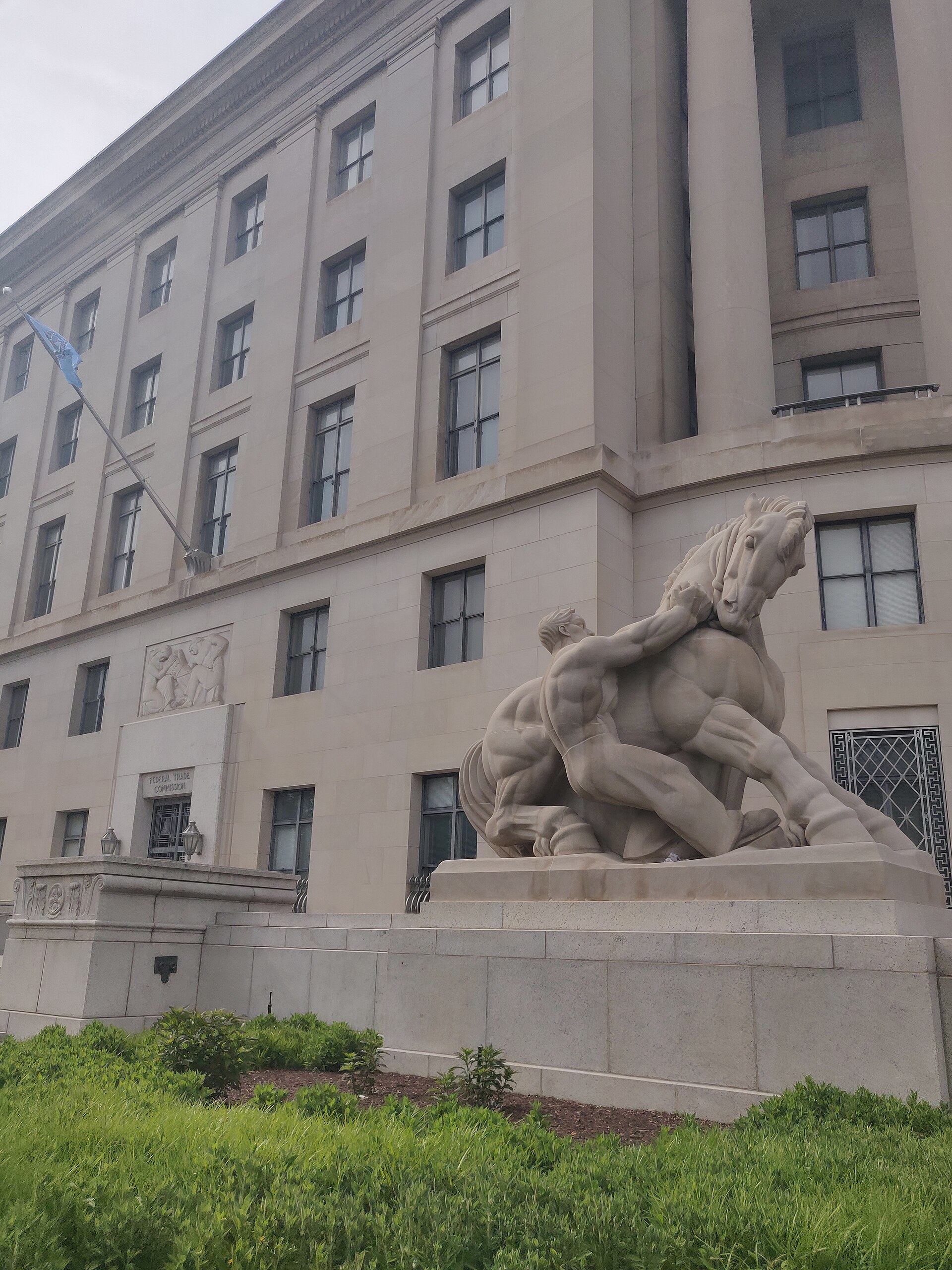
Phone a funeral home and ask what it charges, and the home has to answer. That duty sits in the Federal Trade Commission's Funeral Rule, and for the funeral industry it has done double work: it is also the standing argument against a second duty, putting the same prices on a website. If the telephone already delivers the price, the argument runs, a website requirement is unnecessary.
Throughout 2023 the FTC tested the telephone. Investigators placed undercover calls to more than 250 funeral homes across the country asking for price information, and in January 2024 the agency announced warning letters to 39 of them.
The claim
The telephone argument has a named author and a published text. Chris Farmer, general counsel for the National Funeral Directors Association (NFDA), made it to Consumers' Checkbook while the FTC was weighing whether funeral homes with websites should have to post prices there.
Farmer's position, as Checkbook reported it, was not that price information should be hard to get. He said the association encourages its members toward full pricing transparency because it helps them commercially over time. NFDA told Checkbook it supports price transparency and clarity, but that its members do not think a "rigid federal rule" is the best way to reach it, preferring a "free market" and, where needed, state regulation. The proposed online-posting requirement, in Farmer's account, addressed a problem the market had already handled.
The mechanism he pointed to instead was the phone. "The [Funeral] Rule currently requires a funeral home to provide accurate price information to anyone who telephones the funeral home seeking it," Farmer told Checkbook. He also named a market substitute: free comparison sites such as Funeralocity.com and Parting.com, where a shopper can enter a location and a radius and get homes listed from least to most expensive.
The timing matters, and it runs one way. The captured Checkbook page carries no dateline, but it refers to a website survey the two consumer groups had run the month before publication, and the Consumer Federation of America dates that survey to May 2022. That places the interview in roughly mid-2022, months before the FTC began calling and more than a year before the agency announced what the calls found. Nothing in the record suggests Farmer knew what the calls would find; the record arrived afterward and overtook the claim.
The record
The sweep was the agency's first undercover test of the Funeral Rule by telephone. The January 2024 release describes calls placed throughout 2023 by investigators and other staff from seven FTC regional offices - East Central, Northwest, Southeast, Southwest, Midwest, Western Region - Los Angeles, and Western Region - San Francisco - together with the Bureau of Consumer Protection's Division of Marketing Practices. The callers were asking for the one thing the Rule says a caller is entitled to: accurate information from the home's price lists, plus any other readily available information that reasonably answers the question.
Staff determined that 39 funeral homes violated the Rule on these calls. On 38 of the calls, according to the release, homes "either refused to answer questions about pricing at all or provided inconsistent pricing for identical services." Two calls produced something more specific. On one, a home misrepresented that the local health code required embalming if more than a certain number of people wanted to view the remains, which the local health code did not require; the release notes that most states do not require embalming and the few that do so only in limited circumstances, such as where refrigeration is unavailable. On another, a home promised to send a General Price List - the itemized document with mandated disclosures - and sent a list of package prices that did not meet the requirement.
The letters themselves, as the release describes them, restate the Rule's disclosure obligations, including itemized pricing over the telephone, and ask each recipient to take prompt remedial action. The release adds, in a separate sentence of its own, that failure to comply with the Rule results in penalties of up to $51,744 per violation.
What the release does not do is adjudicate anything. A warning letter is an allegation plus a request; the release reports no hearing and no penalty, and the record here stops with the letters. Nor does the release give an exact denominator - the calls are counted only as more than 250 - so any violation rate drawn from it would be an upper bound, and this piece does not compute one.
Three ways to get a price
Farmer's argument only works if at least one channel reliably delivers. There are three, and each has been counted by someone.
Online is the first, and it is the channel he was arguing should stay voluntary. The Consumer Federation of America reported that only 191 of 1,046 funeral homes surveyed, 18 percent, posted prices online across 35 state capitals in May 2022, and that none of the 102 Dignity Memorial-affiliated homes in the sample did. Joshua Slocum, identified in the release as FCA Executive Director, stated: "Most consumers, especially those out-of-town or having to deal with a sudden death, cannot practically visit several funeral homes to pick up price lists." Stephen Brobeck, CFA Senior Fellow, stated: "Online price posting would benefit not just those consumers searching for price information, but also all consumers by encouraging price competition." The same release cites a May 2022 Ipsos survey finding 75 percent in favor of mandatory price posting for funeral homes with websites and three percent opposed, and reports that only 20 percent of 1,146 respondents who had planned funerals visited more than one home to collect price lists.
The telephone is the second channel, and it is the one the 2023 sweep put to the test. The FTC's business-guidance post published alongside the January 2024 announcement tells industry members the most common violation staff found was refusing to answer price questions over the phone. It directs providers to answer accurately from their price lists, to stop requiring an in-person visit before giving prices, to give information to callers who do not identify themselves, and not to respond with package prices alone.
In person is the third. The FTC's April 2018 release records undercover inspections at 134 funeral homes across 11 states during 2017, of which 29 failed to disclose the pricing information the Rule requires. That release also carries the long view: since 1996 the agency has inspected nearly 3,200 funeral homes and identified 559 with violations requiring referral to the Funeral Rule Offender's Program, which is administered by the NFDA itself. Civil penalties then stood at up to $40,654 per violation.
What this does not settle
The sweep speaks to the factual half of the argument - whether a caller gets a price - and not to the legal conclusion drawn from it. "Substantial injury" is the FTC's own standard for rulemaking, and how the agency applies it to these numbers is the agency's to decide.
Neither January 2024 FTC document mentions the NFDA, Farmer, or the telephone argument, and none of the three FTC documents engages that argument; the pairing in this piece is this desk's, drawn from three separately published records that no single source sets side by side. And the market substitute Farmer named goes untested in this record: none of the FTC documents here reports checking whether Funeralocity.com or Parting.com carry accurate prices, and the disclosure duties described in these documents run to funeral providers, not to third-party sites.
What to check next
The right of reply on this piece is open and unexercised. Comment requests to the National Funeral Directors Association and to Farmer are pending at the time of drafting, and any response will be published here.
Two things are checkable on the public record. The FTC's press-release archive will show whether a second undercover phone sweep of funeral homes is announced, and whether the online price-posting requirement is finalized. As analysis, this desk predicts neither will have happened by January 25, 2027. That is the date to check.