Crime & Justice · The Record
Kansas denaturalization case alleges identity fraud, no criminal conviction in the published account
The rationale OPB and NPR reported for the Justice Department's denaturalization priority describes serious crimes concealed at naturalization. The Kansas action filed Aug. 7 describes an alleged false identity, and TRAC's data says that is the ordinary case.
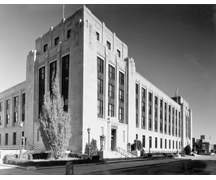
The United States filed a civil action on Aug. 7 in the District of Kansas against Harinder Singh of Olathe, also known as Harinder Singh Sanghera and Rushpal Singh, seeking to revoke his naturalized citizenship, WIBW reported on Aug. 10. The Justice Department, according to that account, notes that the claims made in its complaints are "allegations only and that there has been no determination of liability."
The allegations, as WIBW described them: the Immigration and Naturalization Service first encountered Singh in 1991 at John F. Kennedy International Airport, where he identified himself as Rushpal Singh. In August 1995 an immigration judge ordered him deported, a decision the Board of Immigration Appeals upheld, and the government has no record of his leaving the country afterward. In June 1996 he filed an application with the INS for an immigration benefit under the name Harinder Singh, changing his date of birth, his date of entry and the factual basis for his claim. The INS granted it, and in October 2000 approved his adjustment of status to lawful permanent resident under that name. He naturalized under that identity eight years later, WIBW reported, without disclosing his prior immigration history under a different name. The government alleges he obtained his naturalization unlawfully and that he willfully misrepresented and concealed material facts when he applied.
Under the Immigration and Nationality Act, WIBW reported, a naturalized citizen's citizenship may be revoked and the certificate of naturalization canceled where the naturalization was obtained illegally, or procured by concealment of a material fact or by willful misrepresentation. The action asks the court to set aside the order admitting Singh to citizenship and to cancel his certificate.
What does not appear in the published account is a criminal conviction. No conviction is described, no criminal charge, no offense apart from the alleged immigration and identity fraud that is itself the subject of the civil complaint.
That absence is why the filing is worth setting beside the rationale reported for the Justice Department's denaturalization priority. OPB, republishing NPR, reported that rationale in June 2025 in these words: "If you commit serious crimes before you become a U.S. citizen and then lie about them during your naturalization process, the Justice Department will discover the truth and come after you." The passage available to Daily Pol carries no speaker attribution, so the line is cited here as the rationale OPB and NPR reported for the priority, not as any named official's words. The directive establishing the priority, quoted identically by the law firm WilmerHale and by ABC News, reads: "The Civil Division shall prioritize and maximally pursue denaturalization proceedings in all cases permitted by law and supported by the evidence." WilmerHale's June 2025 client alert listed denaturalization as the fifth of five stated enforcement priorities for the division.
The Kansas filing is not an outlier within the surge. TRAC, the Transactional Records Access Clearinghouse, reported in June 2026 that "Immigration fraud, specifically false identity, was the largest single underlying basis for denaturalization complaints historically and remained so for May and June 2026." TRAC also put the historical rate at fewer than one denaturalization lawsuit a month, and the Biden administration's rate at fewer than four a year, before counting at least 15 complaints in May 2026 and 18 in the first part of June 2026.
Those two TRAC figures total at least 33 filings in roughly six weeks. WIBW separately reported officials as saying the department has filed about 123 civil denaturalization complaints since Jan. 20, 2025, the most in recorded history. The counts come from different counters, and neither source establishes that the May and June filings TRAC logged sit inside the department's 123, or that the Kansas filing does. What the figures do show, side by side, is a concentration: at least 33 complaints in a six-week stretch of 2026 against a historical baseline TRAC measures in fractions of one a month.
ABC News, reporting on the priorities in June 2025, described a catch-all category covering "any other cases referred to the Civil Division that the Division determines to be sufficiently important to pursue."
Analysis: on ABC News's account of the categories, a case with no alleged criminal predicate is not a stretch of the policy but a use of it. The rationale reported by OPB and NPR is built on serious crimes concealed at naturalization; false identity in an immigration filing is what WIBW's account of the Kansas complaint describes, and all WIBW's account describes. TRAC's category finding says that this pairing - the announced rationale on one side, an identity-fraud allegation on the other - describes the ordinary case rather than the exception. A checkable prediction follows: TRAC's next report covering denaturalization filings after June 2026 will again identify immigration fraud, and false identity specifically, as the largest single underlying basis. That can be checked by March 31, 2027.
A piece naming a private individual in connection with alleged fraud carries a comment obligation. Daily Pol's practice requires a documented request for comment to the man named, or to counsel of record, and to the U.S. Attorney's Office for the District of Kansas, before publication. As of drafting, no such request has been documented and no response has been received from either. The Kansas allegations remain allegations, and the man named in them remains a citizen.