Fashion & Apparel · The Record
White House Section 301 actions key apparel duty relief to U.S. cotton purchases; 10% duty still applies
The White House statement of the Section 301 actions directs tariff-rate quotas for Bangladesh, Cambodia, Indonesia and Malaysia sized by each economy's imports of U.S. cotton. FR Doc. 2026-15274 records that establishing them becomes feasible by September 1, 2026. No notice establishing them could be located by this desk on September 3.
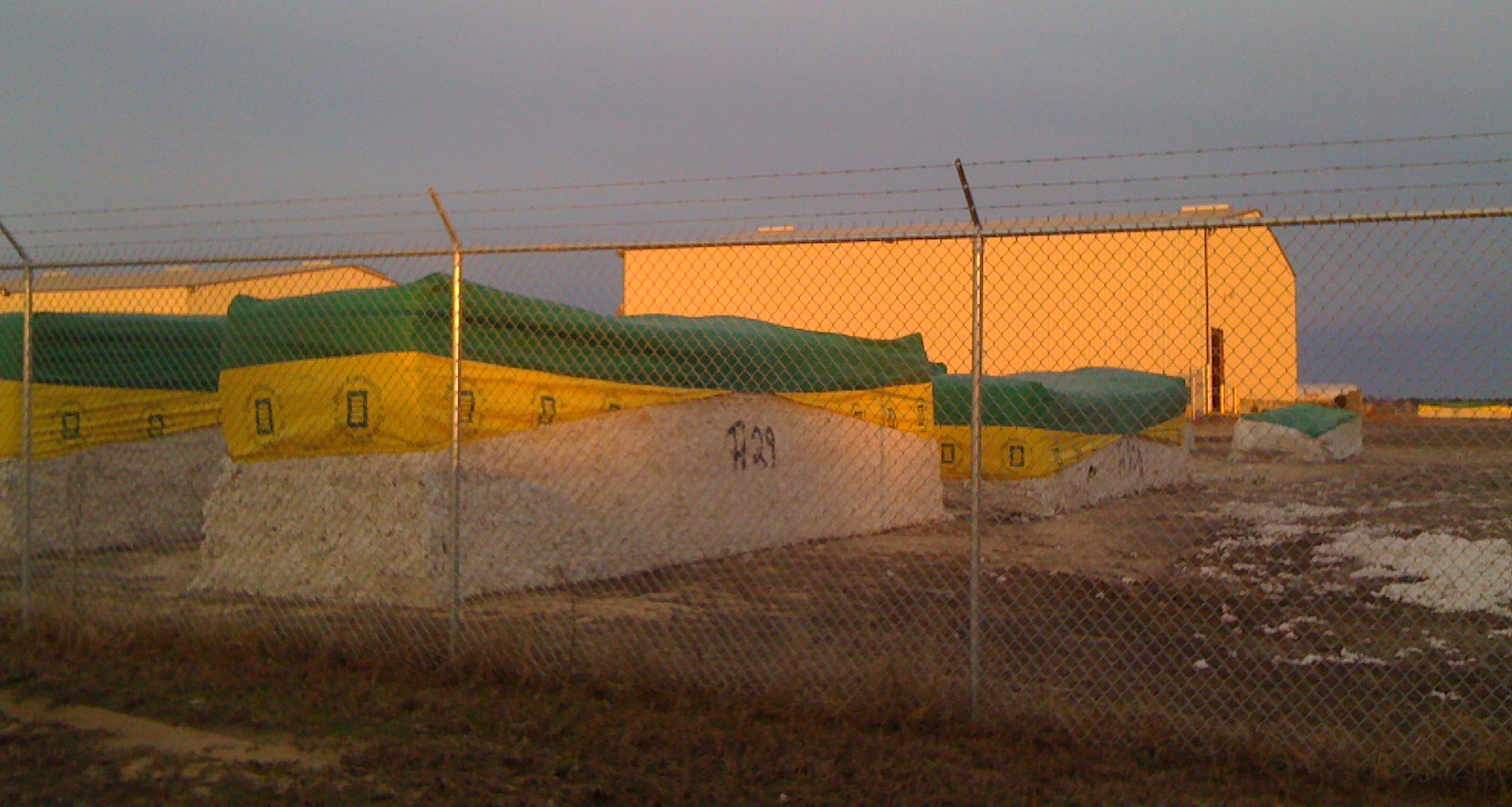
The instrument that will decide what a shirt sewn in Dhaka or Phnom Penh pays at a U.S. port is not the press release that announced the tariffs. It is the White House statement of the Section 301 actions, published in July 2026, which directs the Trade Representative to establish tariff-rate quotas for Bangladesh, Cambodia, Indonesia and Malaysia and to size the apparel relief inside them by how much American cotton each of those economies buys.
The duties are already being collected. The tariffs "took effect July 24, 2026, at 12:01 a.m. Eastern, with a narrow in-transit exception that closed July 28," Thomson Reuters' tax and trade blog records. Two rates run across the 60 economies covered: economies credited with a full or partial forced-labor import ban, or with a reciprocal-trade commitment, face an additional 10 percent duty, and the rest face 12.5 percent, according to the same account.
The USTR announcement presents the action as a correction of a failure by trading partners rather than as a trade bargain. The statement is written in the first person, but the snapshot available to this desk carries no speaker identification, so this piece does not supply one. The United States has banned imports made with forced labor for close to a century and enforces that ban, the statement said, while "decades of moral suasion have not eradicated forced labor from global supply chains." The action, the statement stated, "will begin to correct what is both a human rights abuse and distortive trade practice to improve the welfare of workers everywhere." He added that he was encouraged by trading partners that had moved quickly to adopt import prohibitions of their own, and said he looked forward to seeing them enforced.
That is the claim, and it is a claim about labor conditions: the tariffs are cast as a lever on how goods are made, applied because, in the language of the presidential action, economies failed to impose and effectively enforce a prohibition on importing goods produced with forced labor. The White House page also records that the Trade Representative determined those acts, policies and practices to be unreasonable and to burden or restrict U.S. commerce.
The record half sits in the same set of documents, in the operative paragraphs rather than the announcement. The White House statement of the actions instructs the Trade Representative to establish quotas for Bangladesh, Cambodia, Indonesia and Malaysia with an initial duration of three years, "to encourage the importation by each of these economies of U.S. textile goods." It then instructs him to structure those quotas so that a volume of specified textiles and apparel enters the United States free of the Section 301 tariffs, with that volume set by the economy's purchases of American cotton.
A TRQ is a tariff-rate quota: a volume of goods admitted under a lower duty, with everything above the volume paying the full rate. The two law firms that read the action for clients describe the same construction. Kelley Drye & Warren's trade monitor reports that the quota amount for each country "will be determined 'as soon as feasible' and based on each economy's importation of U.S. inputs," with an initial duration of three years. Holland & Knight describes a reduced rate tied to each economy's imports of U.S. cotton and textile inputs, to be established by USTR and "implemented no earlier than September 1, 2026."
Nothing is in force yet. "Until the TRQs are established, the applicable tariff rates described above apply to imports of textiles and apparel from these economies," Kelley Drye's note states. Thomson Reuters puts the practical consequence plainly for the four countries: the quota has been announced but is not operational, "so the 10% duty applies until then."
The asymmetry is in which document says what. In the passages available to this desk, the two USTR documents written for public reading - the press release carrying that statement and the accompanying fact sheet - carry no tariff-rate-quota or cotton language at all, and mention apparel only once, in the phrase “apparel products manufactured in Jordan”. The cotton-purchase basis for apparel relief appears in the statement of the actions itself. The rationale and the mechanism were published the same month, in different places, and only the mechanism names the sector.
The September 1 date has been read loosely in coverage, and the memorandum does not support the tighter reading. FR Doc. 2026-15274, the Federal Register text of the memorandum to the Trade Representative, records that he "has also informed me that establishing these TRQs is not feasible at this time, but that establishing these TRQs will be feasible by September 1, 2026." That is a statement about when the act of establishing becomes possible, not a date by which the quotas must exist. Holland & Knight's "no earlier than September 1, 2026" and Thomson Reuters' reading that the quotas would not be feasible until around that date are consistent with it. On the available text, September 1 is a floor, not a deadline.
Several things the record does not settle should be said out loud. The forced-labor findings are U.S. government determinations about 60 economies, several of them allies, and are reported here only as determinations. The USTR fact sheet sorts trading partners under two headings, one for those that made commitments to adopt and enforce prohibitions and one for "trading partners that have failed to adopt a forced labor import prohibition," but no primary snapshot available to this desk places Bangladesh, Cambodia, Indonesia or Malaysia under either heading by name. Thomson Reuters, a secondary source, puts all four at the 10 percent rate.
The fact sheet also records an enforcement action inside the sector: in June 2026, U.S. Customs and Border Protection issued new Withhold Release Orders, among them one covering apparel products manufactured in Jordan. Jordan appears in the memorandum's own list of economies alongside Bangladesh, Cambodia, Indonesia, Malaysia, India, Pakistan, Sri Lanka, Canada, Mexico and the United Kingdom, among others. Jordan is not one of the four offered a textile quota.
Analysis, on the cited documents only: the relief valve built into this action is sized by procurement of an American commodity. Four apparel-exporting economies can reduce what their garments pay at the U.S. border by buying more U.S. cotton and textile goods, and the instrument says so in those terms. Whatever the merits, that is a purchasing incentive for U.S. growers riding inside a human-rights measure, and the volume it releases is not indexed to any labor-conditions metric named in the passages this desk holds. Sourcing decisions for the four now turn on a quota whose size no published notice has yet fixed.
What a reader can check next is specific. A notice establishing tariff-rate quotas for Bangladesh, Cambodia, Indonesia and Malaysia would appear in the Federal Register under USTR, and would have to state the volumes and the cotton-import basis used to set them. The three-year clock described in the presidential action and in both law-firm notes starts when that notice issues, not on the date the tariffs took effect.
This desk's testable expectation: if no notice establishing these quotas is published by December 31, 2026, the mechanism will have gone unestablished for four months past the September 1, 2026 feasibility date recorded in FR Doc. 2026-15274, and for more than five months past the July 24, 2026 effective date, with the 10 percent duty applying to those four countries' textiles and apparel throughout. That is checkable on December 31.