World & Conflict · The Record
Senate passes Russia and Iran sanctions bill 86-11, 493 days after introduction
The Senate approved the measure on Aug. 7, 2026. It was introduced on April 1, 2025 and had 84 cosponsors. FDD Action, an advocacy organization, states the 2026 version authorizes tariffs of up to 100 percent on covered countries, where the 2025 bill set a minimum of 500 percent on covered countries.
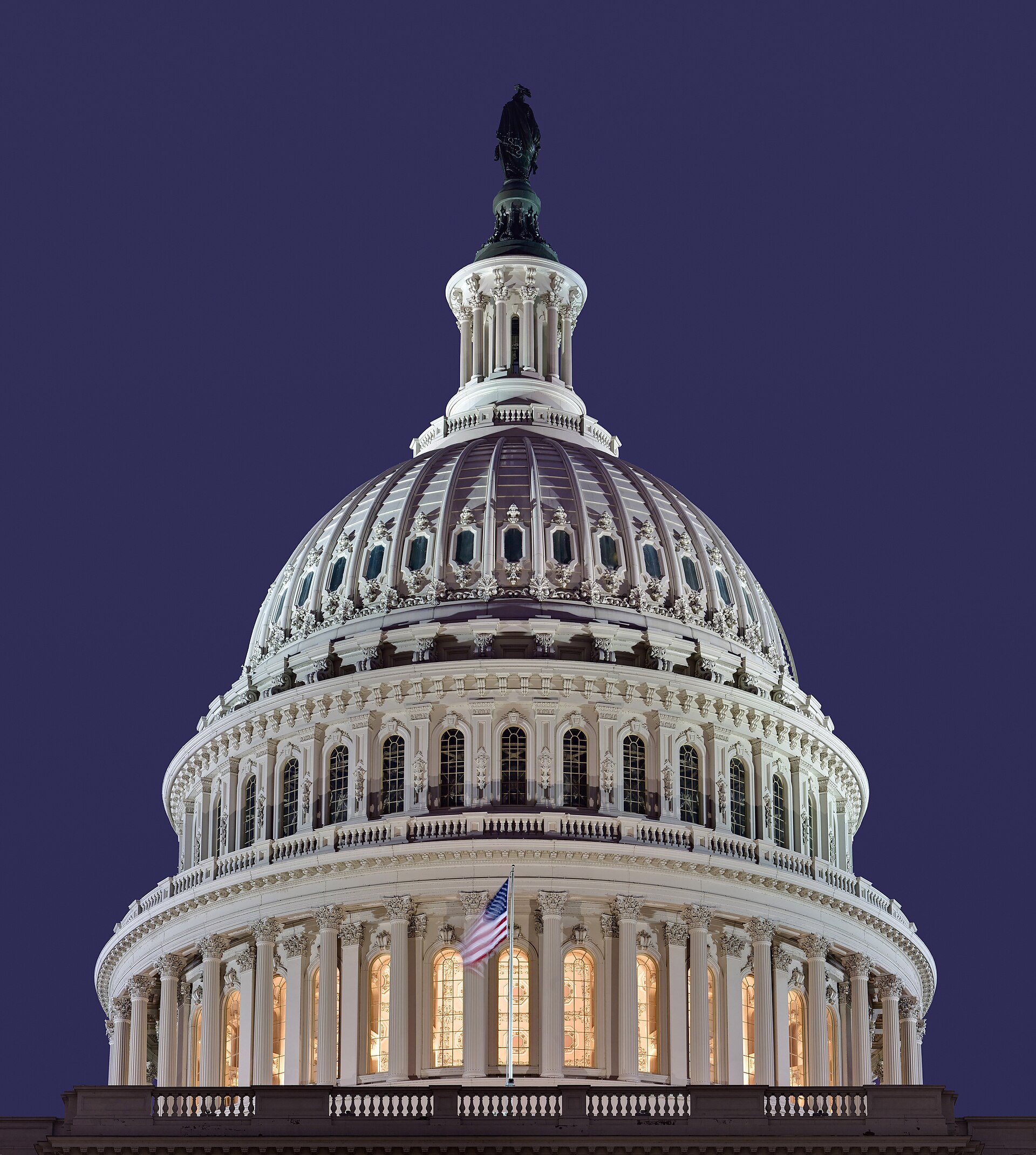
The Senate passed a sanctions bill directed at Russia by a vote of 86-11 on Friday, Aug. 7, Roll Call reported. CBS News reported the same tally and said the bill was sent to the House. Roll Call reported that the measure also levies penalties on Iran. Al Jazeera reported that the legislation is named for the late Sen. Lindsey Graham (R-S.C.), who championed it, and that it "sets up to 100 percent tariffs on major nations importing Russian oil and gas."
Roll Call and CBS News both described the passage as the end of a long delay. Two dated records test what that delay was about, and what survived it.
The claim
Graham promoted the bill as both ready to move and maximally severe. Wikipedia's article on the measure quotes him saying, "I've got 84 co-sponsors for a Russian sanctions bill that is an economic bunker buster against China, India, and Russia for Russia's brutal invasion of Ukraine."
The same article quotes Senate Majority Leader John Thune (R-S.D.) placing the decision elsewhere, saying senators "stand ready to provide President Trump with any tools he needs to get Russia to finally come to the table in a real way."
The record, part one: 493 days
The introduced text published by the U.S. Government Publishing Office is dated "April 1 (legislative day, March 31), 2025" and carries the short title "Sanctioning Russia Act of 2025." The Senate vote came on Aug. 7, 2026. By Daily Pol's count that is 493 days: 365 days to April 1, 2026, plus 128 more to Aug. 7.
Wikipedia states that the legislation was cosponsored by 84 senators, which it describes as crossing the two-thirds threshold needed to override a presidential veto. Two-thirds of a 100-seat Senate is 67. On that record, the obstacle during those 493 days was not vote counting.
What the sources point to instead is the executive branch. CBS News reported that over the past year prior versions of the measure "were on the verge of moving forward, only to meet resistance from the White House." Wikipedia states that Graham repeatedly suggested a final vote was near and that those timelines slipped while President Trump pursued unsuccessful negotiations with Russian President Vladimir Putin. Both are the outlets' characterizations, not Daily Pol's finding.
One limit on this comparison: the introduced text's sponsor line in the snapshot Daily Pol retrieved lists five names and then breaks off mid-enumeration, so the 84-cosponsor figure, which accumulated after introduction, cannot be checked against the day-one text.
The record, part two: the number that survived
FDD Action, an advocacy organization, published a policy alert on July 27, 2026 comparing the two versions. It states that the 2026 bill "authorizes a tariff rate of up to 100 percent on covered countries," and that "the original 2025 bill included a minimum tariff rate on covered countries of 500 percent."
That is the group's own like-for-like statement: on the same measure, covered countries, the maximum the 2026 bill allows is one-fifth of the minimum the 2025 bill set. FDD Action also states that Section 113(b) lets the U.S. Trade Representative move the rate down to any level above zero as a country reduces its purchases, and that Section 115(b) requires a written national-interest certification to Congress plus a report explaining the basis for a waiver.
The introduced 2025 text shows the grammar of the earlier approach. In Section 15, which addresses goods and services imported from the Russian Federation, the bill provided that within 15 days of a covered determination "the President shall, notwithstanding any other provision of law, increase the rate of duty for all goods and services" "to a rate of not less than the equivalent of 500 percent ad valorem."
Daily Pol retrieved only a partial snapshot of the introduced bill, which jumps from the short-title clause to Section 15. The covered-countries comparison above therefore rests on FDD Action's description of both bills, not on the bill texts. The 2026 enrolled text was not retrieved.
What senators actually fought over
Before final passage, the Senate rejected an amendment from Sens. Rand Paul (R-Ky.) and Ron Wyden (D-Ore.) that would have stripped the tariff provisions from the bill, Roll Call reported. The vote was 32-64. Roll Call reported that the bill passed "overcoming Democratic angst over provisions that would expand the president's tariff authorities."
Analysis
Analysis, grounded in the records cited above: the contested question in the chamber was not whether to sanction Russia, but who gets to set tariffs. A 32-64 vote against removing the tariff title, alongside an 86-11 vote for the bill, locates the disagreement in trade power rather than in support for Ukraine. The "long-awaited" framing carried across coverage describes a wait that the cosponsor count cannot explain.
On severity, the shift visible in FDD Action's own account runs one way: a stated 500 percent minimum on covered countries in 2025, an authorized ceiling of up to 100 percent in 2026, with a downward adjustment mechanism and a waiver certification attached. A minimum obliges; a ceiling permits. The introduced Section 15 language on Russian imports was written as a command with a deadline. Readers should weigh that against a passed bill whose terms, as described by an interested party rather than by a retrieved text, leave the level of the tariff to the executive branch that the record says resisted the bill for 493 days.
What happens next, and a date to check
Al Jazeera reported that a vote in the 435-seat House will not take place until at least early September because of the congressional recess. CBS News reported that House action is delayed by a five-week August break and that the bill is likely to meet resistance from some Democrats skeptical of the tariff provisions. Al Jazeera reported that several House members have expressed reservations.
Falsifiable prediction: the bill will not be enacted into law on or before Sept. 1, 2026. Check it against the House calendar and the enrolled-bill record on that date.
How we checked
Only one primary document was retrieved for this piece: the introduced text of S. 1241 from GovInfo, and that snapshot is partial. Congress.gov, senate.gov, GovTrack and several news sites returned HTTP 403 errors, so the 86-11 passage vote and the 32-64 amendment vote are news-sourced and were not verified against an official Senate roll call page. The 2026 bill's operative terms come from FDD Action and Al Jazeera; Daily Pol has not read the 2026 text and does not describe its provisions as verified.
Right of reply
This piece contains critical claims involving named living people, including the characterization by CBS News and Wikipedia of White House resistance to earlier versions. President Donald Trump (R) and the White House have not commented in any of the six sources reviewed here, and Daily Pol has no record of a response. Right of reply is flagged as required before publication; the contact request is documented by an editor, not by this draft.