Fashion & Apparel · The Record
US notice sets India at 10 percent and Vietnam at 12.5 as trade pact stays unsigned
A condition reported on 3 and 4 September ties India's bilateral trade agreement to a tariff edge over its competitors. A Federal Register notice published on 28 July already gives India 2.5 points on Vietnam - and did not need the pact to do it.
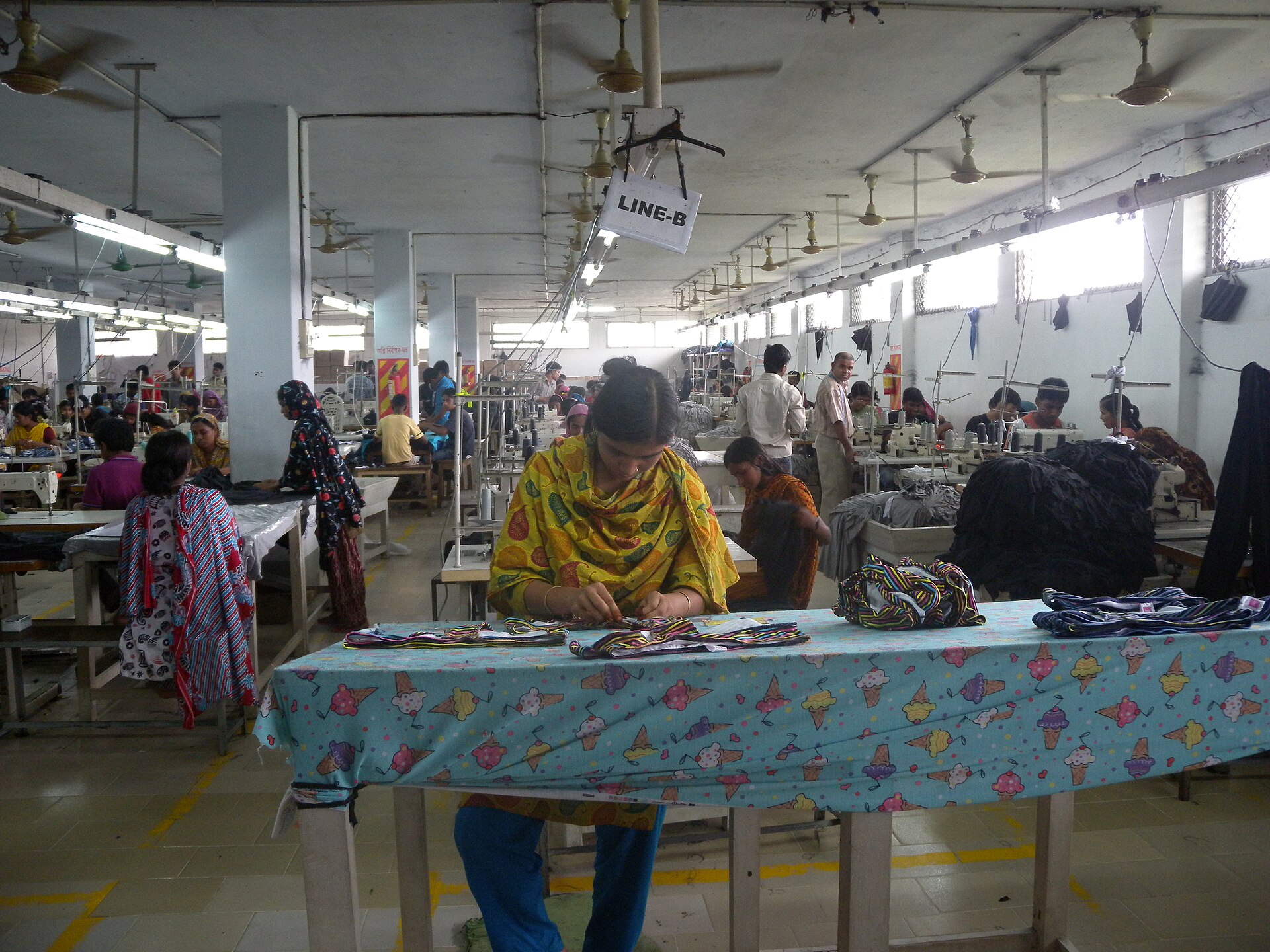
The document that decides what a shirt cut in Tiruppur pays on entry to the United States is not a trade agreement. It is Federal Register document 2026-15181, the final action in the Office of the United States Trade Representative's Section 301 investigations into economies that fail to prohibit the importation of goods produced with forced labour, published on 28 July 2026. The notice imposes an additional duty of 10 percent on products of India, subject to exceptions set out in an annex, and 12.5 percent on products of Vietnam. Both bite on goods entered for consumption "on or after 12:01 a.m. eastern time on July 24, 2026". Indian apparel has therefore been landing into a 2.5-point duty advantage over Vietnamese apparel for six weeks.
That advantage is close to the thing New Delhi says it is still waiting for. Reports published on 3 and 4 September set a single condition on India's bilateral trade agreement with Washington. "As soon as the US is able to give us the preferential rate in comparison to our competition, we will finalise the BTA and announce the final details," The Indian EYE reported on 4 September. IAAN Express carried the same sentence a day earlier in near-identical form, differing only in how it punctuates the abbreviation for the United States. The Indian EYE's report also carries the phrase "balanced, commercially meaningful" for the deal India wants, again without the captured text attaching those words to anyone.
Who spoke the sentence is worth stating precisely, because the captures do not. The research file behind this piece identifies the speaker as Piyush Goyal. Both pages carry that name in their URL slug - no headline text survives in the captures; the captured body text of each presents the quoted sentence with no speaker line attaching it, or any office, to the words. This piece therefore reports the condition as the two outlets published it, asserts no office for it, and treats the sentence as the reports' account of India's negotiating position rather than as a transcript.
Neither report expands BTA, and no capture in this file equates the acronym with the instrument the two governments last named in writing. That instrument is the United States-India Joint Statement of 6 February 2026, which announced "a framework for an Interim Agreement" and committed both sides to "work towards finalizing the Interim Agreement". The February text stated that the United States would apply a reciprocal tariff rate of 18 percent, and named textile and apparel, leather and footwear among the categories in play, alongside home décor and artisanal products. It also recorded an Indian intention to purchase $500 billion of US energy products, aircraft, precious metals, technology products and coking coal over five years, and to cut tariffs on US industrial and agricultural goods.
Under six months separate that statement from the Federal Register notice, and the notice is the operative document. It does not mention the framework. Its rates fall out of a published criterion: 10 percent is the rate the Trade Representative determined appropriate for an economy that imposes a forced labour import prohibition, that "has committed to impose and enforce such a prohibition through an Agreement on Reciprocal Trade (ART)", or that runs a partial regime with the effect of preventing importation of certain forced-labour goods. India draws 10 percent. Vietnam draws 12.5 percent. Bangladesh, on the same notice, also draws 10 percent - parity with India, not a deficit. Global Trade Alert's overview of the action counts seventeen economies at the flat 10 percent rate, India among them.
What the notice does not settle matters as much as what it does. India's rate carries an exception for goods provided for in Annex I, and the annex's contents are not in the capture, so which lines clear at some other rate cannot be checked from this record. The notice also directs tariff-rate quotas for Bangladesh, Cambodia, Indonesia and Malaysia, with an initial duration of three years, framed as encouragement to import US textile goods; the captured direction names those four economies and not India, which is not the same as establishing that India has no quota. And the record does not say which limb of the criterion India satisfied - a domestic prohibition, a partial regime, or a commitment given through an Agreement on Reciprocal Trade.
View the data
| Value (%) | |
|---|---|
| India | 10% |
| Bangladesh | 10% |
| Vietnam | 12.5% |
Source: Federal Register document 2026-15181, published 28 July 2026 · Daily Pol graphic
That last gap is where claim and record press hardest on each other. Read one way - and this is analysis, resting on the documents cited above - the margin over Vietnam already exists, arrived on 24 July, and was produced by a determination about forced-labour enforcement rather than by anything conceded across a negotiating table. Read the other way, the criterion's own wording keeps a trade instrument in the frame: an ART commitment is one of the three qualifying routes, and the capture does not exclude it for India. What the notice does establish is that the number is revisable by the authority that issued it, on the same criterion, without a further agreement.
The rate Indian garments pay has been founded on three different legal authorities inside seven months. The 18 percent announced on 6 February lasted fourteen days as an announced number: on 20 February the Supreme Court decided Learning Resources, Inc. v. Trump, consolidated with Trump v. V.O.S. Selections, Inc. The summary published by the law firm K&L Gates records the holding as "IEEPA does not authorize the President to impose tariffs", and notes that the Court "issued no directives concerning enforcement, refunds, or other remedial actions". The slip opinion is not in this file - the research file records that it could not be text-extracted here - so the holding is reported from a secondary account and characterised as one.
What filled the gap is documented by Kelley Drye & Warren, which records a Section 122 action with an effective period running from "12:01 am on February 24, 2026, through 12:01 am on July 24, 2026", expiring at the hour the Section 301 duties began, and reports that "President Trump announced via social media that he was raising the rate to 15%, the maximum permitted under Section 122". The captured note does not name India in connection with that 15 percent figure. So the dates on either side of the interval are established by this record; the rate a particular Indian shipper cleared inside it is not.
The trade data overlapping the announced 18 percent is thin but pointed. Apparel Resources, citing the Confederation of Indian Textile Industry, reported Indian apparel exports of $1,544.79 million in January 2026, down 3.84 percent year on year, and textile exports of $1,730.65 million, down 3.68 percent. Combined, that is $3,275.44 million, down 3.75 percent, with textiles and apparel slipping to 8.96 percent of total exports from 9.37 percent. Across April 2025 to January 2026 the combined figure was $29,806.70 million, down 0.65 percent. The capture carries no publication date, and a single month's decline in a window before any of these authorities took hold is not causation.
The counter-reading deserves its own space. A 2.5-point edge over Vietnam is not an edge over the whole competitive set: Bangladesh sits at the same 10 percent, and the four economies named for textile quotas in the captured direction have a mechanism India is not named in. A margin conferred by determination can be narrowed by determination, on a criterion about enforcement rather than about trade concessions. On the documents available, declining to sign until the number is written into an agreement is a coherent position rather than a bluff.
Three things resolve on dates a reader can hold. The tariff-rate quotas carry an initial duration of three years from a notice published on 28 July 2026, putting their first expiry in 2029. CITI's monthly export series will show whether trade under the 10 percent Section 301 rate reads differently from the months when 18 percent was the announced number. And the rates themselves live in the Federal Register: this desk's falsifiable expectation is that no notice modifying the 10 percent rate on products of India or the 12.5 percent rate on products of Vietnam will publish on or before 31 December 2026.