Health & Medicine · The Record
WHO counts 1,801 Ebola deaths in Congo as the record shows no vote on a $1.4 billion US request
The State Department said it intends to provide $242 million more, the Jamaica Observer reported. The underlying request went to Congress on June 24 alongside a $67.1 billion Pentagon line, and no enactment appears in the record this desk was able to reach.
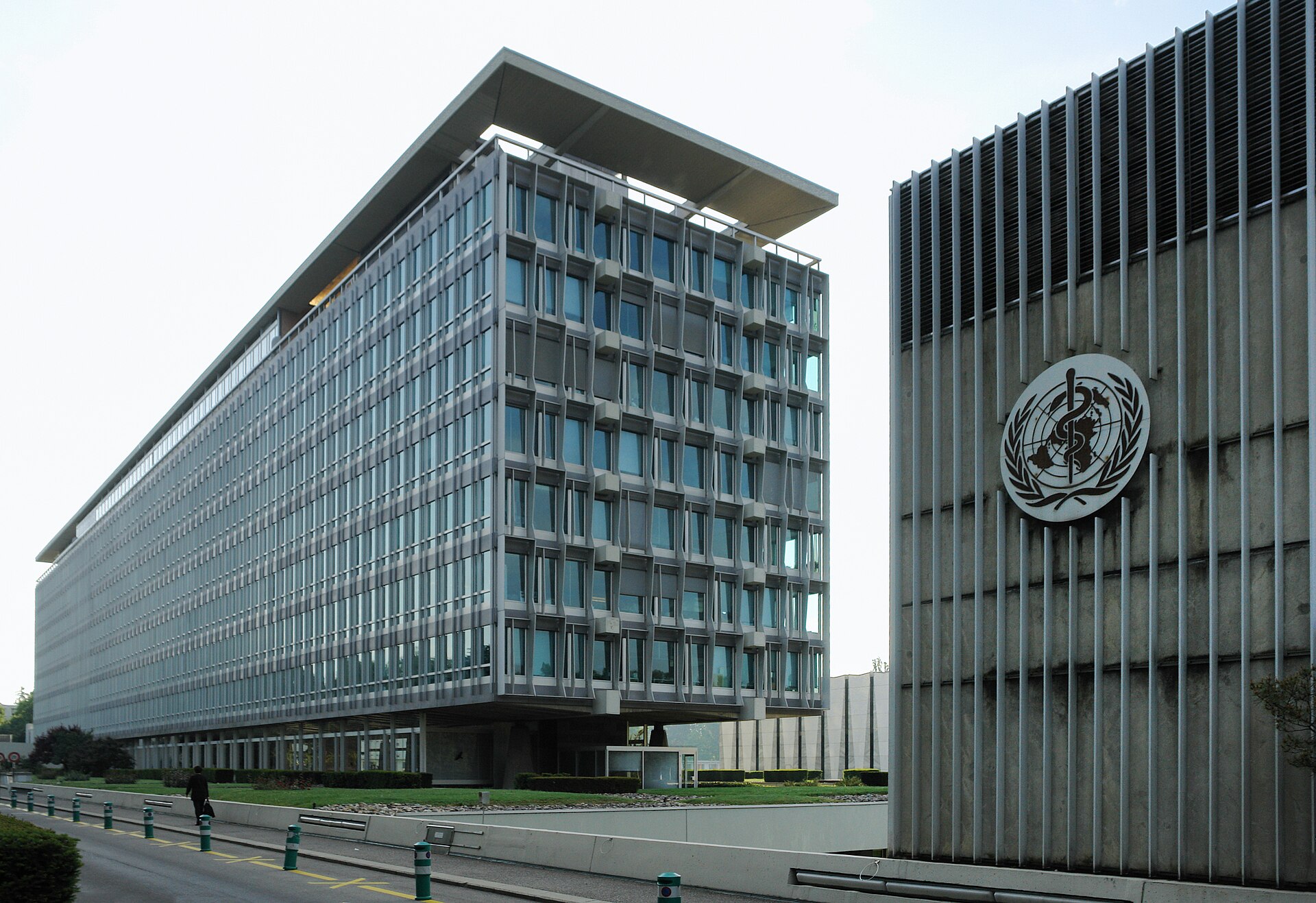
Correction, 3 September 2026. This piece attributed the quoted line to WHO Director-General Tedros Adhanom Ghebreyesus. The quotation is verbatim in the captured WHO release, but the capture does not carry the speaker identification. Our rule is that a quote's speaker must come from the fetched record like the words do; where it does not, we say so rather than let the attribution stand unmarked.
By Hector A. Arnold
On August 6, 2026, the World Health Organization and Africa CDC issued a joint appeal for community-led action against the Ebola outbreak in the Democratic Republic of the Congo. In it, WHO Director-General Tedros Adhanom Ghebreyesus said that in parts of the country's east, "the Ebola outbreak is outpacing our response."
The day before, the Jamaica Observer reported a US announcement of new Ebola funding, stating that "the new funding brings direct US financial assistance in response to the outbreak to more than $500 million" and describing the United States as "the largest financial contributor to the Ebola response." The World Socialist Web Site, in its coverage of the outbreak, reproduces the announcement's operative verb phrase: the government "intends to provide" the money.
That verb is the whole story. What follows sets the announcement next to the legislative and epidemiological record that tests it.
What the count says
WHO's August 6 statement reports that as of August 4, 2026, the Democratic Republic of the Congo had recorded 3,973 confirmed cases, 1,801 deaths and 776 recoveries across 51 health zones in five provinces.
WHO's Disease Outbreak News entry for the same epidemic reports an earlier cut: as of July 30, 2026, 3,605 confirmed cases including 1,587 deaths, which it puts at a crude case fatality ratio of 44 percent. Cases had been reported from 49 health zones across Ituri, North Kivu, South Kivu, Haut-Uele and Tshopo. Among health workers, WHO records 151 confirmed cases, 44 deaths and 68 recoveries. WHO assessed the national risk as very high.
Two things follow from placing those two WHO cuts side by side, which no single document does. First, the reported death total rose by 214 between the July 30 and August 4 reporting points - roughly 43 deaths a day across five days, though reporting lags mean deaths are often attributed to the week they are confirmed rather than the day they occurred, and a jump between cuts can reflect catch-up entry as much as acceleration. Second, the ratio holds: 1,587 of 3,605 is 44 percent, and 1,801 of 3,973 is about 45 percent. A case fatality ratio that stable across a growing epidemic is consistent with case counts rising rather than the disease becoming more lethal. It is not evidence about treatment quality either way.
WHO's own trend line is the sharper number. Its Disease Outbreak News reports that in the most recent complete reporting week, week 30, "the highest weekly number of reported cases (567) and deaths (296) to date were recorded." WHO also states that "This outbreak is now the largest recorded Ebola disease outbreak in the country," passing the 2018 to 2020 epidemic's 3,317 confirmed cases.
What the money record says
The Washington Examiner reported that the administration asked Congress for $1.4 billion specifically for Ebola response, transmitted June 24, 2026. The request letter's stated purpose, as the Examiner reproduces it, was that the money "would be used to limit the spread of Ebola beyond the Democratic Republic of the Congo and Uganda to other vulnerable nations and ensure the virus does not reach U.S. shores."
That $1.4 billion did not travel alone. The Center for Strategic and International Studies, analyzing the same supplemental, wrote that "The supplemental requests $67.1 billion for the DOD" and that "About one-third of the request appears to be driven by the costs of the Iran war." On those two figures, both drawn from source text this desk holds, the Pentagon line is roughly 48 times the Ebola line inside the same package.
Semafor's reporting on the request's reception on Capitol Hill carries an unattributed line from an unidentified speaker, who is not identified as a legislator, staffer or analyst anywhere in the excerpt this desk holds: "There's stuff there for farmers and other things there, Ebola, and all that. So we're looking at it."
The most recent status marker this desk could reach is a Legis1 item dated Friday, July 24, 2026, which states that "Votes on appropriations measures are expected in coming weeks."
Analysis: the gap between intent and obligation
The following is this desk's reading of the documents cited above, not a finding of fact about congressional action.
An announcement that a government intends to provide money, working with Congress, is not the same instrument as an appropriation. Read against the July 24 record of votes still expected, the August 5 phrasing is best understood as stated intent contingent on legislation that had not, in any document this desk could obtain, been enacted. The $242 million therefore describes a plan, and the "more than $500 million" total describes a plan plus prior spending, not a single pool of obligated funds.
The timeline is the part worth holding onto. The request went to Congress on June 24. Epidemiological week 30, which fell after that, then produced the outbreak's worst recorded week by both cases and deaths on WHO's own count. That sequence does not establish causation - money moving faster would not have changed week 30's confirmed cases, and no source in this record measures the effect of funding timing on transmission. It does establish that the epidemiological curve and the legislative calendar were running on different clocks, and only one of them had a deadline.
What this piece could not check
Daily Pol publishes its limits alongside its findings.
- This desk could not reach congress.gov, house.gov, senate.gov or state.gov. The absence of a recorded vote in the sources held is an absence in this record, not proof that the supplemental failed to pass. If it has been enacted, this piece is wrong on that point and will be corrected.
- The $242 million figure and the $87.6 billion package total appear in the titles of the Jamaica Observer and CSIS items as recorded by this desk, not in the body excerpts held. Every ratio above is computed only from body-supported figures.
- The State Department's announcement is known here through outlets reproducing it, not through the original release. No sentence here is presented as a direct departmental quotation.
- The excerpt of the World Socialist Web Site article held by this desk contains two fragments only. Its framing of a death toll approaching 2,000 does not appear in that text and is not relied on here. No competing tally appears anywhere in the record this desk holds: WHO's 1,801 as of August 4 is the only count sourced in this piece.
- WHO's Disease Outbreak News names a virus species in its title. The body excerpt held does not, so this piece does not characterize the species.
A checkable prediction
On WHO's own figures - 1,801 deaths as of August 4 and a peak week of 296 - the cumulative confirmed death toll reported by WHO will exceed 2,000 by September 15, 2026. Weekly counts can fall as well as rise, and a successful ring-vaccination and isolation push would show up first as a flattening of cases and only later in deaths, so this is a projection of the current trend and not a floor. It is checkable against WHO's Disease Outbreak News page on that date.
Right of reply
This piece assesses the conduct of a government body and is filed at Daily Pol's high risk tier. The subject identified as entitled to reply is the United States Department of State, Office of the Spokesperson, on the questions of whether any portion of the $242 million has been obligated and whether the June 24 supplemental has been enacted. As of drafting on August 11, 2026, that request for comment is recorded by this desk as outstanding and unanswered. No reply has been received, and no reply was fabricated. A human editor must document the request before this piece publishes.