Culture & Society · The Record
Abbott's office said House Bill 4211 bans "Sharia compounds"; the law's dispute clause names no faith
The enrolled Texas statute's caption and operative clause use no religious term, and on June 29, 2026 a federal judge recorded the absence of any evidence or allegation that a Plano mosque's burial rites are "Sharia law" of the sort that threaten Texas law.
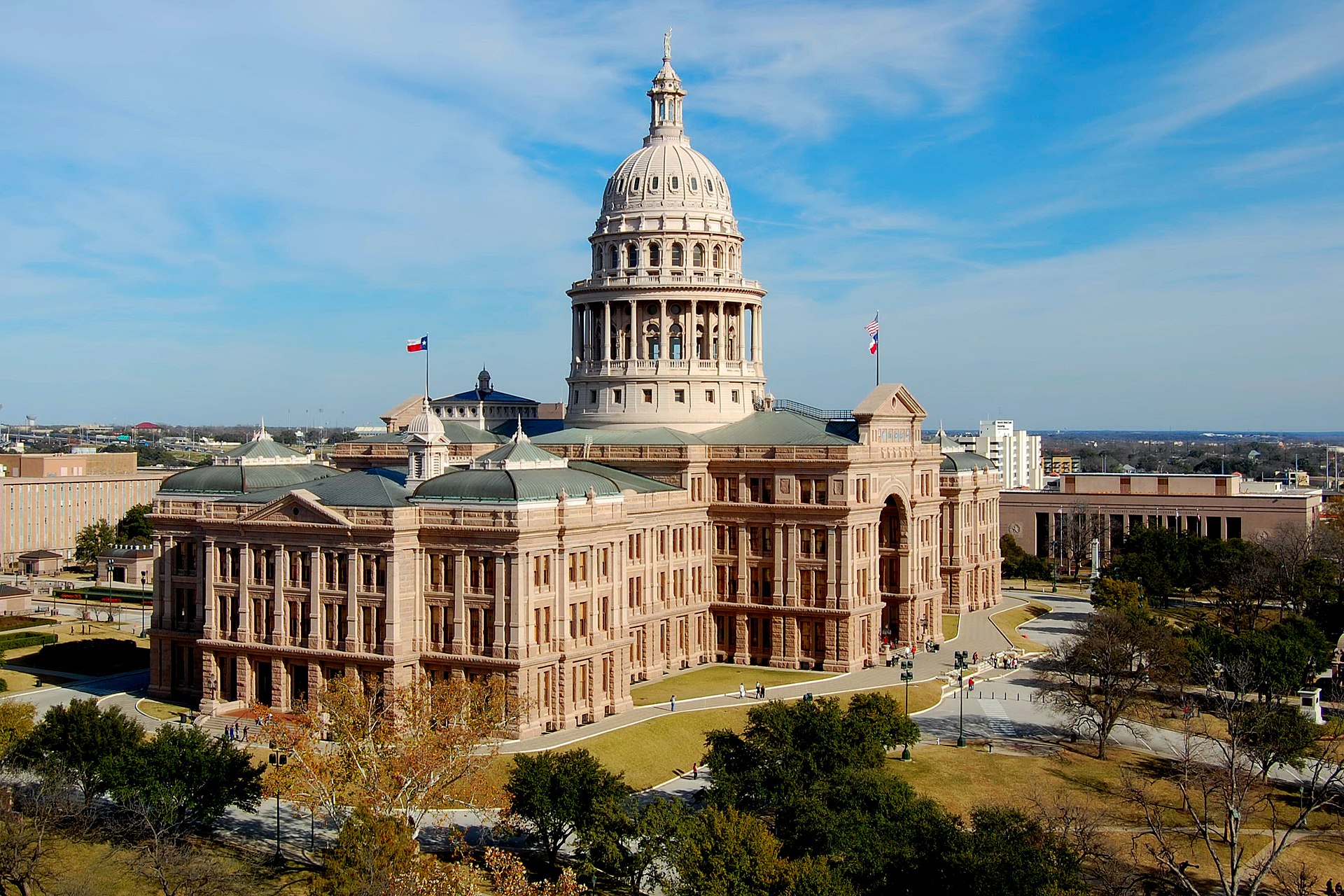
Two kinds of document describe the same Texas law. One is a press release. The other is the statute the release announces. They do not use the same vocabulary, and the gap between them is the most checkable thing in this story.
The claim
On Sept. 12, 2025, the Office of the Texas Governor published a release stating that Gov. Greg Abbott (R-Texas) had ceremonially signed House Bill 4211 into law to stop residential property developments, EPIC City among them, from creating "Sharia compounds" and from defrauding and discriminating against Texans. In the same release, Abbott said that "bad actors like EPIC and EPIC City tried to use religion as a form of segregation." The release also recounted his remarks describing an effort to build a city open only to Muslims, one that would subject its residents to Sharia law and limit a landowner's ability to sell.
Two months later, on Nov. 19, 2025, the governor's office published a second release saying Abbott had written to North Texas district attorneys and sheriffs, the Texas attorney general and the Texas Department of Public Safety about possible criminal violations by Sharia tribunals operating as legal courts. In that letter, quoted by his office, Abbott wrote: "Legal disputes in Texas must be decided based on American law rooted in the fundamental principles of American due process, not according to Sharia law dispensed in modern day star chambers."
The record
The enrolled version of House Bill 4211, published by Texas Legislature Online, is captioned "AN ACT relating to certain residential property interests controlled by certain entities." The chapter it adds is headed "CHAPTER 223. BUSINESS ENTITY-OWNED RESIDENTIAL ARRANGEMENTS." Its tribunal provision, Sec. 223.003(b), states that a purchase agreement or any other agreement or rules governing such an arrangement may not require "that a dispute concerning the arrangement or interest be brought before a tribunal other than a court established under the laws of this state or the United States."
Neither the caption nor that clause uses the words Sharia, Islam or Muslim. The clause reaches every residential arrangement the chapter covers, whoever manages it and whatever, if anything, its managers believe. That is a statement about those provisions, not about the whole act - but they are the provisions the release's framing rests on, and a reader can compare the two documents in about the time it takes to read this paragraph.
The governor's office also states its own religion-neutral account of the bill in the same release, and it belongs here. The release says the law preserves religious freedom, a value it calls a bedrock of the state, while guarding against attempts to force Sharia law onto Texans. It further describes House Bill 4211 as a regulation of the business arrangements behind housing developments such as EPIC City, meant to ensure they do not adopt discriminatory housing terms or unfair investment practices that harm Texans. That second description is close to what the statutory text actually does.
What a court found
On June 29, 2026, KERA News reported that U.S. District Judge David Alan Ezra, sitting in Austin, declined to dismiss the East Plano Islamic Center's suit against the Texas Funeral Service Commission and its former presiding officer, a suit alleging religious discrimination. According to KERA, Ezra wrote in the order: "In resolving the present Order, and without purporting to be an expert in Islamic teachings, the Court simply notes the absence of any evidence or allegation that Islamic burial rites qualify as 'Sharia law' of the sort that threaten Texas law." The hedge is the judge's own and it matters: he is not defining Sharia, he is recording what was and was not before him. KERA reported that in a footnote Ezra also wrote that no evidence suggests, and neither party alleges, that the mosque applies Sharia law in its practices, despite repeated public statements by Texas Republicans.
KERA reported that the same order found the commission's targeting of one organisation's religious funeral rites, while allowing similar rites by others and departing from its longstanding practice, violated the mosque's free exercise and equal protection rights. This came at the dismissal stage, where a court takes the allegations as pleaded; it is not a final judgment on the merits. KERA also reported that Ezra credited the mosque's account that in 1987 and 2014 the same commission recognised two other mosques' right to perform funeral and burial rites without a licence so long as they complied with state law. President Ronald Reagan appointed Ezra to the federal bench in Hawaii in 1988, KERA reported, and he moved to the Western District of Texas in 2012 to help with caseloads.
KERA reported that the funeral inquiry was one of at least five state probes into the mosque prompted by Republican backlash over its proposed housing development in Collin and Hunt counties, formerly EPIC City and now called The Meadow, and that opponents accuse the organisation of trying to impose Sharia law in Texas. Andrew Mahaleris, Abbott's press secretary, said in an emailed statement quoted by KERA that the governor's office often works with state agencies such as the funeral commission, and that "entities seeking to impose Sharia law in our communities are not welcome in Texas." Mustafaa Carroll, executive director of the Dallas-Fort Worth chapter of CAIR-Texas, said in remarks reported by KERA that Muslim Texans had spent more than a year watching public officials single out the mosque with repeated accusations that lacked evidentiary support, and that the ruling reinforced fair treatment for every religious community.
What the filings plead
The Texas Tribune reported on Dec. 5, 2025 that Attorney General Ken Paxton (R-Texas) was suing the directors of a municipal utility district, the second case from his office aimed at impeding the development, which the Tribune described as a master-planned community of more than 1,000 residential units, a mosque, a K-12 faith-based school and shops outside Dallas. Paxton stated: "I will not allow individuals to cheat the system to advance an illegal development and destroy beautiful Texas land." The Tribune reported that Paxton said in March he was examining potential consumer protection violations, that the U.S. Department of Housing and Urban Development had just opened a fair housing investigation at the request of the Texas Workforce Commission, and that the U.S. Department of Justice had quietly closed its own probe the previous summer after the developers agreed to follow federal fair housing law. Those state suits are pending and unproven, as are the mosque's discrimination claims.
The word itself
KERA glossed the term as referring to a body of religious law forming part of Islamic traditions. Shafaqna English, reprinting IQNA and crediting The Dallas Morning News of July 20, 2026, reported that mosques across North Texas opened their doors this month in response to anti-Muslim incidents and misinformation, and that the Islamic Association of North Texas in Richardson ran an Open Mosque Day with tours, question sessions, a chance to observe prayer and shared meals. Sabeel Ahmed of the outreach organisation GainPeace, the keynote speaker at those events, characterised Shariah as "a moral and ethical framework centered on personal responsibility, compassion, community welfare, and justice" and said it is "not a parallel legal system imposed on anyone." That account reaches this article at three removes and is flagged as such.
Analysis
Three usages of one word sit in this record: a scholar's ethical framework, a broadcaster's neutral gloss, and a state's star chambers. A word with three referents is nearly impossible to falsify in the abstract, which is why the documents matter more than the definitions. What can be said is narrower: the release that headlines a ban on "Sharia compounds" announces a statute whose caption and operative dispute clause name no religion at all, and the one judicial finding in this record about whether the practices under investigation are Sharia law says the evidence and even the allegation were absent - with the judge expressly declining to opine on Islamic teaching.
A falsifiable prediction, testable against public dockets: by June 30, 2027, no filing by the Texas attorney general's office in the pending matters described here will make Sharia law an element of a pleaded claim; the pleaded theories will remain consumer protection, land development and utility-district eligibility questions. Ezra's footnote records that nothing of the sort was in the record or even alleged before him, and Sec. 223.003(b) gives prosecutors a religion-neutral hook that does not require them to prove any religious content.
Daily Pol has not obtained comment from the office of Gov. Abbott or from the office of Attorney General Paxton for this article. A request for comment is logged with the editor of record and must be made and documented before publication. The most recent statement from the governor's office in this record is that of press secretary Andrew Mahaleris, quoted by KERA.