Culture & Society · The Record
Adventist division plans conference on Christian nationalism as its own release states church-state separation is a "longstanding conviction"
The announcement invites the church to examine what its public witness should look like. A separate release from the same division already puts the position in one sentence.
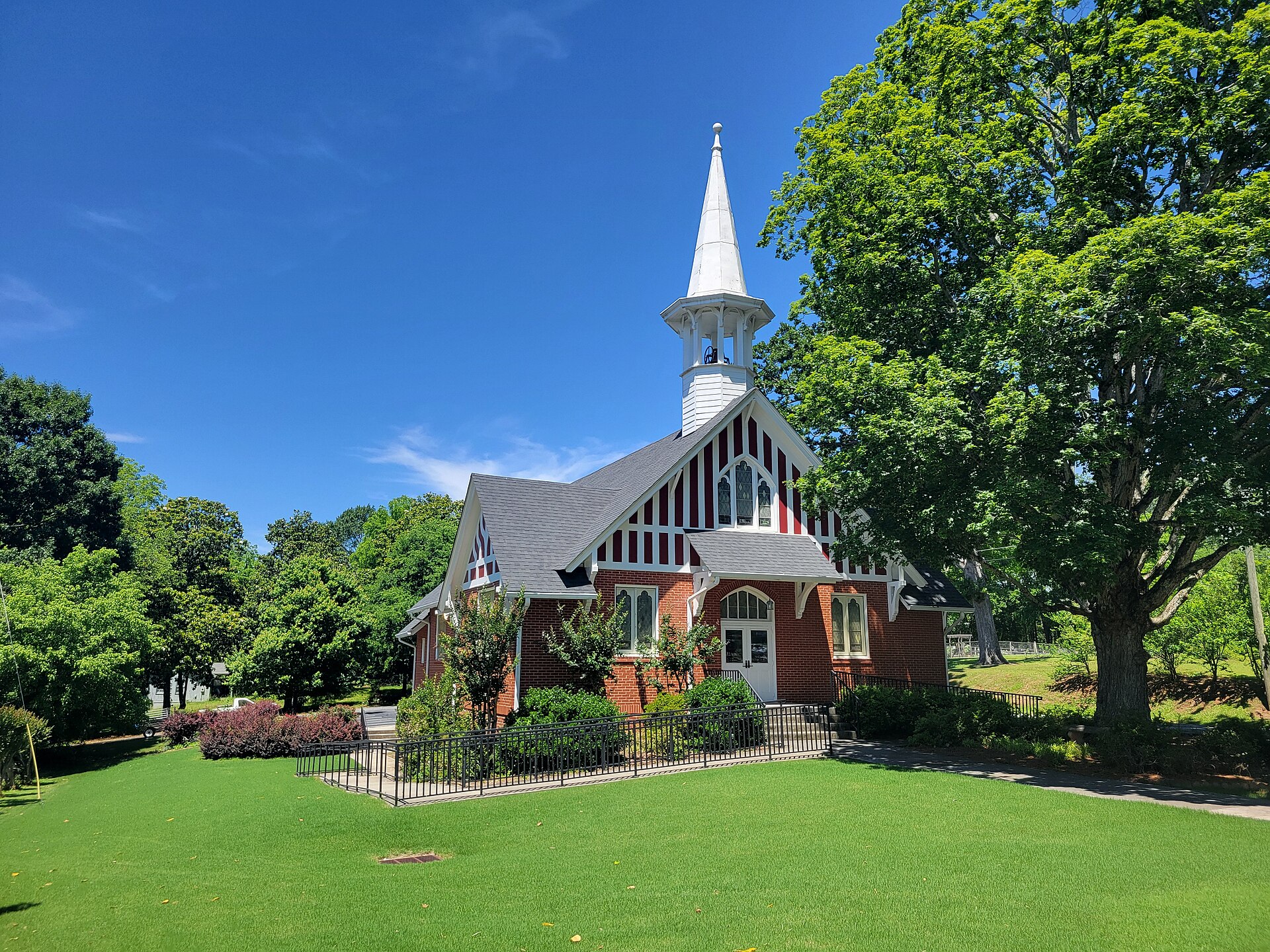
The North American Division of Seventh-day Adventists has announced a research conference titled "The Remnant and the Republic: Prophetic Identity, Public Witness, and the Challenge of Christian Nationalism," according to the division's own news page.
Michael W. Campbell, the division's director of Archives, Statistics, and Research, said in that announcement that "Adventists have a distinctive history of thinking about religious liberty, political power, and the relationship between church and state." Bettina Krause, editor of Liberty magazine, pointed in the same announcement to what she described as a deep inheritance of Adventist advocacy on questions of religious freedom.
The registration listing published by AdventSource describes the subject matter as "Adventism's historical and contemporary relationship with the political realm" and names the intended audience as "Pastors, Educators, Students, Church Leaders, and Members."
The record next to the claim
The same division has separately published a release that contains this sentence: "The separation of church and state has been our longstanding conviction."
The web address the division gave that release is https://www.nadadventist.org/news/adventist-church-urges-federal-religious-liberty-commission-to-preserve-church-state-separation/. Daily Pol is not printing a headline for the release, and is not asserting in its own voice what the release urged or whom it addressed: the material held for this piece preserves the address and a handful of sentences, not the headline, the date or the body text.
That release also contains the phrase "risks weakening one of America's most important constitutional safeguards for religious liberty." The held material preserves that phrase without the sentence around it. What document, provision or passage the phrase describes, and who wrote or said it, are not established by the record available here, and this piece does not fill the gap by inference.
What could not be confirmed
An account published by Religion Unplugged, at an address that identifies its subject as the first draft report of a religious liberty commission ordered by the president, refers to a "224-page report." The material held for that account is likewise fragmentary and carries no sentence attributing the report's contents.
Secondary coverage quoting that report was reviewed for this piece and is not quoted here. Nothing in the held material establishes which sentences belong to the report itself and which belong to the outlets describing it, and a claim-versus-record piece cannot put words in a federal document's mouth on the strength of a fragment. That is a limit on this article, stated rather than worked around. It is also the reason the record half of this story rests on the division's own words rather than on the document the division appears to have been responding to.
The measurable backdrop
The conference title names Christian nationalism. The division's own material held here does not measure it. Survey data does.
PRRI, in its 2025 American Values Atlas analysis, reported: "One-third of Americans qualify as Christian nationalism Adherents (11%) or Sympathizers (21%), compared with two-thirds who qualify as Skeptics (37%) or Rejecters (27%)." PRRI stated that the survey drew on a random representative sample of 22,111 adults aged 18 and up across all 50 states, with fieldwork between February 28 and December 8, 2025. In the press release announcing the 50-state findings, PRRI stated that its "new analysis demonstrates a strong relationship between the spread of Christian nationalist ideology and Republican representation in state legislatures."
That is the checkable scale of the thing the conference proposes to discuss: not a mood, but a measured share of a large national sample, with a stated field period and a stated method.
Analysis
The two documents are written in different registers, and the difference is worth noticing.
The announcement is exploratory. Campbell's noun is history. The registration listing's noun is relationship. The framing is that of a question being opened for study by pastors, educators and members.
The second release is settled. "The separation of church and state has been our longstanding conviction" is not a question under examination; it is a position reported as already held, in a document the division published at an address describing an appeal to preserve that separation.
Those registers are not in conflict. An institution can hold a position and still convene scholars to test how it applies. But a reader deciding what the conference means should read the two side by side rather than one at a time, because the conference's central question - what Adventist public witness should look like now - has an answer already on the division's own website, in one sentence, published under its own name.
The honest reading is narrower than the tempting one. The record shows a stated conviction and an announced conference. It does not show, and this piece does not claim, that one was organized because of the other.
What to check, and when
A falsifiable prediction: by December 31, 2026, any report the North American Division publishes on this conference at nadadventist.org will restate church-state separation as the division's position rather than announce a revision of it. If the division publishes proceedings that revise the sentence quoted above, this prediction is wrong, and the same website will show it.