Economy & Business · The Record
CBO scores the Chiricahua renaming at under $500,000 through 2031
House Report 119-543 puts a six-year ceiling on the federal cost of H.R. 6380. The economic promises around the redesignation sit in separate reports, and the record does not join them.
The fiscal record for H.R. 6380, the Chiricahua National Park Act, is one sentence long. The Congressional Budget Office estimate reproduced in House Report 119-543 reads: "Using information about the costs of similar requirements, CBO estimates that implementing the bill would cost less than $500,000 over the 2026-2031 period."
That is a ceiling on six years of federal implementation cost, as scored. It is also the only figure in the record.
What the committee record says
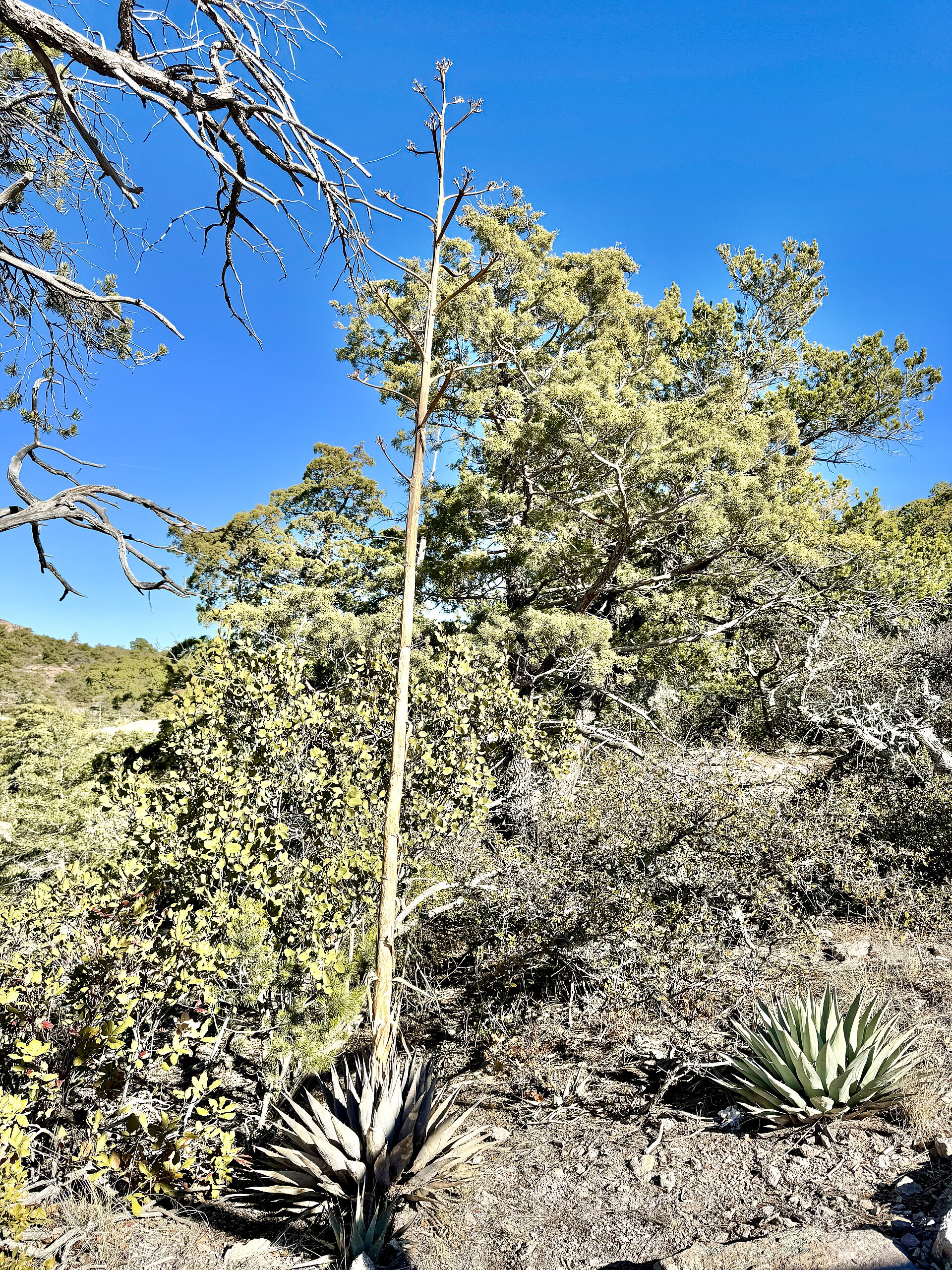
House Report 119-543 states that the purpose of the bill, as ordered reported, is to redesignate Chiricahua National Monument in Arizona as Chiricahua National Park. A separate sentence in the same report identifies the sponsor as Rep. Juan Ciscomani (R-Arizona) and states that the change would make the site the country's 64th national park and the fourth national park in Arizona. The report describes a 12,000-acre monument, of which more than 85 percent is designated wilderness.
On committee action, the report states that the bill, as amended, "was ordered favorably reported to the House of Representatives by unanimous consent." That is the stage the primary record in front of Daily Pol documents.
There is an earlier round. Senate Report 117-88, accompanying S. 1320 in the 117th Congress, describes the same redesignation of roughly 12,000 acres of natural and cultural heritage in Cochise County, Arizona, at a site established by presidential proclamation under President Coolidge in 1924. That report also records that the committee had not yet received CBO's estimate of the bill's cost as ordered reported. The redesignation advanced through a Senate committee once before any CBO number was attached to it. The under-$500,000 figure is new information in a debate that is not.
The claims, and where each one sits
KGUN 9 in Tucson carries this line: "A National Park designation would bring more visitors, support local jobs, and strengthen the entire economy of rural Arizona." The identical sentence appears verbatim in the ABC15 Arizona snapshot as well. The two outlets are running one line, not two independent assessments, and neither excerpt names the speaker.
ABC15's report also carries a statement that the measure would "protect our public lands while also bringing more tourism to our region, boosting economic development." That excerpt likewise does not identify who said it.
A report from AZPM (Arizona Public Media) carries the fiscal version of the pitch: that the redesignation "does not require additional federal funding attached to it," and that it "would not impose additional financial burdens on taxpayers or expand federal jurisdiction." The same report carries a statement that park status would likely speed growth in the tax base for the park and the city, and it reports that Willcox has struggled to keep pace with other communities since the 2008 recession. The AZPM snapshot Daily Pol worked from carries no date, no bill number and no committee identification, so which bill those statements address cannot be established from it.
Against the pitch, KGUN 9 also carries an objection: that designation would draw more foot and vehicle traffic and more construction on the land, which "would jeopardize burial sites." That excerpt does not name the speaker either.
These statements sit in three separate reports published at different moments. Nothing in the record before Daily Pol shows anyone citing the CBO estimate for H.R. 6380 in support of an economic-benefit claim. The fiscal statements and the tourism statements are documented here as what they are: separate, unjoined, and neither one a test of the other.
Analysis: what the estimate measures
The CBO line answers one question - what implementing this bill costs the federal government over 2026-2031. It is a bound on implementation cost. It is not a forecast of visitation, employment or local tax receipts, and it contains no method for producing one. Read as evidence about the economy of Cochise County, it is being read past what it measures.
The reverse holds too. The tourism statements carry no figure, no time horizon and no method, so there is nothing in them to check against the score. A reader who wants to know whether the redesignation pays for itself locally will not find the answer in either set of documents.
One clause in the ABC15 snapshot states that the Park Service would increase the number of personnel managing and patrolling the park. In the excerpt available to Daily Pol that clause stands alone, with no subject and no attribution, so it cannot be established whether the outlet is asserting it or relaying an expectation held by someone else. Either way it is an expectation about staffing, and the CBO estimate does not price staffing at the park. The estimate bounds the cost of implementing this bill; a later change in park operations could be funded through the Park Service's regular appropriations without contradicting that number. The record supports no stronger conclusion than that.
Analysis: how to read a park visitation percentage
No source in this record compares Chiricahua to any other park, and no snapshot here says whether or when any park unit changed designation. What follows is Daily Pol's own arithmetic on published National Park Service figures, offered as a caution about how growth percentages of this kind are assembled.
The NPS release for southern West Virginia reports that visitation across three park sites totaled 1,352,666 in 2019 and 1,918,438 in 2023, an increase of 41.8 percent. That headline figure is an aggregate of three units, not one park's growth. The components in the same release are 1,709,623 visitors at New River Gorge National Park and Preserve, 187,223 at Gauley River National Recreation Area and 21,592 at Bluestone National Scenic River, all for 2023. They sum exactly to 1,918,438.
Year over year, New River Gorge itself rose 7.12 percent from 1,595,923 in 2022. Bluestone rose 53 percent - the largest percentage in the release - from a 2022 base of 14,113 visitors, a gain of roughly 7,500 people. NPS puts total national park visits at 325.5 million in 2023, up 4 percent over 2022.
Two things follow for anyone reading a percentage in a designation debate. The biggest percentages tend to sit on the smallest bases. And a rate covering several units says very little about any one of them.
Comment
Daily Pol did not request comment for this piece. Every statement examined here is quoted from published reports or from the committee record, and the excerpts available to Daily Pol do not identify the speakers of the AZPM, ABC15 or KGUN 9 lines.