Culture & Society · The Record
Column tells Alaskans 22 states backed Amish schools; the two briefs list 20 and 21
An Alaska Watchman opinion piece rests its local hook on a 22-state amicus brief. The Second Circuit docket records 20 states and the Supreme Court filing 21 - with Alaska among them.
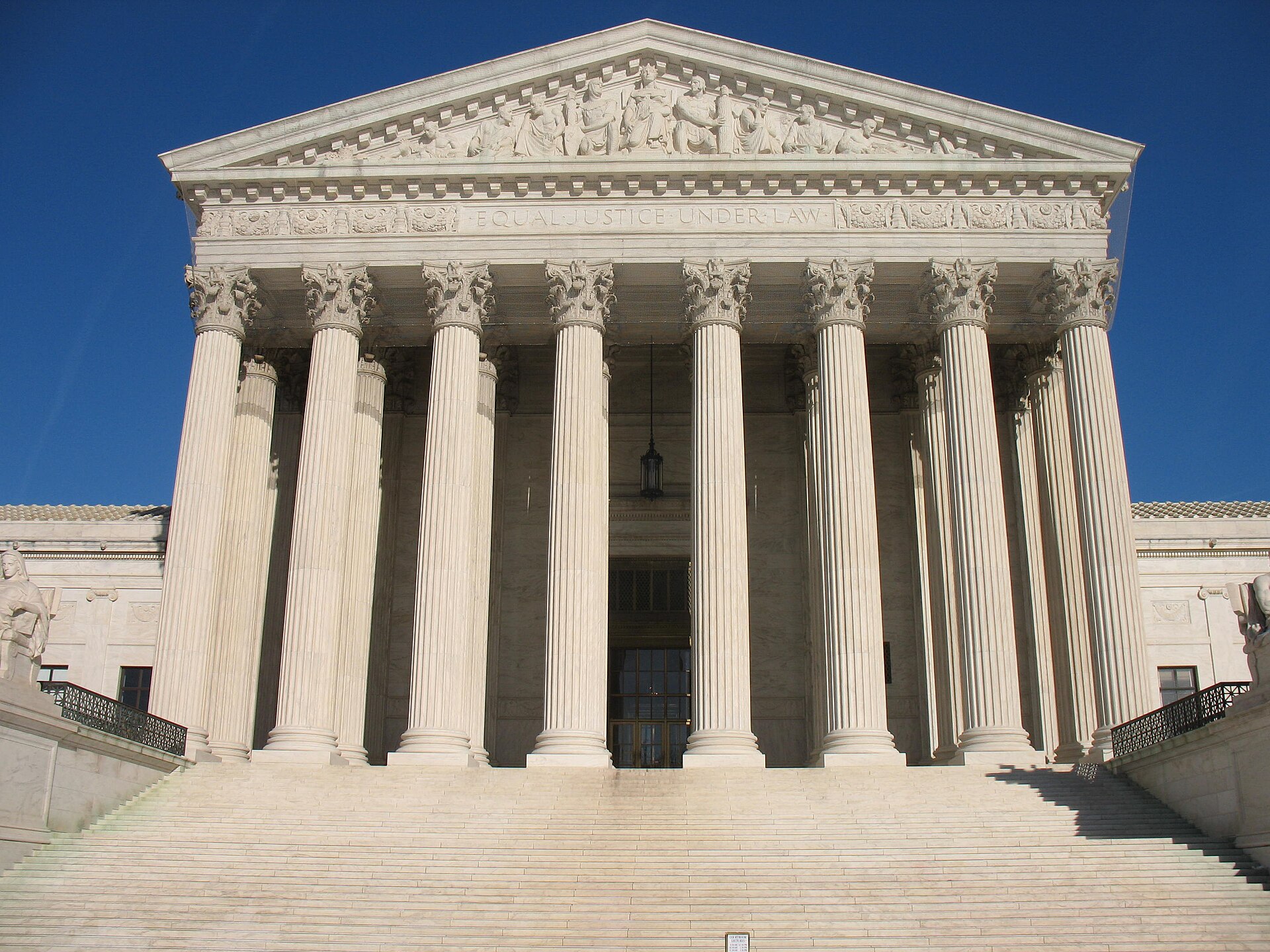
An opinion column on the Alaska Watchman's site asks Alaskans to read a New York vaccination fight as their own, and hands them a fact to carry away: twenty-two states, Alaska among them, formally sided with three Amish schools fined for enrolling unvaccinated children. The state involvement is real and documented. The number is not. Two state briefs are on the record captured here - one at the Second Circuit, one at the Supreme Court - and they carry 20 states and 21 states.
The distinction is worth the words because the claim is doing work. The piece is an argument rather than a news report, and the page says so, labelling the views as the author's own. Its case is that New York's repeal of the religious exemption from school immunization requirements, and the fines that followed, amount to an attack on religious liberty that Alaskans should treat as a warning about their own state. The amicus brief is what makes the argument local: it is the sentence that tells an Alaska reader their government already took a side. The research file identifies the column's author as Linda Boyle; the captured page does not carry that identification. The publication date of Sept. 4, 2026 is read from the article's URL, not from a dateline in the captured text.
The underlying litigation is Miller v. McDonald. The Second Circuit opinion names the plaintiffs as Joseph Miller, Ezra Wengerd and Jonas Smucker, together with Dygert Road School, Pleasant View School and Shady Lane School, suing James V. McDonald in his official capacity as New York's commissioner of health. The column describes the plaintiffs asking a three-judge panel for a religious exemption under the First and Fourteenth Amendments, and losing in March 2025.
The first of the two state briefs sits on the Second Circuit's docket in No. 24-681. The docket record, as published by CourtListener, enters it on May 20, 2024 as an amicus brief filed "on behalf of State of Alabama and 19 Other States". Alabama plus nineteen is twenty.
The second is at the Supreme Court, in No. 25-133, and it is the filing on which Alaska's name actually appears. The document carries the caption "BRIEF OF ALABAMA AND 20 OTHER STATES AS AMICI CURIAE IN SUPPORT OF PETITIONERS"; the Supreme Court's own docket describes the filers the same way, as "Alabama and 20 other states". The signature block lists them in full: "Alabama, Alaska, Arkansas, Georgia, Idaho, Iowa, Kansas, Kentucky, Louisiana, Missouri, Montana, Nebraska, North Dakota, Ohio, Oklahoma, South Carolina, South Dakota, Tennessee, Texas, Virginia, and West Virginia" - twenty-one names, with Alaska second. The brief carries the name of Steve Marshall, Attorney General of Alabama. Its filing date of Sept. 2, 2025 is encoded in the docket URL for the PDF; the captured text of the brief itself carries no date.
So the Alaska half of the sentence holds and the count does not. Whichever brief is meant by "the original" - the 2024 one at the Second Circuit or the 2025 one at the Supreme Court - the figure is 20 or 21. In the record captured here it is 22 under neither, and the only movement the captured filings show is from twenty states to twenty-one.
The rest of the column's factual spine survives the check, which is worth saying as plainly as the error. The Second Circuit opinion records fines totalling $118,000, the same figure the column cites, and itemises them: $52,000 against Dygert Road School, $46,000 against Twin Mountain School and $20,000 against Shady Lane School. The opinion also shows the arithmetic behind them. Each violation of § 2164 is subject to a fine of up to $2,000, and the opinion states that the health department calculated the two larger fines by multiplying each school's number of out-of-compliance students by that maximum, assuming a single day of non-compliance per student. The department concluded in March 2022 that the schools had let some students attend past the statute's fourteen-day grace period without a certificate of immunization.
One apparent mismatch is not one. The column names "Pleasant View in Heuvelton" while the opinion books a $46,000 fine against Twin Mountain School. The opinion records Pleasant View School a/k/a Twin Mountain School, which resolves it; a careless check would score it as an error and be wrong.
The column's most load-bearing quotation also holds. It attributes to the panel the finding that a blanket religious exemption would produce "clusters of low vaccination rates and an inability to achieve herd immunity" in certain communities. That wording appears in the court's own decision, in a sentence stating that the system of religious exemptions impeded the immunization law from functioning and produced exactly that result. It is the court's reasoning, quoted accurately, not a paraphrase of a party's brief.
The procedural history is where the case now stands. The Supreme Court docket in No. 25-133 records the Second Circuit decision date as March 3, 2025 and then the order: "Petition GRANTED. Judgment VACATED and case REMANDED for further consideration in light of Mahmoud v. Taylor, 606 U.S. 522 (2025)". On that second look the Second Circuit affirmed again, ending its opinion by affirming the district court's judgment. A post on Religion Clause summarises the ruling in fragments - the law is "neutral on its face" and shows "no anti-religious bias" - but the captured page carries no author name and no date, and the description of it as reporting a reaffirmance, along with its July 2026 date, comes from the post's URL and title as recorded in the research file rather than from the captured body.
The reasoning the court gave is narrower than either side's rhetoric. The opinion holds that a school attendance requirement "does not regulate what children are taught, does not require them to affirm any belief", and that a "greater burden in degree is not necessarily the same burden in kind" - a public health condition on in-person attendance, in the panel's framing, rather than an instrument of ideological instruction. The opinion also records the plaintiffs' beliefs on their own terms, including their view of abortion and vaccine development.
The human stakes are quoted in the column and only there. It quotes Aaron Siri, whom it describes as one of the attorneys representing the plaintiffs, saying: "The only way the community would be able to meet the fines is if the state confiscated their land to pay them." The column goes on to argue in its own voice that seizing private property is a mark of socialism and communism and that a person's body counts as property too - assertions belonging to the author, not to any filing. It also states that then-Governor Andrew Cuomo rescinded religious exemptions for school vaccine mandates after an outbreak the captured excerpt does not describe, making New York the second state to do so after California.
An observation offered as analysis, grounded in the two filings above: the gap between 21 and 22 is small enough to look pedantic and consequential enough to matter, because that sentence is the column's only claim about Alaska. A reader persuaded by it has been told something true - their state's attorney general signed - by way of a number that no captured document supports. Arguments that ask readers to check the record are the ones that most need their arithmetic to survive a check.
What resolves next is on the public dockets. The Second Circuit has affirmed a second time, in an opinion the research file dates June 30, 2026 though the captured text carries no date, which leaves petitioners a fresh trip to the Supreme Court under a new number. The falsifiable version: by Dec. 31, 2026, no state amicus brief in this litigation will list 22 states. That is checkable at supremecourt.gov's docket search and on the Second Circuit docket for No. 24-681 - and so is the other open question, whether the column's page still reads twenty-two.