Culture & Society · The Record
Church counts 85,695 friends of other faiths in seminary and institute; the release announcing 1 million put the figure near 75,000
The Church of Jesus Christ of Latter-day Saints says enrollment among friends of other faiths has nearly doubled in two years. Its own 2026 releases publish no starting point, and two different two-year growth totals.
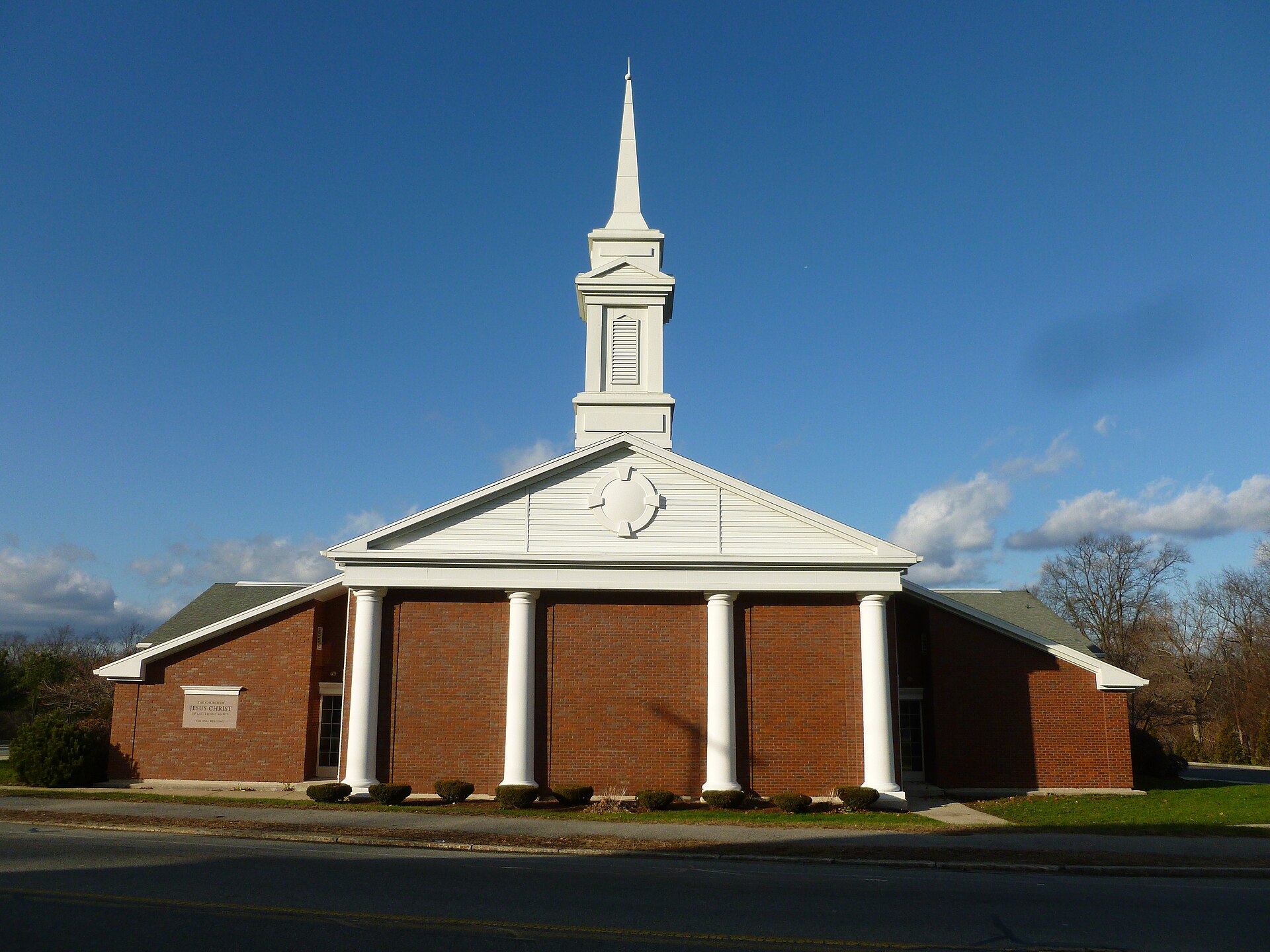
The Church of Jesus Christ of Latter-day Saints has published a precise count of something that usually resists counting. A release on the Church's Newsroom site puts worldwide enrollment in its seminary and institute programs above 1,090,000 and states that 85,695 of those enrolled are friends of other faiths, whose enrollment has "nearly doubled in the past two years." The release presents the number as an occasion: institute, the Church's religious education program for young adults, is marking a century, and Seminaries and Institutes of Religion is launching an initiative called "Invite a Friend."
The claim traveled fast. Church News carried the count on 13 August 2026 and Deseret News on 14 August, both dates taken from the reports' own URLs. Deseret's account supplied a mechanism and a cause, describing growth driven by one-on-one invitation and behind it young Latter-day Saints acting on their prophet's words. It also set the new figure against an older one, reporting that worldwide enrollment passed 1 million in March, that only about 75,000 of those enrolled at that point were of other faiths, and that the number has "grown by more than 10,000 in the last five months." For readers who do not know the programs, Deseret laid out their reach: seminary takes in youth aged 14 through 18 for weekday scripture study during the school year, and institute enrolls young adults aged 18 through 35 in classes that meet once or twice a week.
The invitation being credited is itself on the record. A separate Newsroom release, titled for institute's 100 years, attributes to President Dallin H. Oaks, president of the Church, a direct appeal to young adults: "My dear young adults, in a day of noise and confusion, I invite you to consistently attend institute." In the same passage he encourages them "to invite friends to share in these same blessings." Church News, reporting on the programs on 13 August, put the same emphasis in institutional terms, stating that when a young person personally invites a friend to a class or activity, "it carries special power."
That is the claim, and it is a claim about arithmetic as much as about faith. Doubling is a measurable event. So the record worth testing here is the Church's own set of 2026 publications - four Newsroom releases and two Church News reports - read side by side rather than one at a time.
Start with what the doubling claim needs and does not have. The release announcing 85,695 prints no starting point. Half of 85,695 is 42,847.5, so "nearly doubled" implies a base somewhere near that figure two years earlier, and no passage this desk holds publishes such a number. The nearest published prior figure for friends of other faiths comes from the Newsroom release announcing the 1 million milestone, which counts "approximately 75,000 friends enrolled from other faiths." Deseret News dates that milestone to March 2026. Between roughly 75,000 and 85,695 the change is about 14 percent, which is the growth Deseret itself describes as more than 10,000 in five months. The doubling and the five-month climb are not the same measurement, and the releases do not say how they relate.
They also do not say what kind of count 75,000 is. Deseret reads it as a snapshot of who was enrolled in March. Read instead as an annual enrollment total for a year, it would not be comparable to a current headcount at all. The distinction decides whether the growth rate is remarkable or ordinary, and the passages leave it open.
The same difficulty appears in the totals for all students, not just friends of other faiths. The Newsroom release on the 1 million milestone reports "nearly 200,000 new students joining" over two years. Church News, on 30 March 2026, printed a different two-year total in the words of the program's administration: "After five years of decline, we have added 57,000 additional students in the past two years." The two figures are inconsistent, and they cannot be reconciled from the published passages. Innocent readings are available and are probably correct - one figure may count institute alone and the other both programs, or one may count enrollments and the other net change - but neither passage states which basis it uses, which is precisely why the two can sit in print together without either being wrong.
Chronology is the third strand. The 30 March report dates the turnaround to a point after five years of decline, while the August release describes "Invite a Friend" as an initiative now being launched. Whatever reversed the trend, it was already at work before the initiative the August release announces. The 30 March report also describes effort of an older kind, noting coordinators "who are leaving their offices and literally going to homes and inviting young single adults to come to institute."
Two further pieces of arithmetic follow from the record and appear nowhere in the passages this desk holds. Both are analysis, performed with the Church's own published numbers. First, proportion: 85,695 out of more than 1,090,000 is about 7.9 percent, roughly one enrollee in thirteen. The interfaith story is real, and it is a minority slice of the program. Second, outcome: Church News printed the program's own conversion rate, "about 1 in every 3 who enroll in a seminary or institute class will eventually be baptized." Applied to all 85,695, that rate yields roughly 28,565 people over time - about 7 percent of the 385,490 converts the Church's 2025 Statistical Report records for a single year, against a total membership of 17,887,212, 78,596 full-time teaching missionaries and 204 temples in operation.
That wider picture has at least one reading from outside the Church's own publications. The Salt Lake Tribune, reporting on 4 April 2026, said of the 2025 convert total that it "blew the previous record out of the water," and printed an assessment that the surge tracked something broader than any one program: "It seems to be more related to receptivity." The passages this desk holds do not name the speaker.
None of this shows that a figure was inflated. Every number examined here is the Church's own, published voluntarily, and the discrepancies have plain explanations available to anyone who defines the terms. What the record shows is that the terms have not been defined: the growth claim that carried the story across two newspapers rests on a starting point that no release publishes, and the program's headline expansion is described by two totals that cannot both be measuring the same thing in the same way.
There is a date on which more of this becomes checkable. The Statistical Report is the annual document that would place enrollment beside baptisms in one place; the 2025 edition was in circulation by early April 2026, when the Tribune reported on it. By 30 April 2027, a reader can look at the 2026 report, and at whatever release accompanies it, and see whether either publishes a friends-of-other-faiths count, a stated basis for it, or the two-year baseline that the word "doubled" has been carrying without one.