Culture & Society · The Record
Supreme Court sets Nov. 3 argument in Colorado religious preschool case
Becket says Colorado "slammed the door" on religious families. The record shows a program the Deseret News reports at least 68 faith-based schools took part in, and an appeals court ruling that the state's rules are neutral and generally applicable.
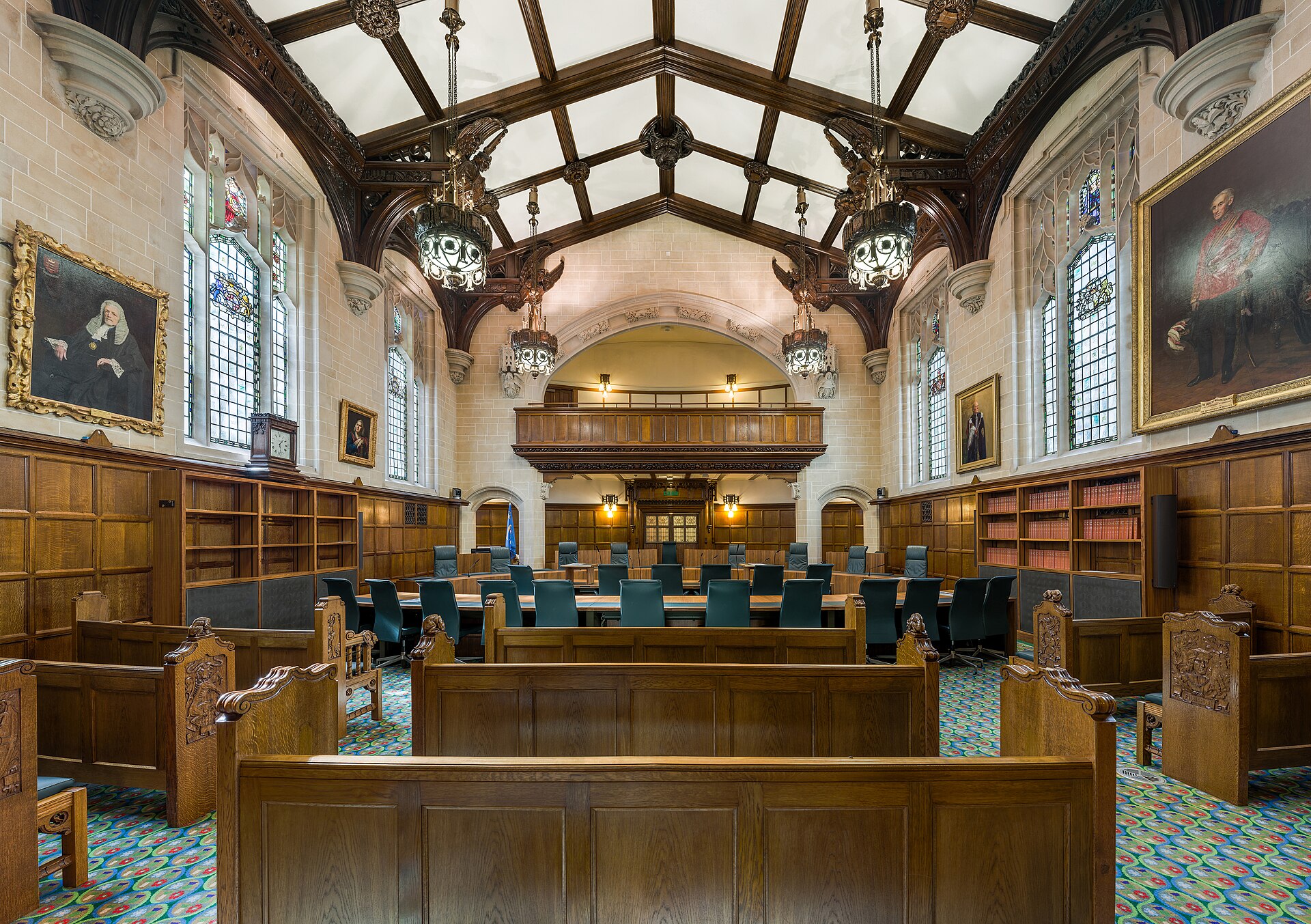
The Supreme Court's November calendar gives it one line. Argument in St. Mary Catholic Parish v. Roy, No. 25-581, is set for Nov. 3, and SCOTUSblog's post announcing the sitting describes what will be heard that morning as "a Catholic preschool's challenge to its exclusion from a Colorado preschool program."
Between that line and the way the case has been talked about since review was granted there is a measurable distance, and it can be measured in two places. The first is what the challengers' own announcement says Colorado did, set against the program's terms and the litigation record. The second is the vocabulary of a landmark reconsideration, set against the questions the court's docket page at SCOTUSblog actually states.
Start with the claim, because it came first. Publishing as the court took the case in April 2026, the Becket Fund for Religious Liberty put the challengers' position into a single image: a door. "Colorado promised free preschool for all, then slammed the door on families who chose a religious education for their children," the statement reads. A client family's words in the same statement narrow the ask to something almost domestic: "All we want is the freedom to choose the best preschool for our kids without being punished for our faith." The argument being made there is about access rather than doctrine - a benefit offered to everyone, withheld from a family because of the school it chose. That is a claim a reader can weigh, which is why it is worth weighing rather than repeating.
The program it describes is a state benefit with terms attached. Reporting in July on the briefs urging the court to end the case, the Deseret News describes Colorado's universal preschool as including 15 hours of free instruction a week. CBS News's account of the grant puts the same figure as up to 15 hours each week - a ceiling where the other reads as a flat entitlement. It is a small difference, and it is the sort of thing worth settling before anyone builds an argument on the number.
The condition in dispute governs enrollment. Participating schools cannot ban children of same-sex couples or children based on their gender identity or sexual orientation, the Deseret News report states. CBS News lists the covered categories more fully, including religious affiliation, race, ethnicity, sexual orientation and gender identity, and carries two phrases describing how the program is meant to sit with religious providers: it "does not require providers to surrender their religious character," and it "affirmatively includes religious preschools regardless of their curriculum or who teaches it." The excerpts available to this desk do not identify who is speaking in those phrases; they are quoted here as the report's own words, not as the state's.
On whether religious schools are in the program at all, the record answers plainly. "Faith-based preschools have always been welcome to participate in Colorado's Universal Preschool and many already do," reads a statement quoted in the same Deseret News report, which puts participation at at least 68 faith-based schools that took part in the state-wide program. The excerpt does not tie that count to a school year, so it is a floor from an unspecified period rather than a current census. It is also the only participation figure in the record before this desk, and it is not zero.
Set beside each other, the two halves conflict less on the facts than on the scope. The door in the statement is the whole program. The door in the record is one enrollment term inside it, applied to providers who otherwise keep their religious character - a distinction that decides how much of the case is about religion as such and how much is about a single clause in a provider agreement.
The dispute is also not new, which the door image tends to obscure. The Tenth Circuit's docket for St. Mary Catholic, et al. v. Roy, et al., No. 24-1267, records the case as arriving from the United States District Court for the District of Colorado - Denver, No. 1:23-CV-02079-JLK, with the appellate entry dated Tuesday, September 30, 2025. SCOTUSblog's April analysis of the petition records the outcome below in one word: the appeals court affirmed.
What was affirmed matters more than that it was. The appeals court concluded that under the Supreme Court's 1990 decision in Employment Division v. Smith, Colorado's rules are "neutral and generally apply to every preschool, regardless of religious affiliation," in the summary SCOTUSblog's November announcement gives of the ruling; the April analysis reaches for the same test's language, calling the rules neutral and generally applicable under Smith. Whatever else the court below decided, it did not find a rule aimed at religion.
Which brings the case to what the justices will consider. SCOTUSblog's case page for No. 25-581 states two questions. The first asks "Whether proving a lack of general applicability under Employment Division v. Smith requires showing unfettered discretion or categorical exemptions for identical secular conduct." The second asks "Whether Carson v. Makin displaces the rule of Employment Division v. Smith only when the government explicitly excludes religious people and institutions."
Read plainly, both of those questions operate inside Smith rather than upon it. One asks what a challenger must show to prove a rule is not generally applicable under Smith; the other asks how far a different precedent, Carson v. Makin, displaces Smith's rule. Neither of the two asks whether Smith should stand. That is a narrower frame than the vocabulary that has surrounded this case, in which SCOTUSblog's April analysis discussed "whether Smith itself retains vitality" and described a path on which deciding the general-applicability question "could obviate any need to resolve" it.
How much weight that observation carries depends on a document this desk could not obtain. The excerpts in hand capture two questions from the case page, and the November announcement quotes a numbered question list that begins at "(1)" with no second item visible - which shows the capture is partial. So the honest statement is not that the court declined to take up Smith's survival. It is that both questions on the record available here ask how Smith applies, and that the full order granting review has not been read at this desk.
Two things resolve on a date. The argument itself is one: on the record above, the Nov. 3 session in No. 25-581 should proceed on the general-applicability question and the Carson v. Makin question as stated on the case page. That is falsified if the case leaves the November calendar, or if an order issued before argument adds a question asking whether Employment Division v. Smith should be overruled. Either would be visible on the docket by Nov. 4.
The other is available now, and it is the cheaper check. Readers who want the record rather than the framing can start with the Tenth Circuit docket for No. 24-1267, whose entry is dated Tuesday, September 30, 2025, and read what that court said Colorado's rules are - before hearing, on Nov. 3, what the justices make of it.