Culture & Society · The Record
Khan wins Connecticut's 2nd Senate District primary with 41% as McCrory finishes third at 27%
Sen. Doug McCrory called the forensic audit of a Hartford nonprofit biased against him and described the organization's daily decisions as not his to monitor. The audit sentence quoted by the Connecticut Mirror, and a primary that put him third, are the checkable record beside that.
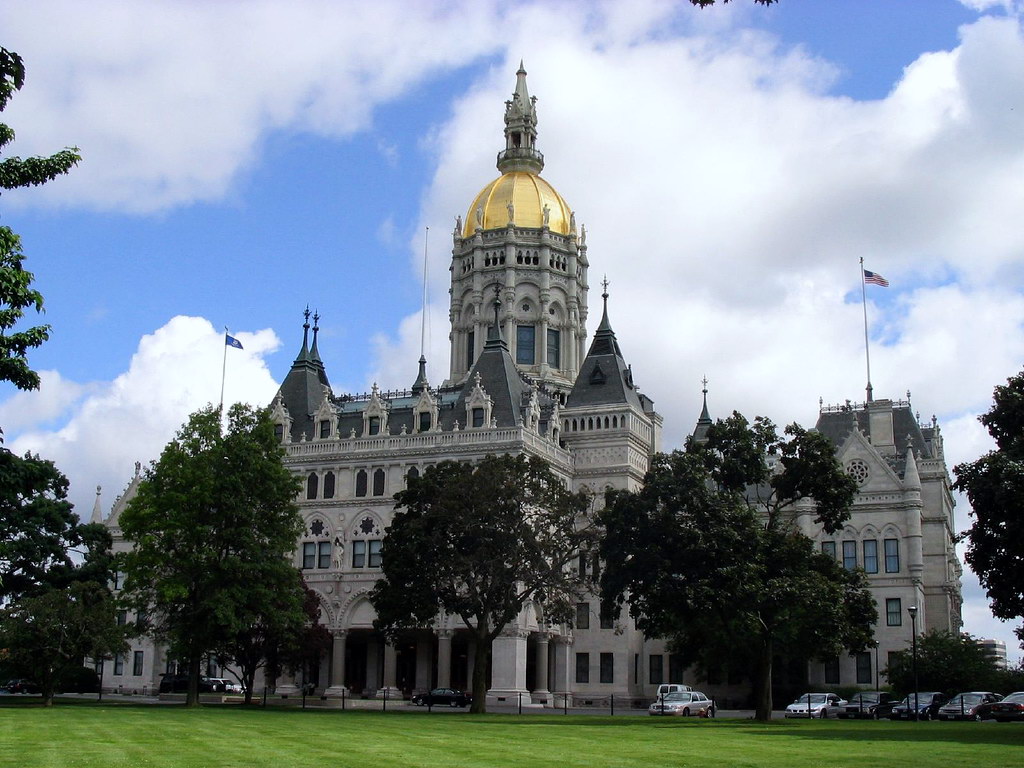
Connecticut's 2nd Senate District held a Democratic primary on August 11, 2026, and the arithmetic reported afterward is simple enough to state in one line. The Connecticut Business & Industry Association's compilation of the state's 2026 primary results records state Rep. Maryam Khan, a two-term Windsor Democrat and the party's endorsed candidate, winning with 41% of the vote; Windsor Board of Education chair Ayana Taylor at 32%; and Sen. Doug McCrory, a five-term incumbent, finishing third with 27%. That page is a compilation rather than a certified return, and no canvass from the Secretary of the State was reachable for this piece, so the percentages appear here as CBIA reports them.
A five-term incumbent finishing third is a fact about an election. What makes it worth setting down slowly is the claim it landed on top of, and the record that had been sitting beside that claim since the winter.
The claim was stated plainly, and more than once. In a statement quoted by WFSB Channel 3 Eyewitness News, McCrory stated: "I engaged in no wrongdoing and expect all concerns to prove unfounded." The same statement did not merely dispute the arithmetic of the document that had prompted the questions - a forensic audit of a Hartford nonprofit funded through the state's Community Investment Fund - but disputed its motive: "This audit contains several inaccuracies, makes unfounded claims, and demonstrates clear bias against me." The web address of that WFSB report dates it to March 4, 2026 and titles it for his stepping away from the state investment fund board amid an FBI investigation. The page text captured for this piece carries the statement and not the reporting around it, so the date and that framing are drawn from the address rather than from text this desk read.
Seven weeks later the claim took a second form, about proximity rather than conduct. In an April 26, 2026 account of documents connected to the Blue Hills Civic Association, the Connecticut Mirror quoted McCrory describing himself as removed from how the organization ran day to day. Set beside the March statement, the position holds together: no wrongdoing, an audit he considers slanted against him, and a nonprofit whose internal decisions were not his to make. Connecticut Public, reporting in January, described him as an influential Democrat representing parts of Hartford, Bloomfield and Windsor.
The record that tests the second half of that position was published three months before he stated it. On January 20, 2026, the Connecticut Mirror reported on the forensic audit of Blue Hills and quoted a sentence that goes directly to the question of who decided. This desk did not obtain the audit itself - its text could not be extracted from the document - so every line from it quoted here is quoted as the outlets that read it published it, and the January date is the date of that coverage rather than a release date the desk verified.
The quoted finding is narrow, and the narrowness matters. It concerns who directed allocations and what paperwork did not travel with them - signed memoranda of understanding, projected budgets ahead of payment. It is not a finding that the senator received anything, and it does not name a crime.
The same day, WFSB reported the auditors' broader characterization of the organization's controls: "pervasive governance failures, systemic internal control weaknesses, and patterns of conduct that strongly suggest potential fraud." The word doing the work in that sentence is potential. The figure most often attached to that coverage - $208,000 in unsupported payments - appears in the report's own web address rather than in the page text this desk captured, and is carried here on that basis. The same coverage describes work the auditors judged either not performed or represented as far more than it was, with what was delivered amounting to "a 13-minute YouTube video and a four-slide PowerPoint presentation," and states that the auditors could not reach a conclusive determination about most of the grant money the nonprofit disbursed. Connecticut Public's January 21 account quoted the report finding conduct that appeared to "strongly suggest potential fraud and misappropriation of public funds by BHCA and related parties."
No source in this piece's record set records a criminal charge against McCrory. On that basis, and as the desk's own statement rather than a document's, this piece reports that he has not been charged with a crime. Blue Hills Civic Association is a community organization; the findings quoted here concern its controls and its paperwork, and an audit that could not trace most of a grant stream is describing an absence of records, not a proven scheme.
What the Mirror published in April was the paper trail underneath the audit's sentence. Among the documents is one headed "PER CONVERSATIONS WITH SENATOR MCCRORY." Another line in that reporting raises how the nonprofit would justify a consulting expenditure of $600,000.
View the data
| Value (% of votes cast) | |
|---|---|
| Maryam Khan | 41 % of votes cast |
| Ayana Taylor | 32 % of votes cast |
| Doug McCrory | 27 % of votes cast |
Source: Connecticut Business & Industry Association, 2026 primary results · Daily Pol graphic
Between the audit coverage and the primary, the state changed the rules governing money the legislature directs to named recipients. In March, the Office of Governor Ned Lamont published a release welcoming a committee vote: "I applaud today's vote by the Government Oversight Committee and I urge both chambers of the legislature to approve this bill so that I can sign it into law." A May release from the same office announced the signing of legislation increasing transparency on earmarks. In it, Lamont stated that "I put a proposal on the table requiring this information be made available to the public every time these types of spending decisions are made," and thanked "the legislature for unanimously voting to send this bill to my desk so that I could sign it into law today." Unanimity, here, is the governor's own characterization published by his own office. No roll call, chamber tally or bill number was obtainable for this piece, and no independent account of the vote appears in the sources below. Whether McCrory voted on the measure is unestablished, and this piece makes no claim either way.
The campaign that followed did not keep the audit at the center. In CT News Junkie's primary-night account, Khan's argument was about schools: "In all of the doors that I've ever knocked in this district, not one time did I hear a family say that they want more choices for schools." The same account carries a line urging the incumbent aside - "McCrory should step aside. The FBI investigation is too much. He can't give his full attention to doing his job." - though the excerpt available to this desk does not identify who said it. The Connecticut Mirror's account of the same night carries campaign statements without attaching speakers to them in the passage available here, among them: "I'm not as disappointed as I thought I was. But hey, we did the best we can."
Read together - and this is the desk's reading, not a finding by anyone else - the April self-description and the January audit sentence cannot both be accurate. Either allocations were largely determined by the senator, as the document quoted by the Mirror states, or the organization's day-to-day decisions were not his to monitor, as he stated. Nothing in the record available here adjudicates which, and a primary result does not adjudicate it either; voters were answering a different question, on a ballot that also carried schools and public safety.
What a reader can check next is dated. Khan, having won the Democratic primary, is expected to appear as the party's nominee for the 2nd Senate District in the November 2026 general election, a claim the ballot will settle by November 4, 2026. The Secretary of the State's canvass will replace the compiled percentages used here with certified ones. The General Assembly's own record will show the roll call on the earmark bill, including how the senator whose earmarks prompted it voted, if he voted. And the federal investigation referenced in the WFSB report's title remains, on this record, an investigation and nothing more.