Immigration & Border · The Record
Two bills would add new ICE-obstruction offenses; the section 1510 text this desk retrieved requires bribery
A Morgan County restaurant's Facebook warning that immigration enforcement was nearby drew a divided response online. A Department of Homeland Security representative called that kind of notice something that looks like obstruction of justice, as Fox News published the remarks; the section 1510 sentence this desk retrieved conditions the offense on bribery, and two bills introduced in 2025 would write new offenses into the law.
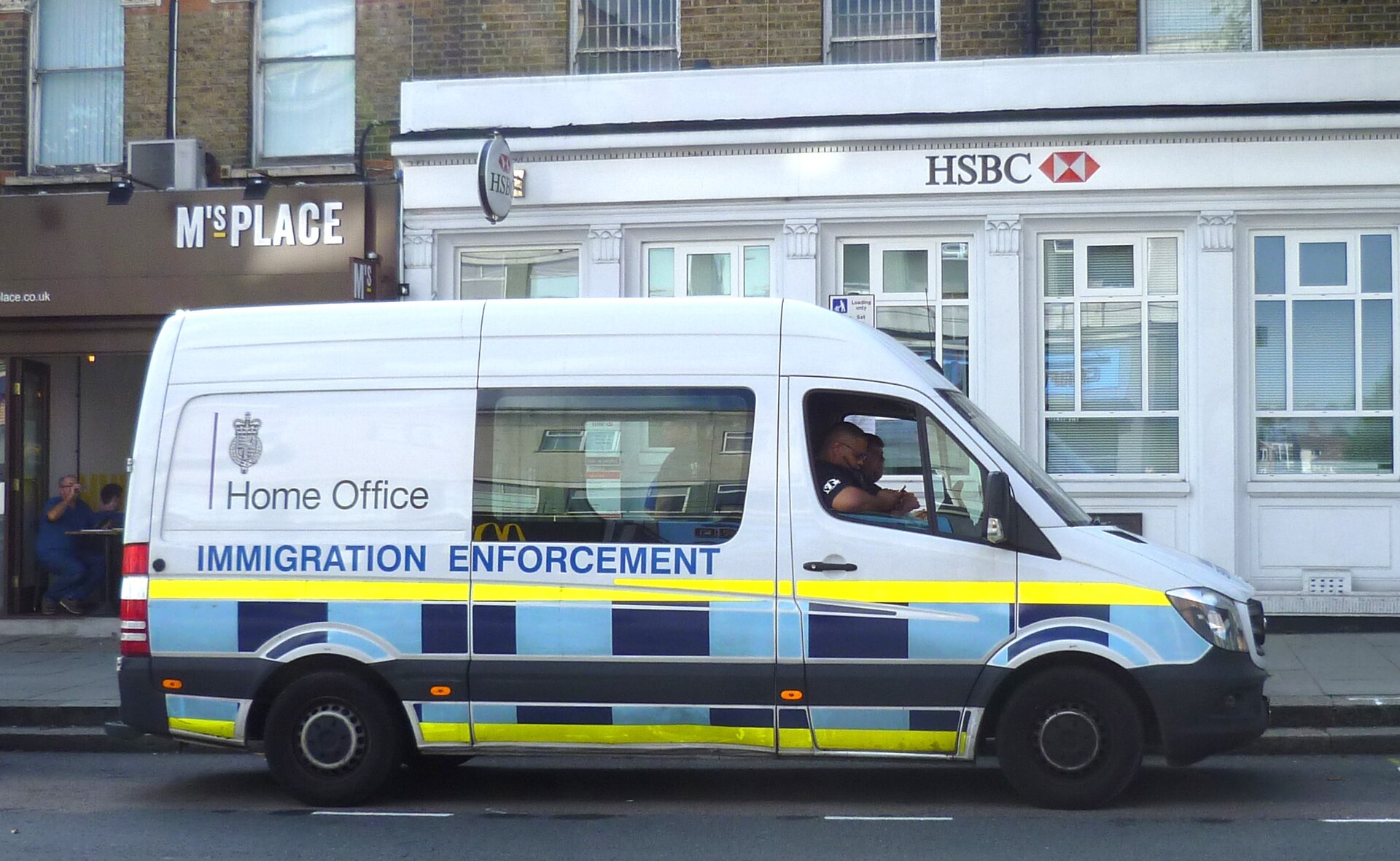
FOX 54, the Huntsville station whose video item Yahoo News carried on Aug. 13, 2026, reported that a restaurant in Morgan County had posted a Facebook warning that immigration enforcement was operating nearby. The item's headline records what followed: "Restaurant's Facebook post warning immigration enforcement is nearby sparks mixed reactions." The restaurant is unnamed in every source this desk retrieved, the text of its post appears in none of them, and nothing available here establishes what enforcement activity, if any, was under way.
Underneath the reaction sits a question that has a checkable answer: is telling a community that immigration officers are nearby a federal crime? The most prominent public assertion that it is came from a Department of Homeland Security representative in 2025, about a different poster elsewhere. The documents that test the assertion are one section of the federal criminal code and two bills introduced last year to amend the law.
What was said
Fox News published that assertion under a headline crediting a DHS representative with saying that ICE-raid tipoffs from a Democratic lawmaker could mean charges. The excerpts of that report available to this desk carry the sentences without naming a speaker beside them. One states the objection to the practice itself: "Notifying the public about ICE law enforcement operations endangers law enforcement and weakens American national security." On the question of charges, the same set of excerpts records a second line: "This certainly looks like obstruction of justice."
The official was not arguing about manners. Read with the rest of the page, the argument treats publicizing enforcement activity as interference with an operation rather than commentary about one - that reading is this desk's, drawn from the excerpts quoted here and nothing else.
The subject of the remarks was Arizona state Sen. Analise Ortiz, whom the same page names in a line accusing her of siding with cartels, human traffickers and violent criminals over American citizens. Her own account of what she did appears in the Arizona Capitol Times, which reported on Aug. 8, 2025 that the state Senate president had called for an investigation after her ICE alert: "My intention has always been alerting my community about ICE activity so people who are at risk can stay home and keep themselves safe." The paper's account situates the reported ICE activity near Southwest Elementary School in South Phoenix.
The statement the paper carries with that report, which its headline and URL attribute to Senate President Petersen, stops short of naming an offense: "Senator Ortiz is fortunate the Legislature is not currently in session, as her remarks would no doubt face significant scrutiny from her colleagues. Public servants have a duty to uphold the law and respect those who enforce it, not undermine them." The same report records the two terms that were put to her conduct by others - obstruction of justice, and aiding and abetting in the commission of a crime. Both are accusations, and both are unproven. No document retrieved for this piece records a charge against Ortiz, and this desk found no announcement of one in the year since.
What the record says
The statute that phrase points to, in an investigative rather than a courtroom setting, is section 1510 of title 18, headed obstruction of criminal investigations. Its operative sentence, as Cornell Law School's Legal Information Institute publishes it, reaches whoever "willfully endeavors by means of bribery to obstruct, delay, or prevent the communication of information relating to a violation of any criminal statute of the United States by any person to a criminal investigator." The means is not decoration in that sentence; it is an element. On the face of the text retrieved here, a warning posted to a restaurant's page, with no bribe anywhere in it, is not the conduct described.
The excerpt this desk retrieved is fragmentary rather than the section's full current text: seven passages, several of them stray phrases about an officer of a financial institution and a subpoena for records, and none of them carrying a subsection label. Settling what the rest of the section covers, and how courts have read it, would take the complete text, which this piece did not retrieve. What the retrieved sentence supports is narrow and specific, and it is stated no wider here.
Two bills introduced in the 119th Congress in 2025 go at the conduct directly. The Senate bill, S. 1952, carries the short title Protecting Law Enforcement from Doxxing Act. Its bill line is dated June 4, 2025, names Mrs. Blackburn as the member who introduced it, and records a second reading and a referral to the Committee on the Judiciary. The bill's operative move is an amendment to the very statute the DHS remarks gestured at: section 1510 of title 18 is amended by adding at the end a provision that defines a Federal law enforcement officer and then declares, "It shall be unlawful to make the name of a Federal law enforcement officer publicly available with the intent to obstruct a criminal investigation or immigration enforcement operation." A violation would carry a fine, imprisonment for not more than five years, or both.
The House bill, H. R. 4226, comes at it from the enforcement side. The passage retrieved here reaches a person who "knowingly impedes or interferes with an officer or employee of U.S. Immigration and Customs Enforcement" - one fragment, which is all of that bill this desk obtained. Where either bill stands today is not asserted in this piece: no document retrieved here records committee action, a floor vote or enactment beyond the referral printed on S. 1952's own face.
Reading the two documents together
This is the piece's own analysis, and it rests on document text alone. A legislator who proposes to insert a new offense into section 1510 is proceeding on the premise that section 1510 does not already contain it; that is the ordinary logic of an amendment. The retrieved sentence conditions liability on bribery. The Senate bill would add liability for making an officer's name public with intent to obstruct a criminal investigation or an immigration enforcement operation. If the second were already inside the first, the amendment would have nothing to do.
Even on the Senate bill's own terms, the conduct the Huntsville station described is not obviously the conduct the bill defines. That offense turns on making an officer's name publicly available. No source retrieved here says the Morgan County post named anyone, and this desk did not obtain the post's text.
What a reader can check next is dated and specific. S. 1952's own face records its referral to the Committee on the Judiciary, and the committee's public calendar records what happens to it after that. Any floor action on H. R. 4226 lands in the same public record. A charge against Ortiz, if one is ever brought, would appear on a federal docket; a year after the Aug. 8, 2025 call for an investigation, none appears in the record retrieved here.
The statute is a standing test of its own. This desk predicts that on Dec. 31, 2026, the sentence Cornell's Legal Information Institute publishes as section 1510's obstruction provision will still require bribery as its means. If a warning like the Morgan County restaurant's is charged as obstruction before that date, it will be charged under something other than the sentence quoted here.