Health & Medicine · The Record
Congo reports a seventh Ebola province; WHO's captured bulletin records one added health zone
Local authorities say a sample from Sud-Ubangi tested positive for Bundibugyo virus. The AP dispatch reports that WHO has said the outbreak "remains out of control" and is on track to surpass the 2014-2016 West Africa outbreak; this piece tests that against the captured WHO documents, and against AP's own figures read as a death toll.
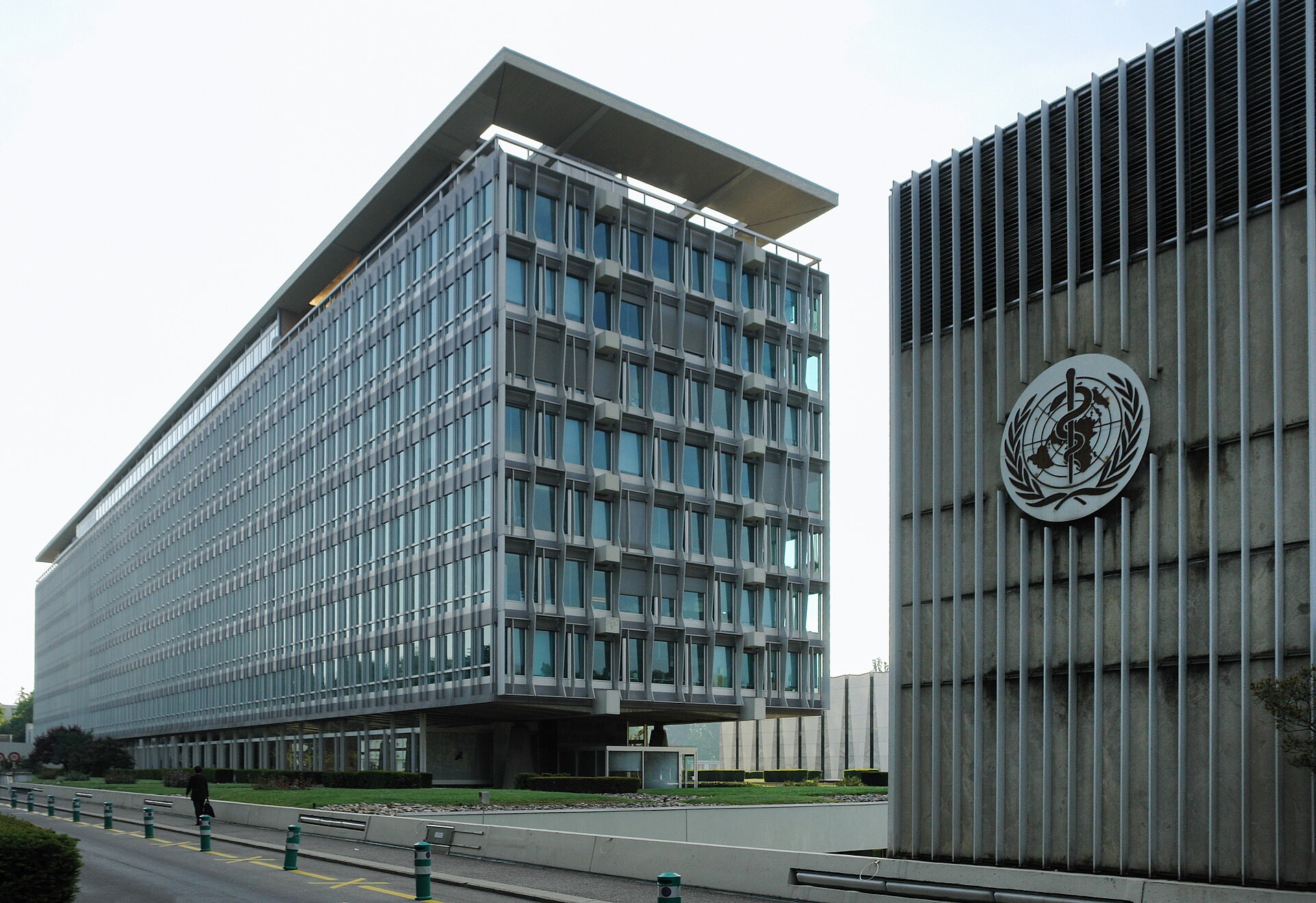
The Ebola outbreak in the Democratic Republic of the Congo has reached a seventh province, local authorities said in an Associated Press dispatch from Kinshasa carried by PBS News. The province is Sud-Ubangi, in the northwest, and the dispatch describes it as the first in western Congo to be affected. The most recent World Health Organization bulletin in this desk's capture set records something narrower: since the previous bulletin, the outbreak had expanded to one additional health zone, Kayna, in North Kivu.
The provincial statement is the formal account. According to AP, the governor of Sud-Ubangi, Jean-Rene Galekwa Vundawe, said the national research institute had tested a sample and found "traces of the Bundibugyo virus", the rare form of Ebola behind this outbreak. The statement was issued on a Thursday and picked up by local media the following day. It placed the sample in the Bulu health district. The provincial statement cites a single tested sample and no other detail about the source of the infection.
A second account reached AP from a different direction. Jean-Jacques Mbungani, whom the dispatch describes as a local lawmaker and former health minister, wrote on X on Thursday that a positive case had been recorded in Gwaka, a town in Sud-Ubangi, and that the patient, a 23-year-old man, had died. In a telephone interview with AP on Friday, Mbungani said doctors and local authorities had been alerted to a patient with a fever who was vomiting blood, that the man died on Tuesday, and that samples were then taken after his death and sent to the national research institute. "It worries me. … Our province borders Congo-Brazzaville and the Central African Republic. We fear it may spread regionally," said Mbungani.
Then comes the sentence that gives the dispatch its weight, and the one worth testing. AP tells readers what WHO has said about where this outbreak is heading. No individual is named for it; the characterization is attributed to the institution.
The bulletin is a serial document, and the captured text opens by measuring itself against its predecessor of 28 August 2026. The interval's change is reported as one health zone added, in North Kivu. Sud-Ubangi does not appear in that captured text, and neither does any province in western Congo.
On risk, this bulletin does not reach for adjectives. It puts the question in a graded register: "The risk in the Democratic Republic of the Congo was assessed as very high", with the risk to countries sharing a land border again assessed as high and the risk to the rest of the African region and to the world again assessed as low. Three tiers, each attached to a geography. The bulletin records the border-country and rest-of-region tiers as again assessed at those levels; it does not say the same of the tier for the Democratic Republic of the Congo. There is no tier on that scale for being out of control, and the phrase appears nowhere in the WHO text this desk captured.
The nearest thing in the captures to an institutional voice speaking in the first person is a Reuters report carried by CNBC Africa, headlined as remarks by WHO's Tedros on scaling up the Ebola response. Two passages survive in the captured excerpt: "Until every chain is found and broken, the epidemic will continue and will continue to pose a threat to DRC, its neighbors and the region as a whole" and "we can control this epidemic if we choose to". The captured excerpt carries no speaker line beside either passage; the attribution to WHO's Tedros comes from the source listing's headline and the page URL, not from the captured text, so this piece does not assign the words to a person. Read against a paraphrase that the outbreak is out of control, the second passage sits at a distance from it: control is described as available, and conditional on choice.
One capture does run closer to AP's wording. A UN News report in the set states that "the outbreak in DRC is continuing to outpace the response". Outpacing a response and being beyond control are not the same statement. The first measures two things against each other; the second declares a status. But the gap between them is a good deal shorter than the gap to a three-tier risk table.
AP's sentence compares outbreaks rather than tolls, so testing it means choosing a reading. This piece tests the deaths reading, because the benchmark the sentence names is a death count: more than 11,000 dead, primarily in Guinea, Liberia and Sierra Leone. Against that benchmark sit the dispatch's own figures, attributed to the latest government tally: 6,942 cases and 3,349 deaths as of Wednesday. The deaths reported stand below a third of the West Africa total. A claim that an outbreak is on track to pass a benchmark is a claim about trajectory rather than standing, and nothing in the captured WHO documents projects a trajectory or names a date.
The geography inside the country cuts a second way. A WHO Regional Office for Africa situation report in the captures states that "Ituri remains the epicentre, accounting for 85.8% of cumulative cases and 80.6% of cumulative deaths." Those are cumulative shares, which is to say they record where the outbreak has been. AP's account of recent weeks points elsewhere: new cases and deaths declining in Ituri, rising sharply in North Kivu and Haut-Uele. The single health zone the bulletin adds, Kayna, is in North Kivu. The bulletin's added zone and the dispatch's account of recent weeks point the same way; the regional report records where the outbreak has been, not where it is moving.
Sud-Ubangi is the exception to that pattern. The dispatch notes it borders none of the six eastern provinces where confirmed cases had previously been reported - Ituri, North Kivu, South Kivu, Haut-Uele, Tshopo and Bas-Uele - and that a case detected in Kinshasa in May, in a person who had traveled from the east, did not make the capital an affected province. AP puts Kinshasa more than 1,600 kilometers from the epicenter.
For scale within Congo's own history, the earlier bulletin in the capture set, 2026-DON614, records that this outbreak is already the country's largest, past the 2018-2020 outbreak and its 3317 confirmed cases. The government's 6,942 is roughly double that earlier figure, though AP gives its number as cases and the bulletin gives its as confirmed cases, so the two may not be counted the same way. The national record has been broken. The global one, on the deaths reading, has not been approached.
This desk reads the gap between seven provinces in the coverage and one added health zone in the bulletin as a lag between a national finding and its appearance in the international record, not as a dispute about the finding. The two documents are not counting the same thing: one is a provincial announcement of a first positive sample, the other a serial bulletin reporting what changed since its own predecessor.
What the captures cannot settle should be said plainly. No WHO count of this outbreak's cases or deaths appears in any captured excerpt, so the only current toll available here is the government series AP reports, and this piece cannot set that series beside a WHO one.
The next checkable moment is WHO's own serial. Each Disease Outbreak News reports what changed since the last one, which makes the question narrow: does Sud-Ubangi, or a health zone inside it, appear in the next bulletin on this outbreak? This desk expects it to appear by 15 October 2026. If it does not, either the provincial sample did not confirm at the international level or the lag runs longer than a month, and both would be worth knowing. Two other clocks are already running, both from the dispatch: Congo's vaccination of health and front-line workers with the Ervebo vaccine, which worked in past outbreaks caused by the more common Zaire type of the virus, and the clinical trials underway toward a licensed vaccine for Bundibugyo.