Crime & Justice · The Record
Justice Department proposes fifth landlord settlement in rent-algorithm case; landlord complaint dates to Jan. 7, 2025
The undated announcement, captured Sept. 5, 2026, carries a statement of this administration's posture toward corporate landlords. The same release dates the landlord complaint it resolves to Jan. 7, 2025.
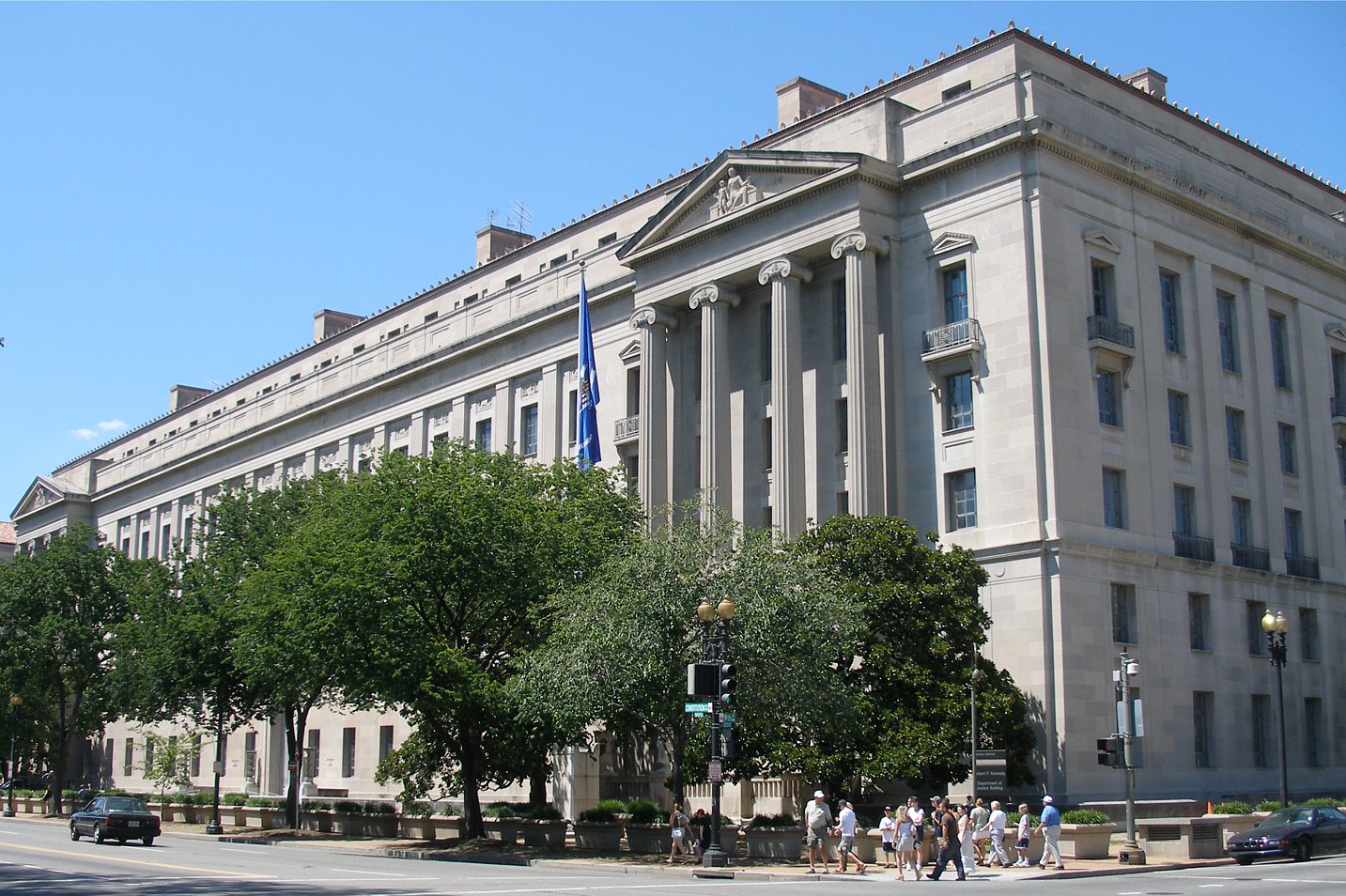
The Justice Department's Antitrust Division filed a proposed consent decree, announced in an undated release this desk captured on Sept. 5, 2026, to resolve the United States' claims against Pinnacle Property Management Services LLC, a residential property manager the department's announcement places in Frisco, Texas. The filing belongs to what the release calls an ongoing enforcement action in the Middle District of North Carolina over algorithmic coordination, the use of competitors' competitively sensitive data, and other practices the department says artificially increase housing costs.
Two points of posture first, since this is a desk that usually handles charges. The action is civil, not criminal. And the decree is proposed, not entered: the captured release records no admission by Pinnacle, the conduct is alleged, and by the department's own account the U.S. District Court for the Middle District of North Carolina may enter the final judgment only after a public comment period and a finding that the settlement is in the public interest.
Under the proposed decree, the release states, Pinnacle would give up any pricing algorithm the decree deems anticompetitive - including one that builds recommendations on "competitors' competitively sensitive data" or that carries "certain anticompetitive features"; accept a court-appointed monitor if it uses a third-party pricing algorithm that is not certified pursuant to the terms of the decree; refrain from attending or participating in RealPage-hosted meetings of competing landlords; and cooperate with the United States' claims against other defendants.
The complaint's account of the conduct, as the release summarizes it, has two halves: the software and the room. Pinnacle and other landlords shared competitively sensitive data to generate pricing recommendations through RealPage's algorithms, which the release says also included rules that aligned pricing. The same landlords, the department alleges, conferred with one another on pricing strategies, rents and the parameters they selected in the software. The department's separate announcement of its RealPage settlement makes the second half explicit, alleging that RealPage hosted meetings attended by competing property management companies where competitively sensitive information was shared.
The announcement carries two quotations from named department officials, both framed as statements of what the department will and will not accept. "This administration will not tolerate illegal actions by corporate landlords that inflate housing prices for Americans," said Associate Attorney General Stanley E. Woodward Jr. The Antitrust Division's voice in the release is Deputy Assistant Attorney General Nicole Sarrine, quoted as saying the division "is diligent in our work of protecting consumers in housing markets, including by putting an end to practices by corporate landlords that illegally prevent honest competition that benefits renters."
The record the same document supplies is a chronology. Below those quotations, the release states that the United States, along with state co-plaintiffs, filed the complaint on Jan. 7, 2025, alleging that Pinnacle and five other co-defendant landlords participated in a scheme to set their rents using each other's competitively sensitive information through pricing algorithms. The department's earlier release announcing a proposed decree with LivCor LLC carries the same filing date.
None of the captured government or company releases names the administration in office when that complaint was filed, and none says who "this administration" refers to. Read strictly, the two department statements offer the new decree as evidence of a current posture toward corporate landlords; they do not claim authorship of the January 2025 filing. What the documents do settle is sequence. The complaint was on file and the enforcement action running well before the decree announced in the release captured Sept. 5, 2026 was reached.
One count in this file is worth doing out loud, because no single document does it. The Pinnacle release describes the January 2025 complaint as naming Pinnacle along with five other co-defendant landlords, which makes six landlord defendants. The same release lists the settlements the new decree builds on: RealPage Inc. and four other large landlords, Cortland Management LLC, Greystar Management Services LLC, LivCor LLC and Willow Bridge Property Company LLC. Four plus Pinnacle is five. At least one landlord named as a co-defendant in that complaint therefore appears in none of the settlement announcements captured for this piece, and none of those captures names it. Whether that defendant is still litigating, settled outside these releases, or was resolved some other way is not something this record answers.
The other claim the new decree complicates belongs to a company rather than a government. RealPage Inc. sells revenue management software rather than renting apartments; the department's release announcing that settlement places the company in Richardson, Texas. RealPage's own release presented its settlement as closure. The agreement, it states, came with no financial penalties, damages, or findings or admissions of wrongdoing; customer operations would not be disrupted; and the settlement essentially formalized product modifications the company said it had already been implementing for more than a year. "This resolution with the DOJ was necessary to provide certainty and finality for RealPage and its customers to avoid protracted litigation," said Stephen Weissman, Gibson Dunn Partner and former Deputy Director for the Federal Trade Commission.
Finality for the software vendor was not finality for the enforcement action. The Pinnacle release describes that action as ongoing, records four further landlord settlements already obtained, and adds a fifth. Its decree would bar a landlord from attending or participating in meetings RealPage hosts for competing landlords; the LivCor release carries a term in the same category, worded slightly differently. And the new decree commits Pinnacle to cooperate with the government's claims against other defendants, which is the language of a case with work left in it.
One detail in the RealPage release would be flagged in any file here: the flattest denial in it is attached to no named speaker in the capture. "While we deny any wrongdoing," the release states in an untagged paragraph that sits directly after the tagged quotation from Weissman, the outside counsel, before going on to thank the department for its engagement; the capture does not restate who is speaking. The chief executive's tagged quotation in the same release speaks of a milestone, not of innocence; the words about clarity and stability sit in a following paragraph the capture likewise leaves untagged. Who a company puts a denial in the mouth of, and whether it tags the denial at all, are facts about the denial.
An observation about the remedy, offered as analysis of the documents cited above rather than as a finding: none of these decrees sets a rent. The RealPage settlement, as the department describes it, stops the software from using competitors' nonpublic, competitively sensitive information to determine rental prices in runtime operation, limits model training to nonpublic data aged at least 12 months, and requires features that limited price decreases or aligned pricing to be removed or redesigned. The landlord decrees reach algorithms and meeting attendance. The remedies are aimed at the inputs and the rooms, not at the number on a lease.
The state side speaks in this file too. The Connecticut Attorney General's release captured for this piece carries three quotations, and the capture attaches none of them to a named speaker; one reads, "We are alleging today that some of the nation's largest landlords rigged the market using unfair algorithmic pricing." Alleging is the operative verb, then and now. Two of the department's own releases in this sequence, the RealPage settlement announcement and the LivCor decree announcement, likewise carry quotations the captures leave unattached to any named official.
Three things here resolve on a date. Under the Tunney Act, the proposed settlement and a competitive impact statement will be published in the Federal Register, opening a public comment period; this piece forecasts, as its own estimate and not as a schedule the department has announced, that the Pinnacle notice appears there on or before Dec. 31, 2026. When that period closes, the district court in the Middle District of North Carolina decides whether to enter the final judgment, and the docket will carry the date. And the arithmetic above leaves a question with an answer somewhere: whether any landlord named in the January 2025 complaint but absent from these settlement announcements ever appears in one of its own.