Immigration & Border · The Record
EOIR set the San Francisco immigration court's closure for Sept. 4, shifting cases to a Concord bench a congressman says never reached 21 judges
The agency's May 1 notice states cases "will still be timely adjudicated." EOIR's own 2024 notice promised Concord 21 immigration judges; a March 2026 congressional letter states that court never got there, and puts the two courts' combined backlog at 177,827 cases.
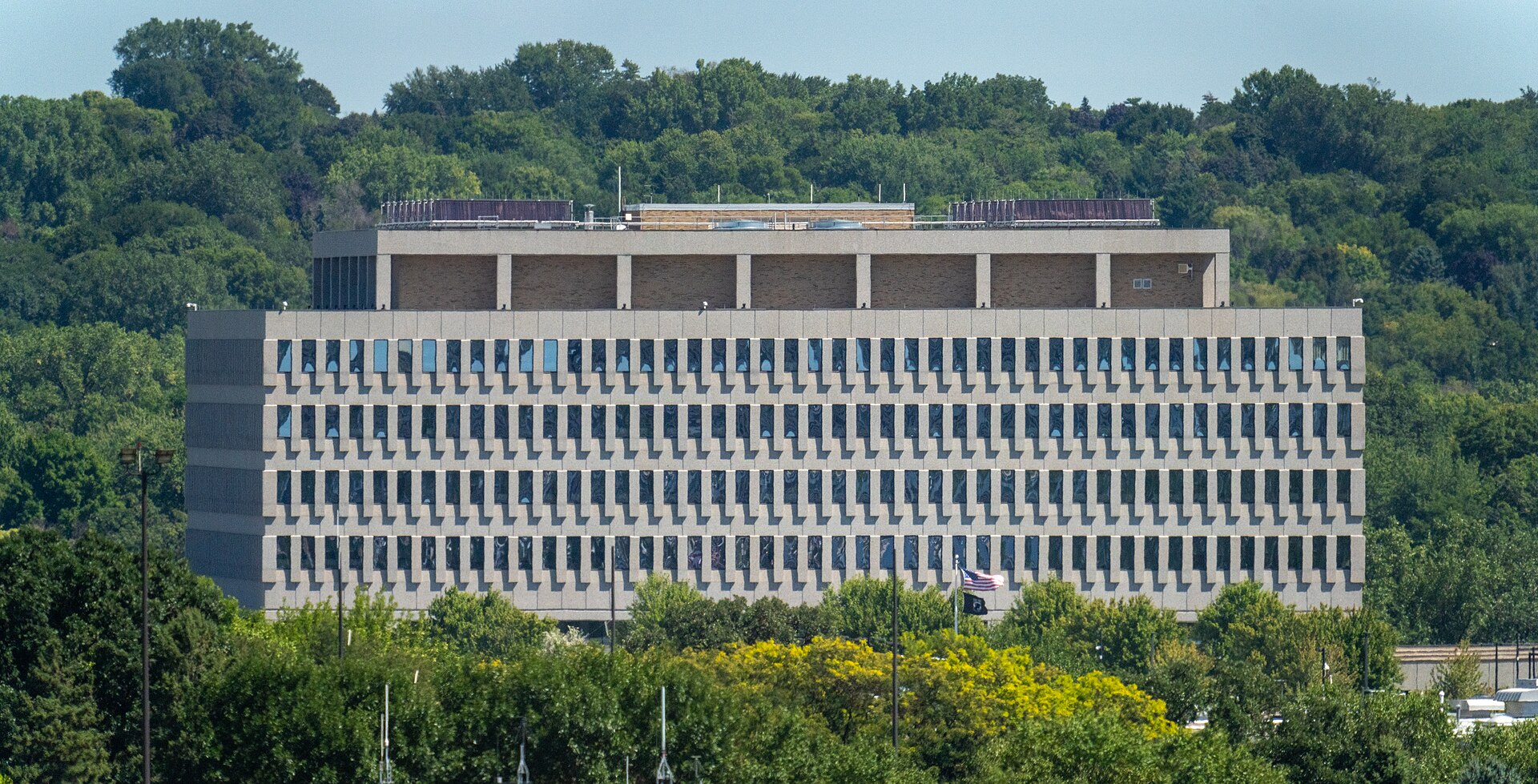
A notice dated May 1, 2026 set the end date for the San Francisco Immigration Court. The Executive Office for Immigration Review announced that the court would permanently close at the close of business on Sept. 4, 2026, and that its Sansome Street location would become a hearing location under the administrative control of the Concord Immigration Court. That date has now passed. The notice names no official, contains no quotation marks, and gives one point of contact: EOIR's Office of Policy, a phone number and the shared [email protected] mailbox.
The stated reason is cost. EOIR, working with the General Services Administration, determined it would be "more cost effective to relocate its court operations" at 100 Montgomery Street to Concord, the notice states. The document does not argue that the move will speed anything up. What it asserts is narrower, and it is the sentence the rest of this piece tests: adjudication will remain timely, either in Concord or remotely. The notice states the agency will begin issuing new hearing notices to those whose cases are reassigned.
The notice refers to two addresses: the court operations at 100 Montgomery Street that are being relocated, and the Sansome Street location that becomes a hearing location. No document read for this piece states how the two relate, so what continues at either address after Sept. 4 is not settled by the record.
What EOIR promised the receiving court
The other half of the record is also EOIR's. On Jan. 22, 2024, the agency announced it would open a court in Concord on Feb. 12, 2024, "expanding its presence in Northern California." That notice gives the new court a size: the Concord Immigration Court will have 21 immigration judges. It sets out the agency's mission as adjudicating immigration cases by interpreting and administering the nation's immigration laws fairly, expeditiously and uniformly, and, in a line the 2026 notice nearly repeats, it promises to notify parties whose cases are reassigned to Concord.
Why Concord opened is a claim that lives in a different document. The 2024 notice does not say the new court was meant to relieve San Francisco; it describes the opening as an expansion in Northern California and calls new courts in high-volume areas a way of meeting the needs of people with business before the agency. The relief-of-pressure account comes from Rep. Mark DeSaulnier, who wrote in a March 31, 2026 letter to EOIR Director Daren K. Margolin that the Concord court opened in 2024 in part to relieve pressure on the San Francisco court, and that it never reached the 21-judge capacity it had been given. No EOIR document read for this piece states how many judges Concord actually has - only the 21 the 2024 notice said it would have.
Five questions, one deadline
DeSaulnier's letter predates the closure notice by a month. It records that in January, employees and judges received notice that the San Francisco court would close by the end of the year, and that remaining personnel and many cases would move to Concord, a city the letter says he represents, nearly 30 miles away. His office published a press release the same day describing the letter in the same terms.
On staffing, the letter states that since January 2025 the number of judges at both courts has dwindled, and that San Francisco's court, which began 2025 with 21 judges, had four at the time of writing after 14 were fired and four were pressured into early retirements. Those figures and that account of how the bench shrank are the letter's; the captured document names no source for them, and this desk has not verified them independently. On caseload, the letter credits TRAC for a combined backlog at the two courts of 177,827 cases, with hearing dates already being scheduled years ahead. If the closure went through, the letter states, Concord would be one of only two federal immigration courts in the whole of Northern California, a region it describes as home to over 12 million people.
The document then puts questions to Margolin and asks for answers by April 14, 2026. As captured, it lists five: what data the agency used to reach the decision; whether affected cases get automatic continuances; whether EOIR plans to physically expand Concord or hire more judges; whether judges are being hired or reassigned for the transferred docket; and "What is the projected backlog attributable to consolidation?"
An EOIR answer, if one was written, is not in the record reviewed here. What is in the record is the sequence: the requested response date was April 14; the closure notice is dated May 1; the closure's stated effective date, Sept. 4, has passed. This desk did not seek comment from EOIR before publication.
Two lines from the CBS report
CBS News San Francisco reported on the Northern California courts, and the captured excerpt carries two quoted lines. It does not identify a speaker for either line, establish that two different people spoke, or state either speaker's connection to the courts. One describes the bench: "Out of the 21 judges that were my colleagues in San Francisco, there's only two left that are still on the bench." The other describes the calendar: "Now we're getting cases set for 2029, even 2030." That first count sits below the four judges the March letter records, and the capture carries no date for either statement, so the two figures cannot be lined up in sequence. What they agree on is direction.
What can be checked next
The letter's final item is a request for a meeting with Assistant Chief Immigration Judge Julie Nelson of the San Francisco Immigration Court. Nothing in the documents reviewed here records whether that meeting took place, which leaves an answerable question for the congressman's office.
On Sept. 5, 2026, the day after the notice's stated effective date, EOIR's own page for the San Francisco Immigration Court still published public hours of 8 a.m. to 4:30 p.m., window filing hours to 4 p.m., and the routine line that the court may have to close unexpectedly for weather or another reason. A page lagging an administrative change is ordinary, and the listing is not evidence the court is open. As analysis rather than reporting: if the cost case is being executed as written, that listing should be gone within a month. This desk's prediction, checkable on Oct. 5, 2026 - the page will no longer carry the 8 a.m. to 4:30 p.m. public hours line.
Three other things resolve on the record rather than in argument. Whether the five questions get written answers, and whether the projected consolidation backlog is one of them. Whether EOIR ever states how many judges Concord actually has - the notices reviewed here give only the complement the 2024 notice promised. And whether the new hearing notices the May document promises actually arrive - something every party whose case moved can check against their own mail.