World & Conflict · The Record
Drone tariff of 100 percent on aircraft over 25 kilograms is set to start September 3
The White House case for the duties rests on foreign component dependence. The rate text this desk obtained sorts drones by weight, names no country, and follows an FCC listing that already barred foreign-produced drone gear from new equipment authorizations.
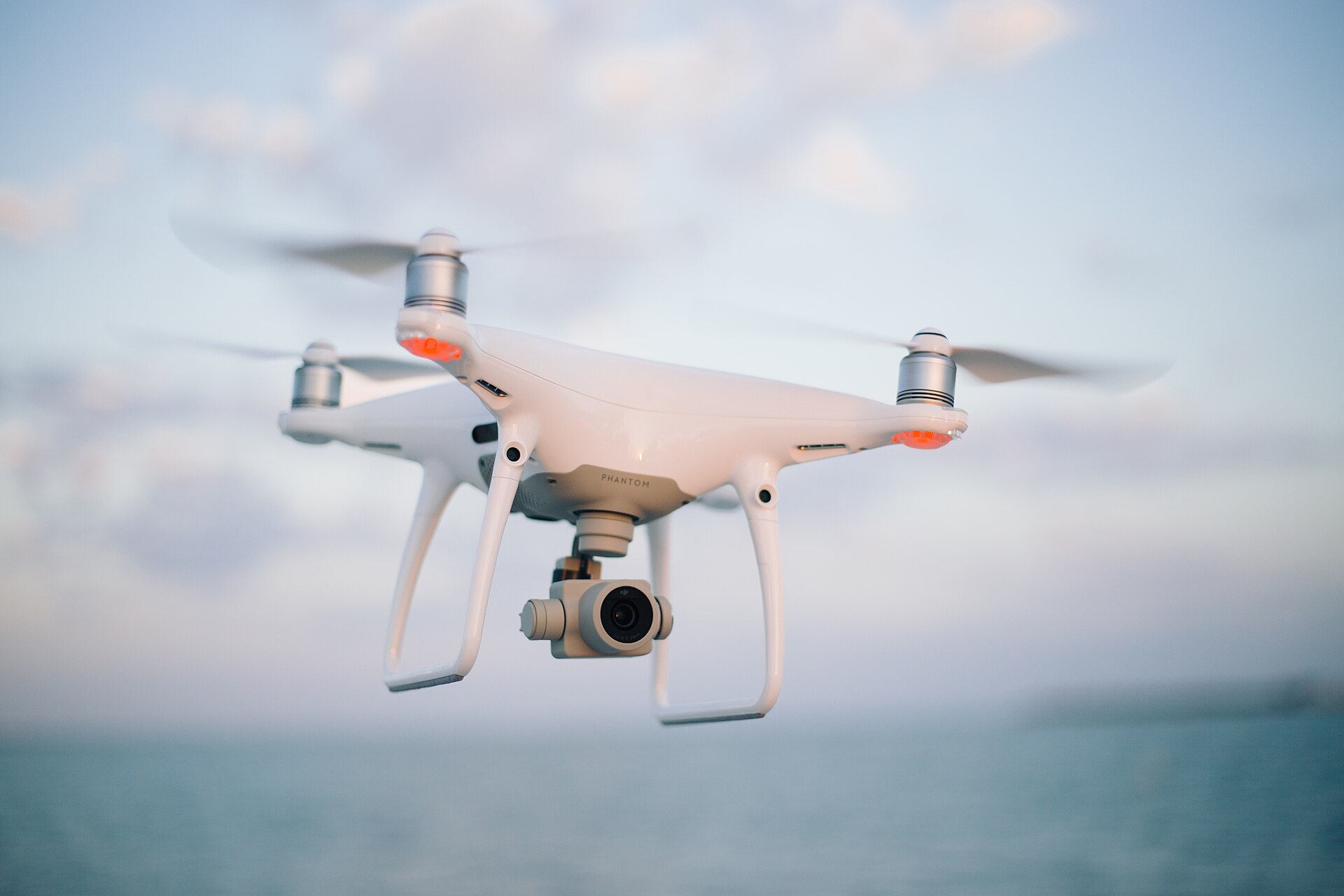
The case the White House makes for taxing imported drones is a case about dependence, not about any one government. A fact sheet on the action states that drones flown for commercial and U.S. military purposes draw on foreign sources for critical unmanned aircraft system components, and that the arrangement carries national security risk and opens cybersecurity vulnerabilities. The proclamation signed by President Donald Trump (R) states that unmanned aircraft systems and their components are being imported in quantities and under circumstances that "threaten to impair the national security," and that the United States is too reliant on foreign supply of them, which the document describes as a strategic vulnerability.
The figure that traveled with the announcement was up to 100 percent. What the operative text does with that figure is narrower, and the narrowing is the story. Among the passages of the proclamation this desk obtained, the rate turns on mass: a 100 percent ad valorem duty on unmanned aircraft with a maximum take-off weight of more than 25 kilograms, and 25 percent on those at 25 kilograms or less. Ad valorem means the rate is applied to the customs value of the article determined at entry, so 100 percent is a multiplier on that value rather than a fixed sum. Neither threshold refers to a manufacturer, a nationality or a place of assembly.
Origin does enter the document's reasoning. The proclamation states that unmanned aircraft systems and components from certain foreign entities pose security and safety risks, and it describes the information technology risk concretely: software that allows data to be sent back to the manufacturer in a foreign country. That passage turns on where a machine comes from rather than on what it weighs. It also stops there. In the material obtained, the actor is a category - certain foreign entities - and no company and no state is named in that finding.
This desk worked from the proclamation text published on whitehouse.gov and captured in its source snapshots, not from a certified copy or a Federal Register printing, so it cannot certify that no annex or schedule anywhere in the instrument names a country. What it can report is that the rate text it obtained is origin-neutral. The money follows weight and capability, and the one origin-linked condition in that material runs the other way, toward relief: a test under which at least 85 percent of an article's content must be a product of Trade Agreement Partners.
On the clock the fact sheet is explicit: "The tariffs will take effect 21 days after signing." The proclamation fixes the moment at 12:01 a.m. eastern time on September 3, 2026. Counting 21 days back from that timestamp puts the signature on August 13, 2026, which is how this desk dates it. ABC News reported the signing of the drone proclamation and records the administration's framing of the imports as a "national security threat," but the excerpt held here carries no date, and no date was read off a signed instrument.
The fact sheet also defers one tier: for components of drones that are not particularly sensitive, duties begin 180 days after signing, which from August 13, 2026 falls on February 9, 2027. The deferral moves only that tier. Components the administration treats as sensitive are dutiable from September 3 along with the aircraft themselves, so a domestic assembler buying the parts the government considers most consequential gets no extra half-year at all. The relief is written for the inputs deemed least sensitive.
The proclamation also states that within the past 90 days the Secretary of Commerce transmitted a report on his investigation into the effects of imports of unmanned aircraft systems. That report is the evidentiary base for the finding, and it is not in this desk's source set. Beside the duties, the document authorizes and directs the Secretary to establish a program to incentivize new investment in U.S. production facilities for these systems and their components - a subsidy channel running alongside the tariff wall, aimed at the same dependence.
The tariff is not the first federal instrument to fence this category, and the earlier one is blunter. On December 22, 2025, the Federal Communications Commission's Public Safety and Homeland Security Bureau issued Public Notice DA 25-1086, adding to the agency's Covered List "UAS and UAS critical components produced in a foreign country" together with the communications and video surveillance equipment and services listed in Section 1709(a)(1) of the FY25 National Defense Authorization Act. Equipment on that list, the notice states, is "prohibited from receiving equipment authorizations." The notice text obtained here does not set out what that authorization regime covers or how far the prohibition reaches.
Read together - and this is the desk's reading, not a claim either agency makes - the two records share a drafting choice neither announces. Roughly eight months before the tariff, the commission had already defined its restricted category by where a component is produced rather than by naming a government. The proclamation now prices an overlapping category and defines its own by kilograms. Two agencies, two mechanisms, and in both the restriction is built to stand without an adversary's name inside it. Taking the action as aimed at one country's manufacturers is an inference about effect. It is not what either text says.
Three secondary reports sit in this desk's source set, and none of them test the proclamation's language. ABC News reported the signing. Forbes reported that shares of Unusual Machines, whose advisory board Donald Trump Jr. joined in November 2024, rose more than 14 percent to $31.13 in early trading after the announcement; the sequence is recorded here and nothing is asserted about cause. The Daily Caller News Foundation published a report on the purchase of a building near the White House by a man it describes as a Chinese intelligence official, resting on property and personnel records this desk did not obtain; no claim from it appears above.
Four dates and one document are checkable from here. At 12:01 a.m. eastern on September 3, 2026, duties on aircraft above 25 kilograms are scheduled to begin at 100 percent of the article's customs value, unless the proclamation is modified, superseded or blocked before then. On February 9, 2027, the less sensitive component tier becomes dutiable. Publication in the Federal Register will produce a text with its annexes attached, which is what will settle whether any country is named anywhere in the instrument.
The fifth thing to watch has no date on it: whether the Commerce Secretary's investment incentive program exists in any concrete form by the time the deferred component duties land, and whether the report behind the finding is ever released for anyone outside the executive branch to read.