World & Conflict · The Record
CBP rule ending the $800 parcel exemption cites volume and uncollected revenue, not a China fentanyl finding
The April 2, 2025 White House announcement closed de minimis for China and Hong Kong on a synthetic-opioid rationale. The passages carrying the June 24, 2026 rule's stated basis rest on 1.36 billion shipments, CBP workload and revenue never collected - while seizure data puts 83.4% of fentanyl at official ports of entry.
The claim came first, and it was about drugs.
A White House fact sheet dated April 2, 2025 announced that President Donald Trump was ending duty-free de minimis treatment for covered goods from the People's Republic of China and Hong Kong, starting May 2, 2025 at 12:01 a.m. EDT, following the Secretary of Commerce's notification that adequate systems were in place to collect tariff revenue. The setting was a tariff action; the argument offered for it was a narcotics one. The Chinese Communist Party, which the document describes as exerting ultimate control over the government and enterprises of the PRC, had "subsidized and otherwise incentivized PRC chemical companies to export fentanyl and related precursor chemicals" that are used to produce synthetic opioids sold illicitly in the United States. That is one government's allegation about another state and its companies, and it should be read as such: the records examined for this piece contain no reply from Beijing.
The fact sheet was specific about method, and the method was parcels. Many PRC-based chemical companies, it states, hide illicit substances in the flow of legitimate commerce, including through "false invoices, fraudulent postage, and deceptive packaging." Its supporting figure is a border figure: more than 21,000 pounds of fentanyl apprehended by Customs and Border Protection in the previous fiscal year, which the document translates as enough to kill more than 4 billion people, set against 75,000 deaths a year it attributes to fentanyl alone. The scale of the channel being closed appears in the same text - CBP processes over 4 million de minimis shipments a day, by its own count.
Roughly 14 months later, the suspension stopped being an announcement and became a regulation. An interim final rule published in the Federal Register on June 24, 2026 (91 FR 37789) implements an indefinite suspension of the de minimis exemption for imports valued at $800 or less arriving by every mode other than the international postal network, effective the day it was published. The rule's account of the problem is one of volume: CBP processed over 1.36 billion de minimis shipments in Fiscal Year 2024, an almost ten-fold increase over the 139 million it processed in 2015.
The passages carrying that rule's stated basis are operational and fiscal. "The crushing volume of these de minimis shipments imposes a significant and costly burden on CBP related to identifying violative merchandise and processing the shipments," the document states. Elsewhere it records that "despite collecting no revenue, the burden of work imposed on CBP related to the de minimis exemption was growing with each passing year." CBP also determined that many goods entered through the Entry Type 86 Test were undervalued, misclassified, or failed to meet other agencies' requirements. Illicit trade appears, but generically: the rule registers an apparent perception among transnational criminal organizations and other bad actors that low-value shipments draw less interdiction, given how many entries move at once. In those passages there is no China-specific fentanyl finding. The conclusion is narrow as well - allowing the exemption to remain for merchandise arriving by every method other than the international postal network no longer fits the purpose of 19 U.S.C. 1321(a).
The carve-out is where the two documents diverge most sharply. The international postal network - the exact channel the 2025 fact sheet reached for when it named fraudulent postage - was excluded from the June 24 rule and closed by a separate interim final rule effective July 24, 2026, with one amendatory instruction (19 CFR 145.31) effective a month earlier. That is roughly 15 months after the China action. The mail rule does say plainly what the other one leaves general: attempts have been made to enter illicit and dangerous goods, among them firearms, counterfeit merchandise and illicit fentanyl, by claiming the exemption. It also reports an estimated two-thirds reduction in mail shipments following the global suspension in Executive Order 14324, and replaces the duty-free channel with a monthly filing: an Excel spreadsheet emailed to CBP with fourteen data fields, due by the 7th day of the month after arrival, with payment through Pay.gov on the same deadline.
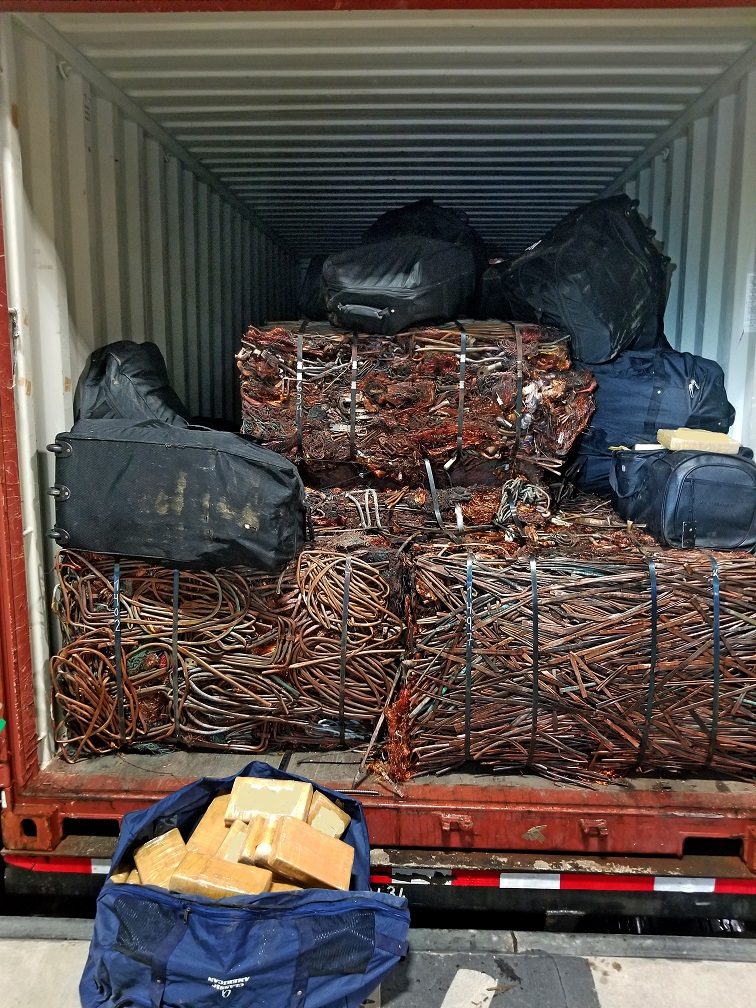
The drug data is the third record, and it does not sit where the claim points. CBP seizure figures compiled by USAFacts show about 5,200 pounds of fentanyl seized at US borders between January and June 2026, 10% more than in the same period of 2025 - up, not down, after the general parcel channel closed. "Between January and June 2026, 83.4% of all confiscated fentanyl was intercepted at these official entry points," the compilation states, with 74% passing through official southwest ports of entry, the trafficking route it describes. "Most fentanyl is primarily found and seized from vehicles driven by US citizens at official ports of entry," it adds. June 2026 alone accounted for about 1,100 pounds, up 42.1% from the previous month. That window closes days after the non-postal suspension took effect, and a month before the postal one, so it covers a period in which the parcel channels were mostly still open. Read as analysis rather than proof: a rule about $800 parcels does not reach a car at a land crossing, which is where this data puts the drug.
None of that means the policy failed on its own terms. CBP announced on Dec. 17 that it had collected more than $1 billion in duty revenue from over 246 million low-value shipments in 2025 after the phase-out, as reported by Supply Chain Dive - about $4.07 per shipment, by this publication's arithmetic, which no source states. The same reporting records "an 82% jump in seizures of low-cost goods deemed to be unsafe or noncompliant" since de minimis ended for China and Hong Kong. Revenue arrived, visibility improved, mail volume contracted. What changed between April 2025 and June 2026 is the stated reason: a measure introduced as a response to one government's conduct was codified on grounds of workload and uncollected duty.
There are dated things to watch. Comments on the mail rule were due July 24, 2026, and CBP has to answer them in a final rule; the compliance date for the new postal data fields at 19 CFR 145.12(a)(2)(v) and (vi) is October 22, 2026. Seizure figures for the second half of 2026 will be the first to cover a period ending with both suspensions in force, since the postal one only took hold on July 24. If parcels were carrying the share of fentanyl the 2025 case implied, the share intercepted at official ports of entry should now fall. The expectation here is that it will not fall below half.