Politics & Government · The Record
White House marks the end of World War II in August after proclaiming May 8 as Victory Day
Two 2026 documents from the same administration place the war's end about three months apart, and neither lands on the September 2, 1945 surrender the National Archives records.
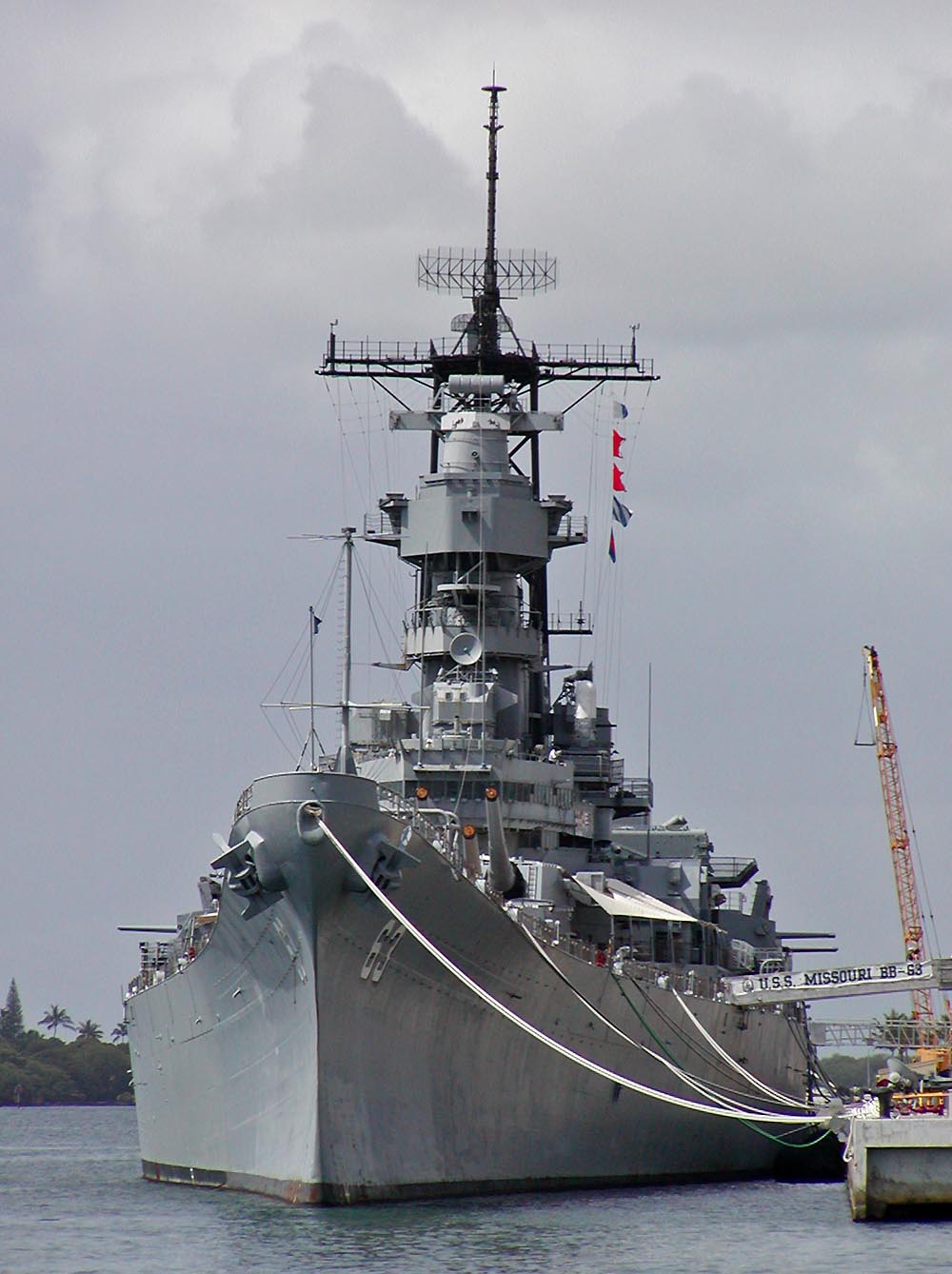
A presidential message published in the White House's August 2026 briefings and statements marks the anniversary of the end of World War II. The message credits that day with "the moment American might brought the Second World War to its end in complete and total victory," and it fixes itself by its own text rather than by a date line: the day, it states, on which Imperial Japan laid down its arms in 1945. Its subject is the Pacific war - Pearl Harbor, Midway, Leyte Gulf, Iwo Jima, Okinawa - and its argument is that the war ended there, in a single unconditional surrender.
Roughly three months before that message appeared, on May 7, 2026, President Donald J. Trump (R) signed a proclamation designating May 8, 2026, as a day in celebration of Victory Day for World War II. That document describes something narrower than the whole war. It celebrates "America's monumental triumph over tyranny and evil in Europe, led by the might of our Armed Forces and those of our Allies," and it dates the shattering of Nazi Germany's grip to May 8, 1945.
Read side by side, the two 2026 documents place the winning of the same war on two dates about three months apart. Neither is September 2, 1945.
The proclamation argues with its own date
The May text does not need an outside source to complicate it. Its third paragraph turns to the Pacific: the proclamation states that that sacrifice, together with the resolve of millions of men and women on the home front, "paved the way for the Allied powers to secure their resounding victory against Imperial Japan nearly 4 months later." The operative clause further down then proclaims May 8, 2026, as the day of celebration for Victory Day for World War II - a designation resting on a date the same document says preceded the defeat of one of the Axis powers by nearly four months. The proclamation also puts the American dead in the fight against the Nazi regime at more than 250,000, a figure it does not extend to the Pacific.
The May designation was also announced on social media. An archived Truth Social post attributed to Trump states, "I am hereby renaming May 8th as Victory Day for World War II and November 11th as Victory Day for World War I," and argues that "we did more than any other Country, by far, in producing a victorious result on World War II." The archived post as captured carries no timestamp, so this piece does not fix the day it was written or its order relative to the proclamation.
What the record holds
The surrender document itself is not held by the White House and is not in dispute. The National Archives entry on the Japanese surrender records that on September 2, 1945, Japanese representatives "signed the official Instrument of Surrender aboard the USS Missouri in Tokyo Bay." The instrument's text, reproduced by the Archives, proclaims the unconditional surrender of Japan's Imperial General Headquarters and of all armed forces under Japanese control wherever situated. That is the legal end point, and it is dated.
August has its own claim on the calendar, and it is a claim about news rather than about signatures. The National WWII Museum's article on V-J Day states: "As soon as the news of Japan's surrender was announced on August 14, celebrations erupted across the United States." The United Kingdom, the museum notes, set its official V-J Day for the following day, August 15, 1945, and Americans joined in. The observance the United States settled on, the article states, is the later one: V-J Day "would officially be celebrated in the United States" on the day the formal surrender documents were signed in Tokyo Bay, September 2, 1945.
That leaves three dates doing three different jobs. May 8 carries the proclamation. August carries the message, and the crowds of 1945. September 2 carries the signature, and the observance the country adopted.
the moment American might brought the Second World War to its end in complete and total victory
The forms are not equal
There is a second contrast in the White House's own filing system, visible without leaving whitehouse.gov. May 8 received a proclamation, signed and witnessed in the document's closing formula and published under presidential actions. The August anniversary - the one the message itself calls the end of the war - received a presidential message, published under briefings and statements. The lesser instrument carries the larger claim. As analysis, that asymmetry is what a reader can weigh: the date given the full apparatus of a presidential action is the date the administration's other document says came first by nearly four months.
The casualty arithmetic
The August message states that more than 16 million Americans served and that "more than 400,000 of them never came home, laying down their lives on distant shores." The service figure checks precisely. The Department of Veterans Affairs page America's Wars lists 16,112,566 on its World War II line.
The death figure is where the phrasing outruns the table. The VA's World War II line does not give one death total; it gives two, 291,557 and 113,842, which sum to 405,399. That sum is consistent with "more than 400,000." It is not a single count of Americans who died overseas, and the message's phrase treats it as one. The same line carries two further figures, 670,846 and 389,000. The capture this piece works from preserved the numerals but not the column headings, so those figures are reported here as they appear and nothing is asserted about what each column counts.
The August message ends forward rather than backward. It states that the peace those forces won endures and that a free and democratic Japan now stands beside the United States as one of its closest allies, joined in the defense of a free and open Indo-Pacific. On that point the two documents do not compete; only on the question of which day the war was won.
Two things resolve on dates a reader can check. The first is September 2, 2026, the 81st anniversary of the Instrument of Surrender: whether the White House marks it at all, and if so whether it does so with a presidential action or with a message, will be visible on whitehouse.gov within a week of that date. The second is May 8, 2027, when a second Victory Day for World War II proclamation either issues or does not. This desk's expectation, stated so it can be scored: no presidential action designating September 2, 2026, appears by September 9, 2026.