Politics & Government · The Record
GAO reports 988 contact volume rose 23 percent in fiscal 2025 as federal hotline operations held steady
The August 13 audit finds the three federal crisis hotlines' operations "remained mostly consistent" during a fiscal year in which HHS and VA announced plans to carry out a February 2025 workforce-reduction order. Its summary does not mention the 988 specialized service for LGBTQ+ youth that was shut down and, on a later account, has not been restored.
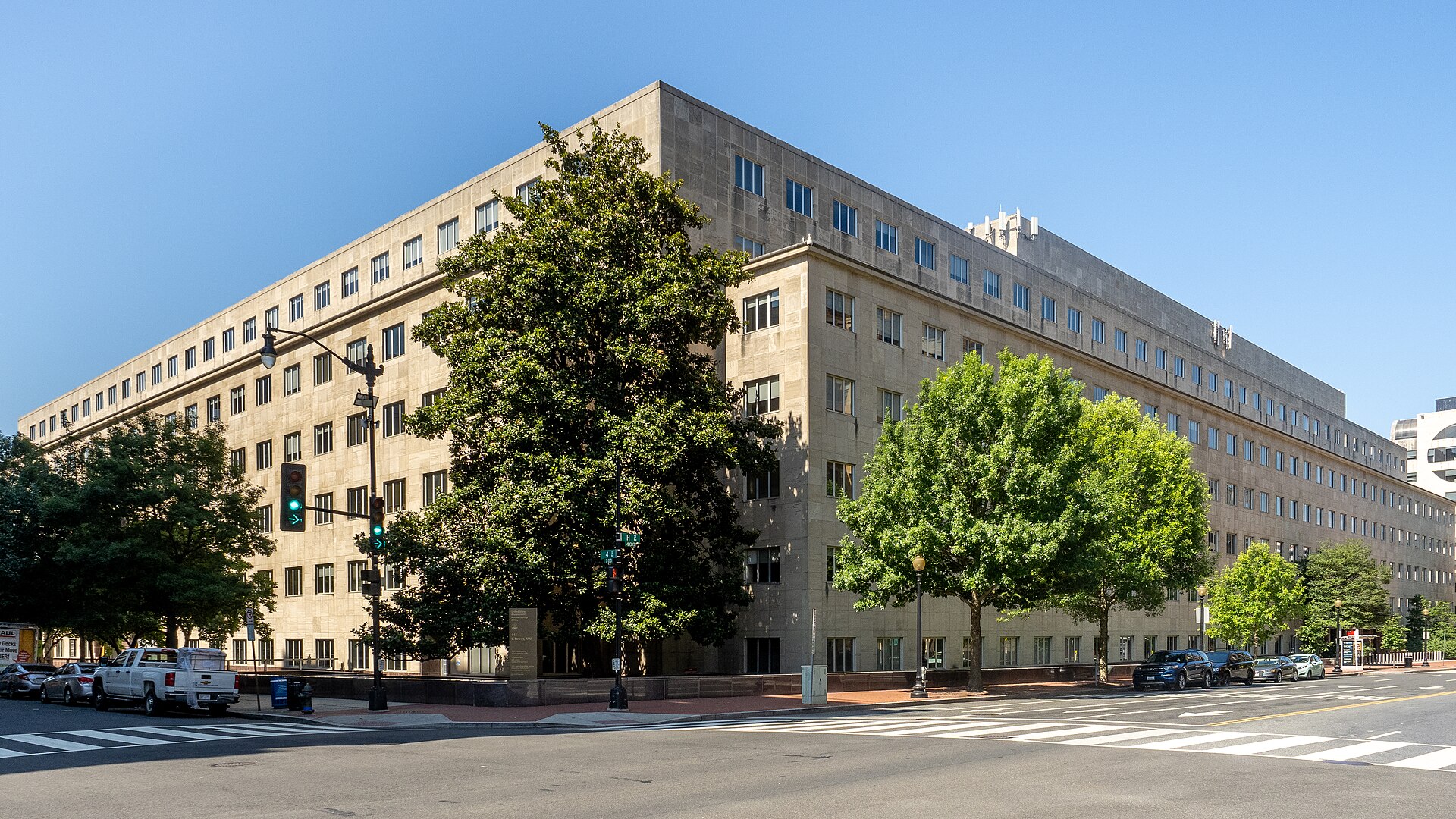
The Government Accountability Office reported on August 13 that the federal government's three crisis and support hotlines handled more contacts in fiscal 2025 than the year before, and largely kept doing what they had been doing. The report, GAO-26-109046, carries the title "National Crisis and Support Hotlines: Contact Volume Increased and Operations Remained Relatively Consistent in 2025." It covers a fiscal year during which, the summary states, the Department of Health and Human Services and the Department of Veterans Affairs announced plans to implement the President's February 2025 executive order to reduce the size of the federal workforce.
That overlap is what turns a routine count into a test of a claim.
In March 2025, Government Executive reported the scale of the HHS reduction under the headline "HHS to lay off 10,000 employees and cut overall workforce by 20,000." Its account carries a first-person statement made for the department, placing the cuts within the administration's DOGE workforce reduction initiative: "we're going to streamline HHS, make our agency more efficient and more effective." The same account carries a promise that the department would "do more with less," alongside an acknowledgment that the transition would be painful. The excerpt available to this desk does not name the speaker or the venue; the words are rendered as the department's own. Government Executive also reported the department's position that the reductions would not affect delivery of Medicare and Medicaid.
The argument being made was a capacity argument: fewer federal employees, undiminished service. An audit of the hotlines a year later is one of the few places that argument meets a counted record.
GAO's summary answers part of it. The hotlines' operations and services, the report finds, "remained mostly consistent, with an increase in chats, texts, and calls." For the 988 Suicide & Crisis Lifeline, volume rose for every contact method in fiscal 2025, an overall increase of 23 percent measured against fiscal 2024. Stakeholders selected to represent users of all three hotlines told GAO they experienced consistent services across the year.
What the summary counts is worth stating precisely, because the summary is precise about it. It counts contact volume, and it reports continuity as described by selected stakeholders. The 23 percent figure belongs to the 988 Lifeline alone; this desk did not obtain the per-hotline figures for the Veterans Crisis Line or the Maternal Mental Health Hotline and does not supply them. Nor does the summary rank services, price them, or say which ones existed at the start of the year and which did not.
A companion GAO product published weeks earlier, GAO-26-108114, "Suicide Prevention: Capacity and Federal Assessment of the 988 Lifeline," fills in the longer arc. From July 2022 through September 2025, roughly 19.1 million calls, texts, and chats were routed to crisis contact centers, that report states. It records growth of about 87 percent in call volume, about 260 percent in texts and about 23 percent in chats; the summary this desk read attaches no period to those three growth figures, so none is asserted here. On performance the picture is mixed: "Call answer rates increased, while text and chat answer rates varied," and average time to answer varied across all three methods. The same report notes suicide resulted in more than 49,000 deaths in 2023, up by 31% from 2003.
Neither GAO summary mentions the 988 Lifeline's LGBTQ+ Youth Specialized Services, the "Press 3" option. The Trevor Project, which provided the service and is an interested party on the question, published a post titled "Closed: Trump Admin Officially Shuts Down the 988 Suicide & Crisis Lifeline's LGBTQ+ Youth Specialized Services," stating that the federal government "cut a literal lifeline that has provided 1.5 million LGBTQ+ youth with suicide prevention services." That number counts young people served, not contacts handled.
The service was not a marginal one, on the accounts available. K-12 Dive reported it had fielded nearly 1.6 million calls, texts, and chats, running at roughly 2,100 contacts a day. iCarol, a crisis-center software vendor writing under the title "A Lifeline Cut Short," put the total at "nearly 1.5 million contacts" and counted "70,000 crisis interactions in April 2025 alone" - a month inside the fiscal year GAO audited. The two published totals differ, and neither excerpt states the period it covers, so this desk cannot reconcile them. Both are counts of contacts, a different unit from the Trevor Project's count of youth; readers should not treat the three figures as one number confirmed three times.
Congress did not treat the closure as settled. K-12 Dive reported a directive "to take immediate, concrete steps to restart specialized services for LGBTQ+ youth," and a figure of $33.1 million; the excerpt available here does not state what that money was appropriated for, or when. The same report, headlined "HHS working to restore LGBTQ+ youth suicide prevention hotline," carries the statement "We are working on getting it up now," and indicates the service was not then running fully. The excerpt names neither the speaker nor the setting, and this desk does not supply either.
Analysis: on the terms GAO set for itself, the continuity finding holds. The office counted contacts, asked selected users whether service held, and reported that it did. The distance opens between two propositions that read alike - the hotlines kept answering, and nobody lost a service. The first is what GAO's summary establishes. The second it does not test, and for one population the record assembled outside GAO points the other way. Absence from an audit summary is not itself a finding of absence; it is a boundary of scope, and scope is a choice someone made.
What a reader can check next has dates attached. GAO's next product on the 988 Lifeline will either address the specialized service or, like these two, not - and that silence is itself checkable. The $33.1 million reported by K-12 Dive carries an obligation to spend, and spending leaves a record. On this desk's reading of the material above, the prediction is that as of December 31, 2026, no public GAO or HHS record will document the LGBTQ+ youth specialized service as fully operational. If one does, the prediction fails on that date.
If you or someone you know is in crisis, the 988 Suicide & Crisis Lifeline can be reached by call or text at 988.