Lifestyle & Consumer · The Record
Louisville Ladder recalls 1,770,000 attic stairway ladders over bolts that can break
US and Canadian regulators announced the same bolt defect and described its consequence differently. The CPSC record says the remedy is a kit of two bolts the homeowner installs.
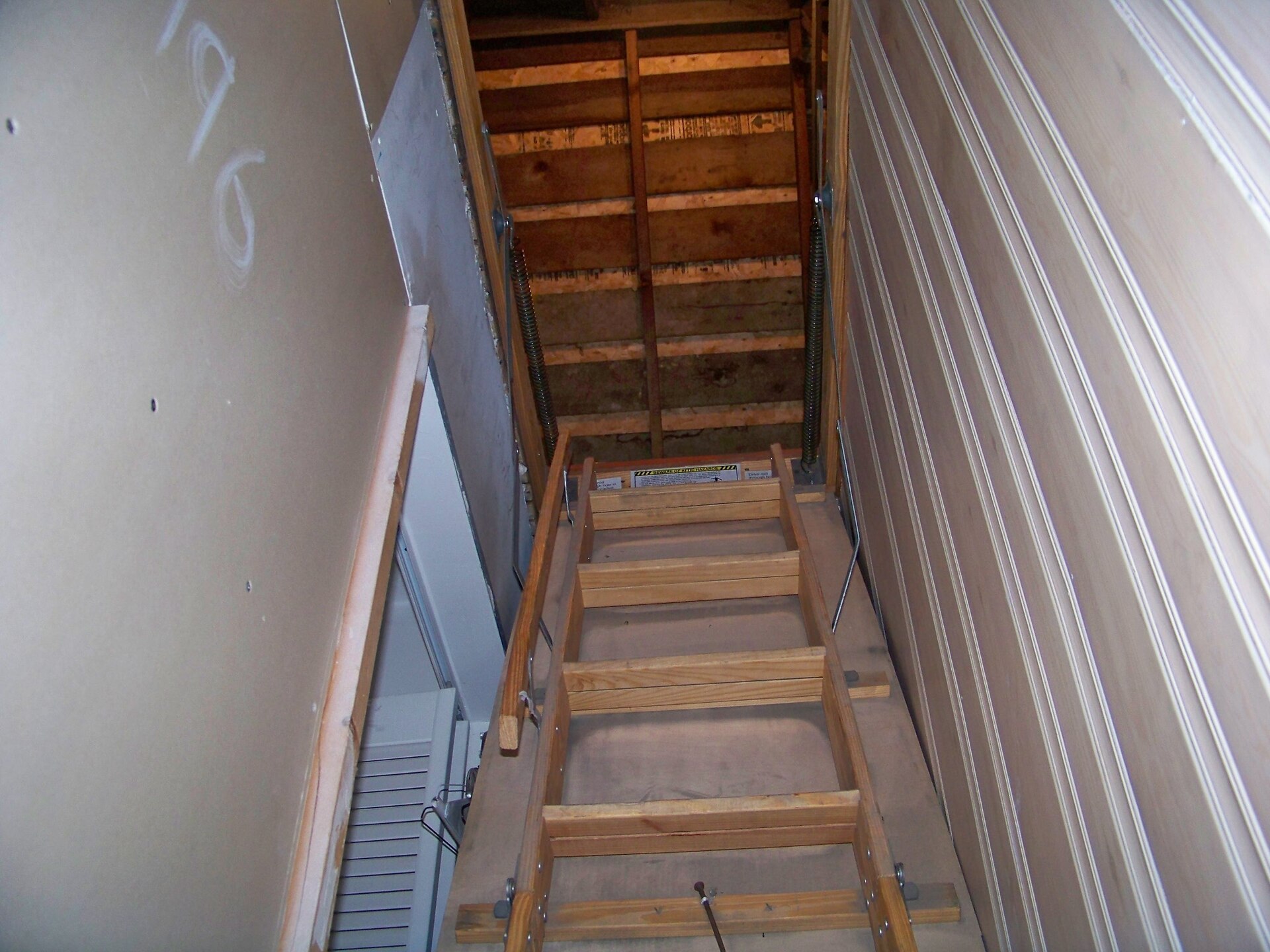
If there is a folding attic stairway in your ceiling, the check takes a minute: pull it down, look at the inside of the attic door, and read the brand name and model number printed there.
On August 06, 2026, the U.S. Consumer Product Safety Commission published recall 26-661, covering 1,770,000 attic stairway ladders sold in the United States under the Louisville, Featherlite, Lite and Century names - gas-strut models only, with handrails, folding up into the ceiling in aluminum or wood frames sized for openings from 22.5 to 30 inches wide and ceiling heights up to 12 feet. The commission's record directs consumers to stop using the recalled ladders immediately and to register at Atticstairwayrecall.expertinquiry.com for a free repair kit. The ladders were sold from November 2012 through July 2026 for between $170 and $600 through The Home Depot, Lowe's, Do It Best, Orgill and other retailers nationwide, and online at Amazon.com. A further 13,054 units were sold in Canada; no captured record states which Canadian retailers sold them, or at what price. The recalling firm is Louisville Ladder, Inc., of Louisville, Kentucky, and the record lists the ladders as manufactured in Mexico.
The hazard sentence at the center of this recall exists in two official versions, and they do not tell a homeowner the same thing about what can happen. Health Canada's Recalls and Safety Alerts notice for the Louisville and Featherlite attic stairways frames the defect as a possible departure from the manufacturer's own drawings: the quarter-inch chrome-colored bolts in the spreader assembly, on stairways "manufactured on or before June 22, 2026," may not meet Louisville Ladder Corp.'s design specifications, and the consequence the notice names is a potential injury hazard. That sentence carries no named speaker - no executive, no official, no spokesperson - so it belongs to the document, and this piece attributes it that way.
The CPSC record describes the same part on the same product and attaches a heavier consequence to it. In the saferproducts.gov record for recall 26661, the bolts can break while the ladder is in use, and the risk named is serious injury or death from a fall. The same record counts what has been reported: the firm has received 11 reports of a bolt breaking, including one report of an injury to the neck, head and back. Health Canada's notice, counting as of July 24, 2026, puts the Canadian total at one incident and no injuries, and restates the US figures as 11 incidents and one injury.
Neither notice divides its incident count by its unit count, so this desk did the arithmetic. Eleven reports against 1,770,000 US units is roughly one report for every 160,000 ladders sold. One report against 13,054 Canadian units is roughly one for every 13,000. Per unit sold, that is about a twelvefold difference, and it runs the other way from the raw counts: the eleven American reports are spread across a far larger number of ladders, so it is the Canadian notice that carries the higher rate per unit sold. Both figures are self-reported company counts as they stood on the dates the two notices give, and this desk has no basis in the captured records for saying how either figure will move.
The two records also bracket the problem in time, and the brackets are wide. CPSC dates the sales window from November 2012. Health Canada's scope reaches every stairway manufactured on or before June 22, 2026 - roughly six weeks before the American recall date - and sets no earlier boundary at all. Read together, and reading them together is this desk's own step, the documents leave open that bolts and specification may have been apart for the whole fourteen years the product was on shelves. The Canadian notice states that as a possibility rather than a finding: the bolts may not meet the specification. Neither captured record says when the deviation began, and neither says what changed on June 22.
On the part and on the fix, the two notices agree. Both tell consumers to stop using the stairway at once. The CPSC record describes a free kit of two replacement quarter-inch spreader bolts, washers and lock nuts, sent with installation instructions. Health Canada directs consumers to stop using the product immediately and to contact Louisville Ladder Corp. for a free repair kit; the captured Canadian notice lists no contents for that kit, so this desk cannot say the two kits are the same object.
That remedy has a practical wrinkle worth naming, because it lands on the consumer. The instruction is to stop using the ladder immediately, and registration requires the model number, and as the CPSC record puts it, "The brand name and model number are located on the inside of the attic door." Reaching it means opening the stairway. Then the replacement bolts go in by the owner's own hand: in the passages captured from both notices, the consumer does the installing, and neither offers professional installation or a technician visit.
No statement from the company appears in any captured record. Its homepage carries a line reading "URGENT Recall Notice on Attic Stairways" above the standing tagline, "Ladders and accessories that are tested and trusted at the top." Reporting the recall, Fox Business wrote that "Louisville Ladder could not immediately be reached by FOX Business for comment." This desk has no statement from Louisville Ladder, Inc. and did not obtain one; everything above rests on the two regulators' notices, one secondary report and the company's own homepage.
Three things resolve on a date. The CPSC record for 26-661 stands at 11 reports and one injury; the Canadian count stands at one incident as of July 24, 2026; both pages are public and both can be reread. This desk's checkable expectation, testable on December 1, 2026: the remedy listed on the CPSC record for recall 26-661 will still be a consumer-installed repair kit, not a replacement ladder, a refund or a professional installation program.
Until then the homeowner's task has not changed since August 6. Open the stairway, read the inside of the attic door, and if the name there is Louisville, Featherlite, Lite or Century and the ladder has gas struts, stop using it and register for the kit.