Lifestyle & Consumer · The Record
Captured federal nomination text puts Mar-a-Lago's three boatloads of Genoa stone on exterior walls alone - and stops them a few feet short of the top
The captured text of a National Park Service nomination form carries a narrower version of the sentence two captures repeat from each other verbatim and a third paraphrases - with a height limit the retellings drop and no stone in the arches.
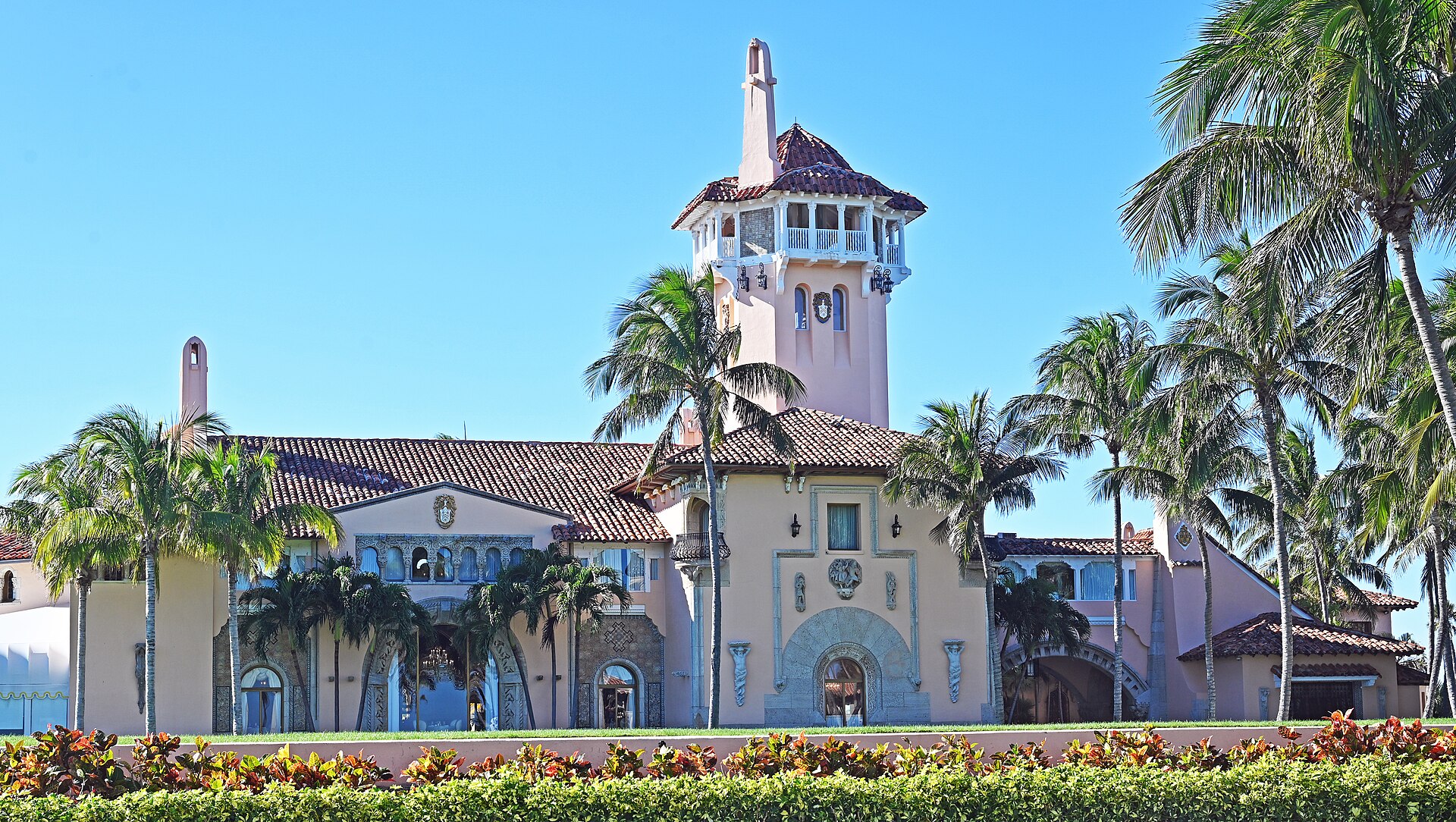
The most-repeated sentence about Mar-a-Lago in this set of captures is a sentence about rock. The Mar-a-Lago Club's history page states that three boatloads of Dorian stone were brought from Genoa, Italy for the construction of the exterior walls, arches and some of the interior. Four of the six captures held for this piece carry a version of that sentence. One of the four is a federal form, and it is the one that says something narrower.
The National Park Service's National Register of Historic Places inventory-nomination form for Mar-A-Lago carries the same three boatloads, the same port and the same name for the stone. Where the club's page runs the material across walls, arches and interior, the form's captured description keeps it outside and stops it short of the roofline, on exterior walls to within a few feet of the top. The two sentences share their nouns and their number. They part company on where the stone ended up.
An inventory-nomination form is the paperwork behind a National Register listing: a description of the property, an argument for its significance, and the sources for both. The capture held here is an unlabelled extract of the form, spanning at least description and significance material, which matters for everything that follows, because a passage missing from an extract is missing from the extract and not proven missing from the form. Inside that extract, the form describes the house as an adaption of the Hispano-Moresque style, crescent-shaped, with an upper and lower cloister on the concave side facing Lake Worth and a seventy-five foot tower on top. It records that the house is built of stone and treats that as an innovation for Florida at the time. It counts the grounds as roughly seventeen acres, with a nine-hole pitch and putt course, citrus groves, green houses, a cutting garden, guest houses and staff quarters.
Arches show up once in that captured description, and not as stone from Genoa. The approach, the form states, comes from the South Ocean boulevard "through a massive arched gate", down a coconut palm-lined driveway to a porte cochere. One paragraph of the captured description goes to tile: Spanish tile used throughout the interiors and exteriors, with pink glazed tile on either side of the front door.
So the distance between claim and record is one qualifier dropped and two destinations added. The height limit is a builder's detail, a line that says where the Genoa stone stops and not what sits above it; it survives in the federal sentence and in none of the retellings. Read as analysis rather than as a finding about the building itself: the club's version is the federal sentence with its edges filed off, which is what copying does to a sentence over time.
The rock also travels under two names. The federal form and the club's page both call it Dorian stone. Wikipedia's entry describes "three boatloads of Doria limestone from Genoa" and places it in the exterior wall facing, some interior structures, arches and the Barwig sculptures, which is closer to the club's reading than to the form's and uses a different name for the material. An essay published by Peacock Architects carries the club's wording word for word; the two-paragraph extract captured for this piece does not show whether those words are the writer's own or a speaker's.
The second federal capture is thinner than its name suggests. The NPGallery asset record for reference 80000961 arrives as a run of bare strings: the reference number, the date 12/23/1980, the names Wyeth,Marion Sims and Urban,Joseph, the words ARCHITECTURE and SOCIAL HISTORY, two date ranges, BUILDING, and the address 1100 S. Ocean Blvd. No field names came with them. This piece therefore reports the strings the record carries and does not put a label on the date, because the capture cannot say whether the record calls it a listing date, a certification date or something else. The reference number survives that ambiguity only because it is in the URL.
The club's page is doing several jobs at once, and the stone sentence sits among them. It names Joseph Urban, called in from Vienna for the more elaborate details, and the sculptor Franz Barwig, who with his son spent close to three years on the carvings. It counts approximately 20,000 Cuban roofing tiles and 2,200 square feet of black and white marble from an old castle in Cuba, and it says the late Mrs. Horace Havermeyer had collected approximately 36,000 tiles in the 1800's. It dates the official opening to January of 1927, after four years of construction. Both the club's page and the federal extract give space to tile, though to different tile claims. They part company on where the Genoa stone stopped.
One further capture touches the house's federal chapter without settling it. National Parks Traveler describes the estate being transferred to the federal government "for use as a diplomatic/presidential retreat" and being "placed on the National Register of Historic Places". The fragments held here carry no dates in their body text, though the Traveler piece's URL as captured carries 1972-1980 in its slug; nothing in the six captures' body text establishes when or whether the estate left federal hands.
What a reader can check from here is narrow and real. The club's history page was live when captured on 2026-09-05, and the sentence in it either changes or it does not: this desk's falsifiable call is that on 2026-12-31 the page will still carry the stone across exterior walls, arches and some of the interior, with no height limit. The second item is a document. The nomination capture is an extract of one section, and the remainder of that same form is the only record in this set that would show what the three boatloads claim rested on when it entered the federal form.