Lifestyle & Consumer · The Record
NHTSA narrowed Nissan Skyline imports to a 30-month band of R33s in 2006
The March 1, 2006 Federal Register notice rescinded one eligibility number and issued another; the tentative decision that preceded it rested on airbag recordkeeping.
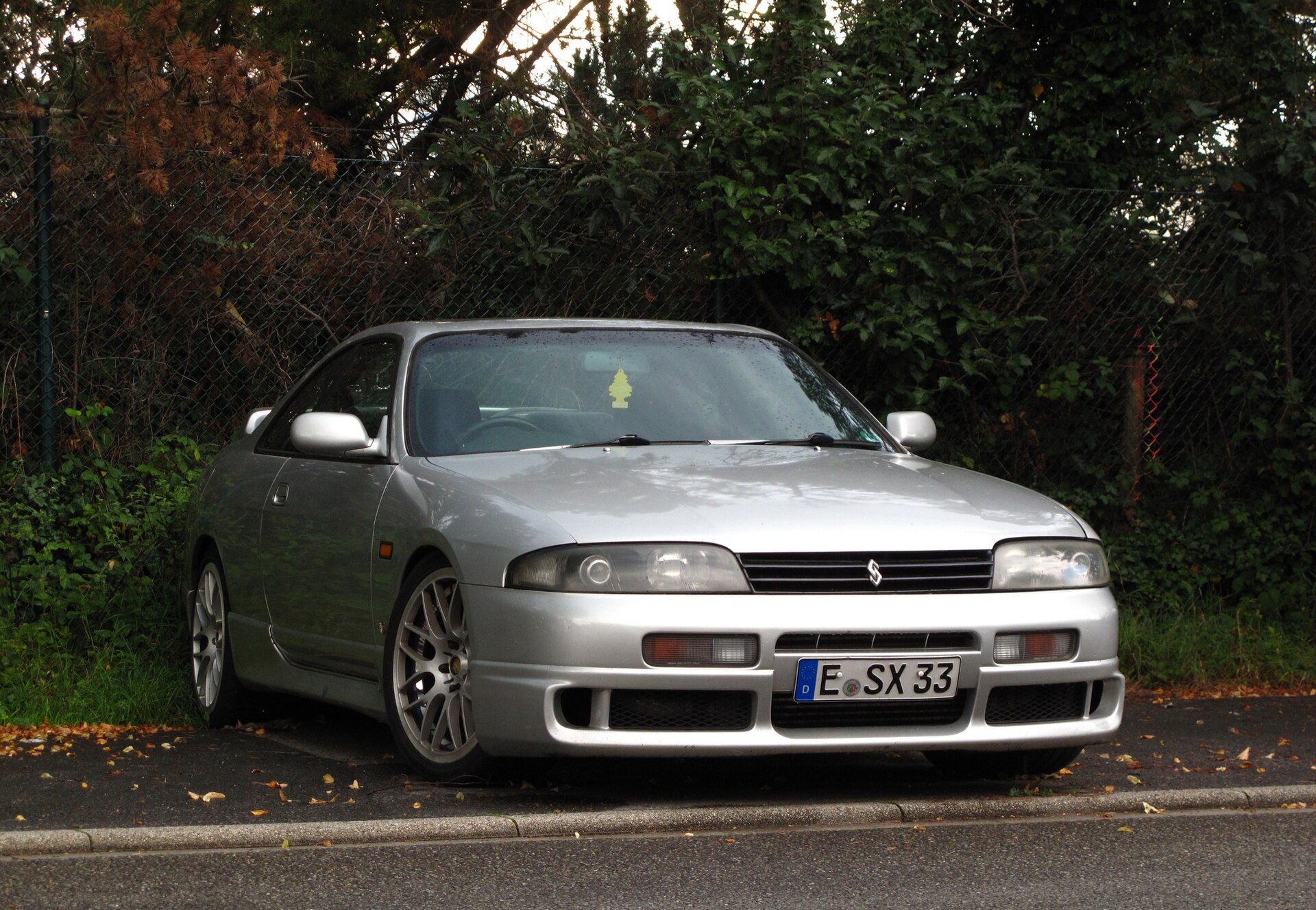
One route a nonconforming Nissan Skyline has had into the United States is a vehicle eligibility number the National Highway Traffic Safety Administration issued on March 1, 2006. It covers 30 months of production and nothing else. The notice that created it partially rescinds the agency's own earlier grant, runs under Docket No. NHTSA 2005-22654, Notice 2, and is signed by Claude H. Harris, Director, Office of Vehicle Safety Compliance.
Enthusiast coverage tells a shorter version. Drifted, a car site whose page asks why the Skyline is illegal in the United States, writes that "after this came to light, the NHTSA banned further importation of Skylines." The captured page carries no byline, so the sentence belongs to the publication and not to any named writer. The "this" is the site's account of Motorex, a company the page describes as founded in 1998 and as the first to apply to bring the R33 Skyline in legally by supplying cars for crash testing. Drifted states that Motorex provided only R33s for testing and then claimed the R32 and R34 data were identical, which the page calls a lie. That allegation rests on a single unattributed secondary page; no court, police or agency document in this file supports or refutes it, and neither Motorex nor Drifted has been contacted for this piece.
Now the notice. It rescinds vehicle eligibility number VCP-17 and issues VCP-32 in its place, and under the new number "only Nissan R33 model GTS and GTR passenger cars manufactured between January 1996 and June 1998 are eligible for importation." All other models and model years admissible under the prior decision, the decision records, are no longer eligible. Counted inclusively, January 1996 through June 1998 is 30 months. The agency cut a ten-model-year grant down to a band rather than closing the door; the same document that takes VCP-17 away issues a replacement number for the cars that survive.
The grant being cut was six years old. On January 19, 2000 the agency decided that 1990-1999 Nissan GTS and GTR passenger cars were eligible for importation because they had safety features complying with, or capable of being altered to comply with, all applicable federal motor vehicle safety standards - Docket No. NHTSA-99-5507, Notice 2, signed by Marilynne Jacobs, Director, Office of Vehicle Safety Compliance. The petitioner named in that document is J.K. Motors of Baltimore, Maryland, Registered Importer No. R-90-006. Motorex, which the enthusiast account credits with the first applications, does not appear in the captured text of that notice.
What unwound the 2000 grant was information the agency obtained from the manufacturer. After the decision published, NHTSA received additional information about the cars from Nissan North America, Inc. Nissan described three distinct GTS and GTR models built between 1990 and 1999 - R32, R33 and R34 - each in its account newly designed rather than carried over from the one before, and each differing from the others in structure and in restraint performance. With that in hand, the 2006 decision finds the petitioner "did not identify these separate models or provide crash performance test data on them," and therefore had not demonstrated full compliance with FMVSS 208 and other crashworthiness standards for the R32 and R34.
The reasoning for where the band starts sits in the tentative decision published on November 28, 2005, which called the original grant "overly broad." That notice states that Nissan "does not possess records that would allow it to determine whether any individual vehicle had the air bags installed," and that the agency can be assured only for R33s produced from January 1996 that both driver and passenger airbags were fitted as original equipment. It also records that no driver's airbag was available in the R32 GTS until August 1991, and that the testing the petitioner relied on was done on vehicles after it had made structural modifications and replaced the airbags at both front seating positions.
That is a documentation problem, and it is not the story the enthusiast page tells. Drifted writes that the R32 "didn't hold up in crash testing due to not being airbag-equipped, unlike the R33 and R34." Nothing in the captured text of either federal notice records an R32 being crashed and failing; what the tentative decision describes is an inability to establish, car by car, what equipment left the factory in it.
MotorBiscuit describes a second route into the country, a years-based exception. The page told readers "That's right, you can now import a 1996-1998 R33 Skyline," and explained the mechanism as a rule under which "cars become eligible for importation after a set number of years." The capture of that page carries no date and no byline, so its reference to January of the year of writing cannot be tied to a calendar year from this file, and the page does not say how many years the exception runs.
One thing the airbag reasoning does not explain is where the band ends. Both notices stop eligibility at June 1998, but the recordkeeping ground fixes only a start date - the month from which the agency says it can be assured about original equipment. The captured text carries no reason for the June 1998 cutoff. That is a gap in what was captured, and possibly a gap in the notices; from these files a reader cannot tell which.
What is checkable next sits in the Federal Register. VCP-32 is the eligibility number the 2006 decision issued for the R33s inside the band; whether any later notice has changed it is not something these captures show. This desk expects that on March 1, 2027, twenty-one years to the day after the final decision, VCP-32 will still be the operative eligibility number for those cars and no later notice will have restored the R32 or the R34 to the list. That is an expectation and not a record - nothing in these files settles it - and the Federal Register is where it resolves.