Lifestyle & Consumer · The Record
The 325-car replica exemption defines an eligible car as one built under a license for trade dress
A SEMA item told small automakers the roadblocks had been eliminated. The federal exemption it praises admits only cars built under a license for trade dress, the interest at stake in the $8,500 kit case whose injunction a 1991 Sixth Circuit decision reproduces.
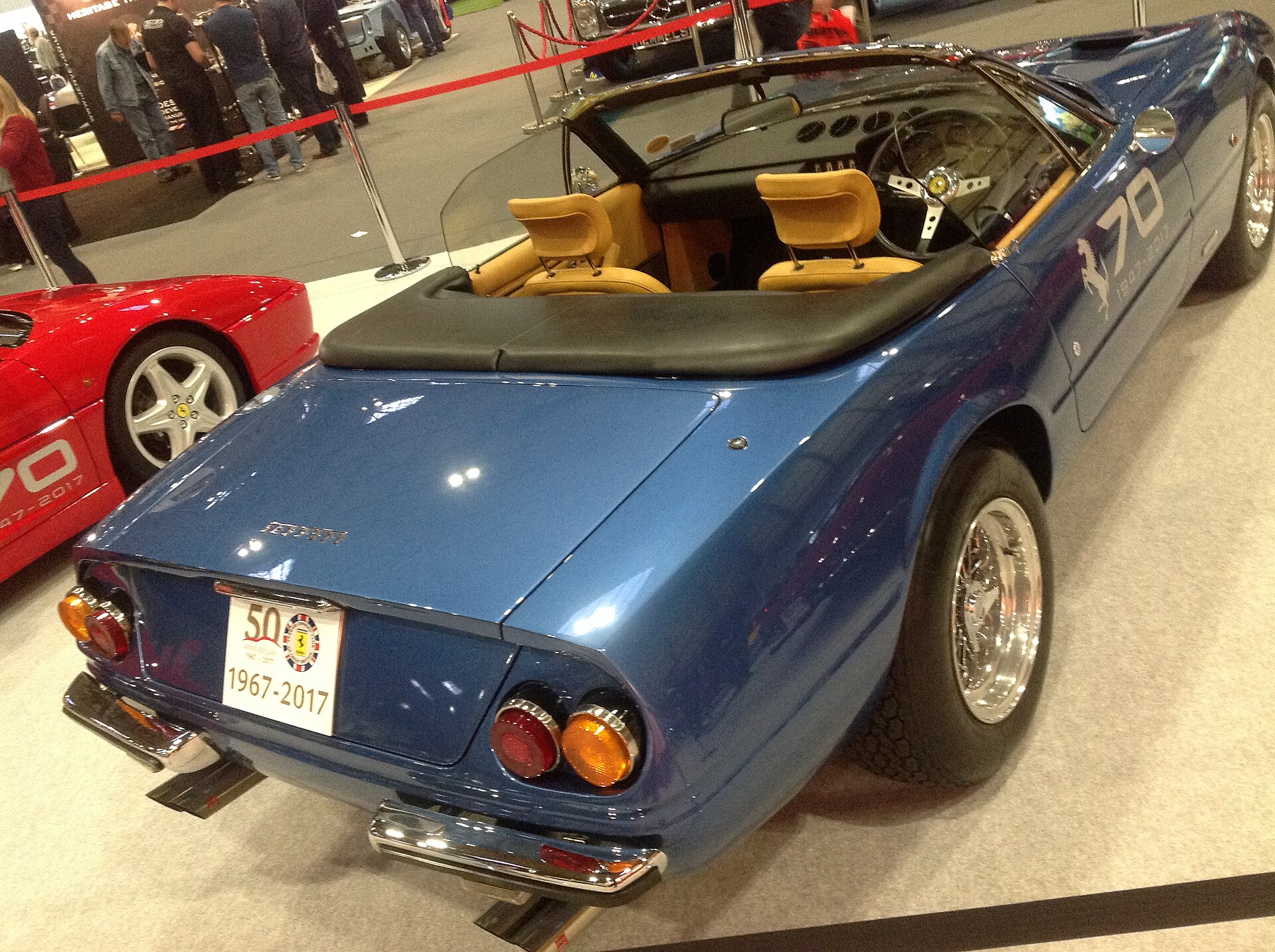
Anyone shopping for a newly built copy of an old sports car is shopping inside a single paragraph of federal law. 49 U.S.C. 30114 sets out the replica exemption in these words: "exempt from section 30112(a) of this title not more than 325 replica motor vehicles per year that are manufactured or imported by a low-volume manufacturer." The section defines a low-volume manufacturer as a maker whose annual worldwide production, counting a parent or subsidiary, runs to no more than 5,000 vehicles, and it excludes anyone registered as an importer under section 30141.
The 325 is the number that gets repeated. The definition underneath it decides who qualifies, and it has two halves. The car must be intended to resemble the body of another vehicle built at least 25 years earlier. And it must be "manufactured under a license for the product configuration, trade dress, trademark, or patent, for the motor vehicle that is intended to be replicated from the original manufacturer, its successors or assignees, or current owner of such product configuration, trade dress, trademark, or patent rights." That second half is a licensing test, and it sits inside the definition rather than beside it.
The Specialty Equipment Market Association said the way was clear. An item posted in September 2022 at sema.org/news-media/enews/2022/09/replica-car-companies-start-your-sales states: "Regulatory barriers have previously prevented small automakers from producing heritage cars that are coveted by consumers." It also states: "The roadblocks have been eliminated." The captured page contains no quotation marks and attaches no speaker to either sentence, so both are reported here as statements of the item itself. The same item states that the association applauds the agency's final rule for letting companies market classic-themed cars.
The item gives low-volume manufacturers a sequence to follow: register with NHTSA, EPA and CARB before selling vehicles, then submit annual reports on production. The rule text captured for this piece covers none of those steps, so nothing here tests that part of the advice. Nor do these captures contradict the sentence about regulatory barriers; the captures do not say which barriers it means. What the record can answer is what that sentence leaves out.
NHTSA's replica rule, published in the Federal Register on March 9, 2022 as FR Doc. 2022-04030, carries the statute's licensing language into the registration process. To register as a replica manufacturer, a low-volume maker must certify the vehicle will be built "under a license for the product configuration, trade dress, trademark or patent" - the rule's own words for the permission it demands. The registration-content rule, 49 CFR 586.6, supplies the words of that certification: the manufacturer has determined which intellectual property rights are required, and "has obtained all licenses and permissions necessary to legally produce the replica motor vehicle described in the application, or is the owner of such intellectual property."
The obligation is not confined to a body shell. The Federal Register document describes it as reaching not only the exterior rights but "any IP implicated by designs elsewhere in the vehicle, such as the interior." The same document carries the argument that disclosure would "permit intellectual property owners to take action to protect their rights if they believe that the applicant does not have the necessary authorizations"; the capture attaches no name to that argument. What the captured text asks the registrant for is the certification. The licenses themselves, in what the capture carries, go to no one.
Whether a car's shape can be owned at all was the subject of a 1991 Sixth Circuit decision. Ferrari S.p.A. Esercizio v. Roberts, 944 F.2d 1235 (6th Cir. 1991), concerned fiberglass kits that replicated the exterior features of the Daytona Spyder and the Testarossa and were sold as the Miami Spyder and the Miami Coupe. The kit was a single molded shell, usually bolted onto the undercarriage of a donor car such as a Chevrolet Corvette or a Pontiac Fiero. Most sold as kits for about $8,500. A fully accessorized turnkey version ran about $50,000.
The decision records that the district court found, and the panel agreed, that "the unique exterior design and shape of the Ferrari vehicles are their 'mark' or 'trade dress' which distinguish the vehicles' exterior shapes not simply as distinctively attractive designs, but as Ferrari creations." It sets out the survey evidence behind that finding: shown photographs with the identifying badges removed, 73 percent of respondents identified the Daytona Spyder as a Ferrari and 82 percent identified the Testarossa. It states that courts have consistently rejected the argument that the availability of design patent protection keeps the Lanham Act out where trade dress has acquired strong secondary meaning. And it reproduces the injunction's operative words, which barred manufacturing, selling, distributing or aiding others to do those things with the Miami Spyder, the Miami Coupe and all versions of them.
Read together, the four federal texts describe a trade that no single one of them states, and this paragraph is analysis drawn from them. The exemption on a 325-car production run is from section 30112(a). The trade-dress condition was not loosened. It moved up: from case law a builder might take a chance on, into the statutory definition of the exemption, and from there onto a certification a manufacturer signs at registration. A builder holding a license, or copying a shape no one claims, is untouched by it. A builder in the position of the kit maker in the 1991 case would now be certifying to a federal agency that it holds permissions it does not hold.
The captured text of the decision also carries the argument on the other side, in two separate excerpts. One states: "An unpatentable article, like an article on which the patent has expired, is in the public domain and may be made and sold by whoever chooses to do so." Another states that a copier's only obligation is to identify its product, so the public is not mistaken into believing the prior patentee made it. The capture does not show where either sentence sits in the opinion or whose reasoning it belongs to, so this piece does not say.
For a buyer, the check is small and specific. The exemption is real, and the definition that admits a car into it names a license. That license, or the claim to own the rights outright, is written down: 49 CFR 586.6 puts the certification inside the registration a low-volume manufacturer files. Ask the builder which registration carries it and which rights holder granted the license, before any money changes hands.
March 9, 2027 is the date to look again. Five years after the rule published, the license test in the statute's definition of a replica motor vehicle and the certification paragraph in 49 CFR 586.6 should still read as they do now, and a replica maker's eligibility should still turn on both rather than on the section 30112(a) exemption alone. Both texts are public, and either one changing is the next story.