Science & Technology · The Record
NASA lists two more 2026 Venus occultations; its captured September guide does not mention Sept. 14
A Sept. 4 photo caption on nasa.gov sends skywatchers to Sept. 14 and Nov. 7. The captured version of NASA Science's September guide, dated Sep 01, highlights Antares instead, and an independent prediction record puts the November event over the southeastern Pacific.
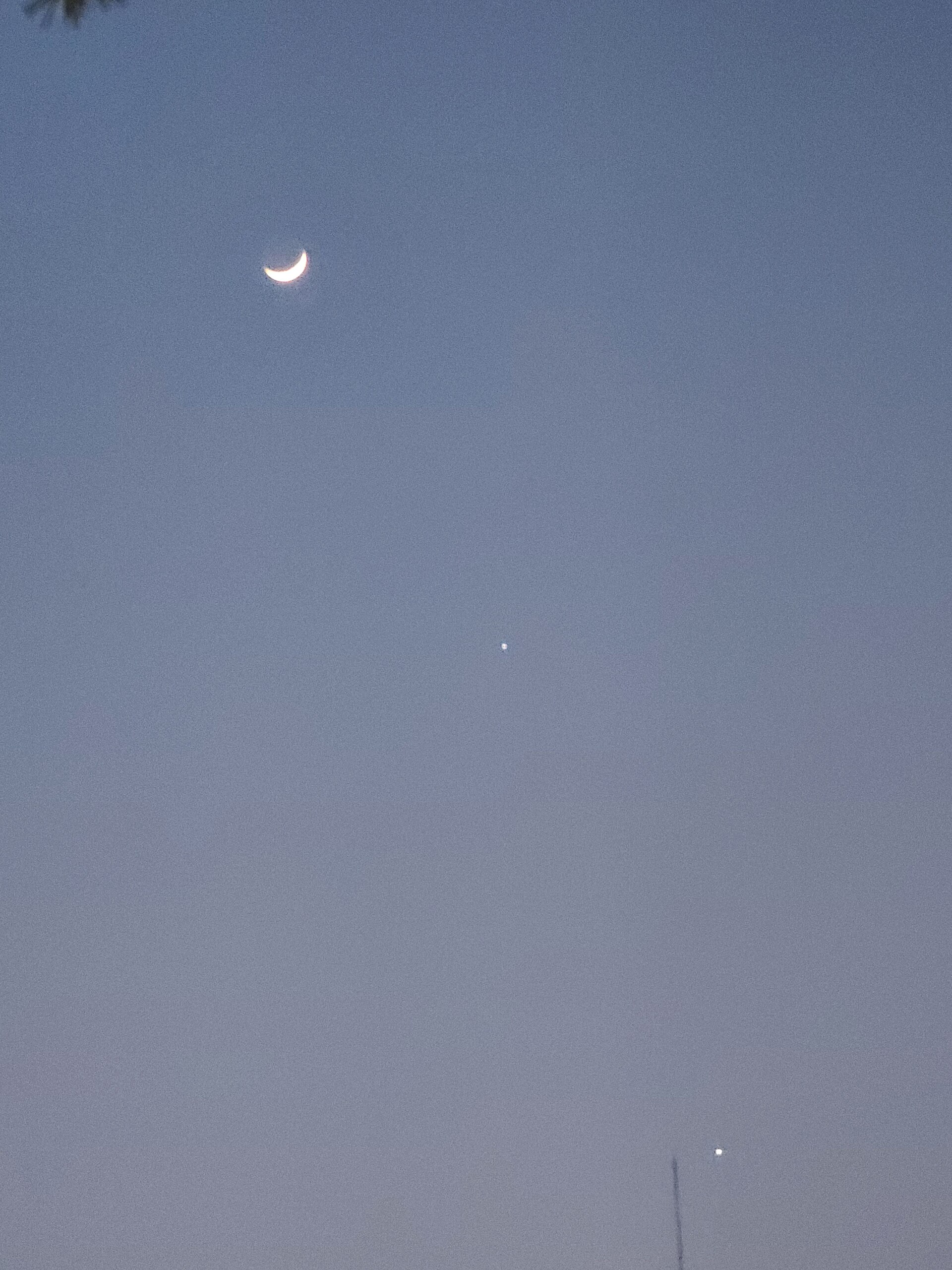
On Sept. 4 NASA posted a photograph of Venus at the moment it went behind the Moon, and used the caption underneath it to send readers after the next one. The image was taken on June 17 from the Mary W. Jackson NASA Headquarters building in Washington, and shows the planet at the start of the occultation. The page is bylined HQ Web Team, dated Sep 04, 2026, and carries the image credit NASA/Joel Kowsky. Its caption calls what happened in daylight "a rare event: a daytime lunar occultation of Venus," then points anyone who missed it at two more chances in 2026: Sept. 14, which the caption places over parts of Asia, Africa, Europe and western Russia, and Nov. 7, which it places over southern South America.
Who is making that claim is worth stating precisely, because the page itself does not. No individual is named as the author or the speaker of that sentence. The byline is a team, and no individual is named on the item outside the photo credit line and the building name itself, which credits the photograph and not the text. So the claim belongs to the document rather than to any official: NASA's headquarters web item is what states it.
The mechanism is not complicated, and the caption explains it accurately in its own terms - the Moon moves directly in front of another object as seen from Earth and briefly hides it. The consequence is that an occultation is a local event. The English Wikipedia summary of the phenomenon describes the Moon obstructing Venus from view on some regions of the Earth, which is why each of these dates arrives with a list of places attached, and why the list is the part worth checking.
Three days before that photo item went up, NASA Science published its own monthly skywatching guide for September, dated Sep 01, 2026 and credited to Raquel Villanueva. It is the page a reader who took the caption's advice would most plausibly open next. In the version captured for this piece, it does not mention the Sept. 14 occultation at all. The words "occultation" and "occult" do not appear on it - a finding about the captured page, not a quotation from it. What the guide offers for those dates is the Moon as a signpost: "From September 14 through 20, let the Moon guide you to a few celestial landmarks," it reads, and then walks the reader from the Moon toward Antares in Scorpius. Its Venus item lands four days later and concerns brightness, not disappearance: "Look west on September 18 as Venus hits peak brilliance," the guide directs.
The same series handled June very differently. The June 2026 edition led its highlights with the line "June 17: Moon passes in front of Venus," told readers the planet would look like it disappears behind the Moon and then reappears, and named the countries in the viewing path - parts of the United States, Canada, Brazil and Venezuela. As analysis: the difference between the two editions tracks who could see the event from the United States. June 17 was visible across the contiguous US; the Wikipedia summary records it as visible in daylight there, along with part of Canada and Mexico, the Caribbean and northeastern South America. Sept. 14 is not a US event on anyone's account. The guide that promoted an occultation Americans could watch is silent, in the captured version, about the one they cannot.
The November date carries a second, sharper problem. Universe Today's roundup of September occultations, bylined David Dickinson, places the year's final Venus occultation not over land but over open ocean. Both statements cannot describe the same viewing path. One of them tells a reader on the coast of a continent to go outside; the other says the event happens far offshore.
The June guidance also carried something the Sept. 4 item does not. Two consecutive sentences in NASA Science's June edition read: "If you're trying to observe the occultation, do not point binoculars, a telescope, or a camera near the sun unless you're using proper solar safety equipment. Looking at or near the sun through optics can cause serious eye injury." JPL's What's Up video page for June 2026 carries those same two sentences, word for word - one warning published identically across two NASA pages. The Sept. 4 caption repeats no version of it. Dickinson describes Sept. 14 as a daytime event for Europe, part of Africa - he names northeast Africa - the UK and the Middle East, with Venus and the Moon 41 degrees east of the Sun at the time, and notes that the Moon takes just over a minute to cover the planet's sunlit crescent. A daytime observation near the Sun is exactly the condition NASA's June pages wrote the warning for.
One more word in the caption is worth benchmarking, because the caption itself supplies the counter-evidence. "Rare" sits in the same sentence group as "the first of three occultations happening this year." The Wikipedia summary sets the long-run rate: occultations of Venus "only happen about twice a year rather than once a month," and a computer search predicts 101 of them between 1995 and 2045 - close to two a year averaged over that half-century. Three in 2026 is above the baseline, not outside it. The rarity in June was the daytime timing and the US ground track, which is what the June guide emphasized and what the September caption compresses into one adjective.
None of this settles whether the caption is wrong. A photo caption is a coarse instrument, and a country list is not a path map; "southern South America" and "the southeastern Pacific Ocean" could conceivably be two descriptions of the ends of one track, though neither document says so. Nor does the record show anyone deciding to leave the Sept. 14 event out of the September guide. What the six documents establish is narrower and checkable: NASA's two skywatching channels currently describe the same year's occultation series differently, and the fuller guidance - regions, mechanics, eye safety - sits on the page that does not mention the next event.
Two dates settle this without anyone's cooperation. As analysis, and falsifiably: if the captured September guide is accurate, the page at science.nasa.gov will still carry no mention of a Sept. 14 Venus occultation when the Moon covers the planet on Sept. 14, 2026. And on Nov. 7, 2026 the observing reports will come either from southern South America, as NASA's caption says, or from nowhere populated at all, as the Universe Today account implies. Whoever is looking up that day is the check.