Science & Technology · The Record
Johnson said AI companies can self-regulate; the White House order on file directs the Attorney General to establish a task force to challenge state AI laws
The Speaker told reporters the industry needs no one telling it to slow down. The captured record carries a presidential order commissioning challenges to state AI laws, a Justice Department motion to intervene on xAI's side against Colorado, and a Colorado rewrite that took eleven days from introduction to final Senate action.
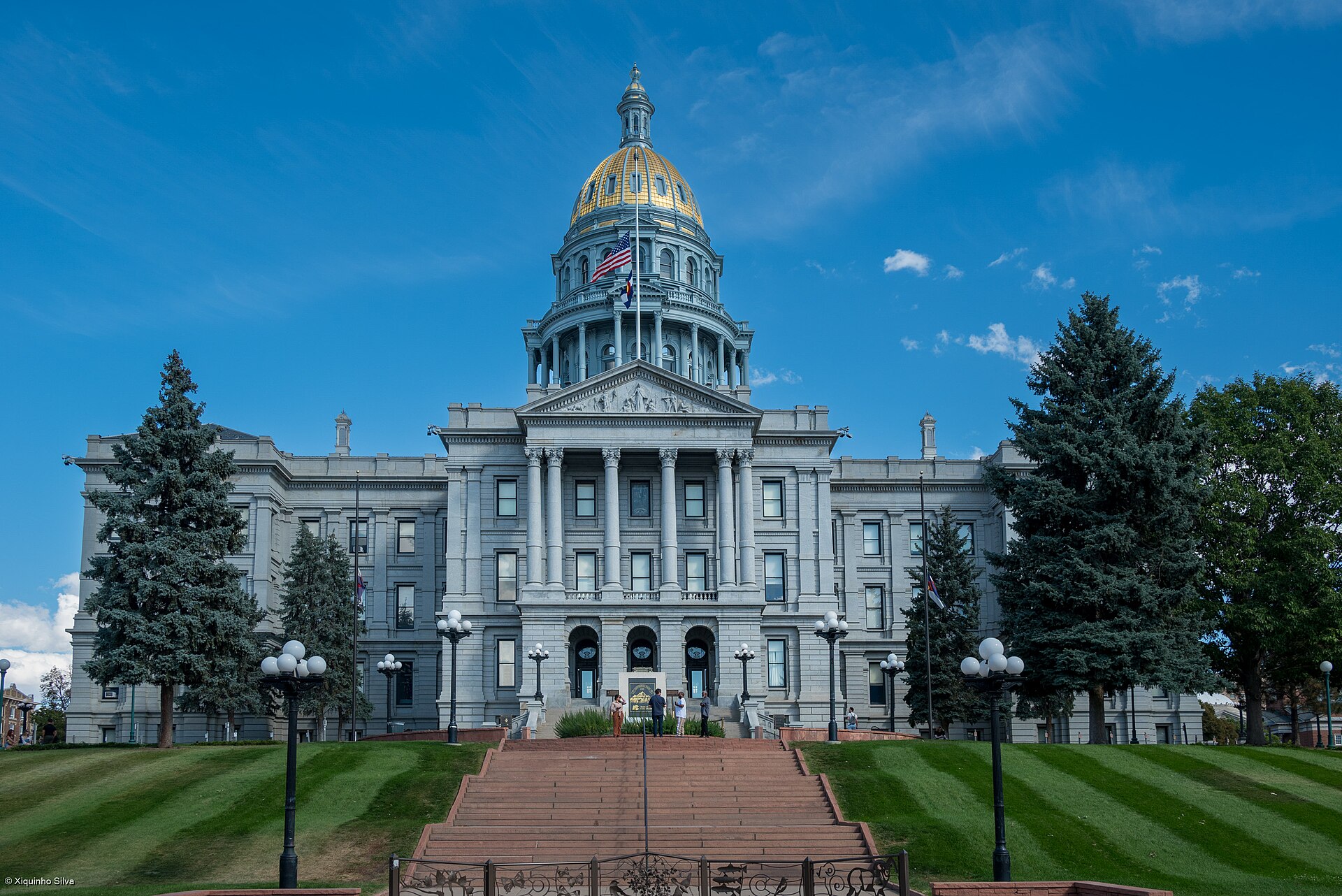
US House Speaker Mike Johnson told reporters that the firms building AI systems should be trusted to set their own speed limits. Al Jazeera's report of the remarks - the capture's URL places the piece on September 15, 2026, while the text itself says only that he spoke to reporters on a Tuesday - carries the line directly: "They can self-regulate. They don't need the government to tell them to slow it down. If they want to slow it down, they should," he said.
The setting is part of the claim. Johnson was answering a push for a pause on AI development, and he rejected it in the same appearance: "We cannot have a moratorium on the development of AI," he told reporters, according to the report, which carries the rest of his reasoning in his own words: "Because then we will lose our edge to China, and that has serious national security implications for every American family.". He did not close the door on rules altogether. The report describes him allowing for guardrails set in a balanced and thoughtful way, and quotes him saying: "I think you need independent auditors. I think you need transparency from the people who are developing this." He also told reporters he had spoken to Trump on Monday night, and that executives from the major AI companies would be called in to the White House within a week. The report does not say Johnson was answering them, but it places two calls for restriction on the same Tuesday: US Senator Bernie Sanders and Steve Bannon, a former adviser to President Donald Trump, appeared at the same event in Washington, both calling for restrictions on AI. A day earlier, per the same report, Trump had played down warnings from industry leaders about misuse and said the country already had safeguards.
So the proposition on the table is that AI companies need no government telling them to slow down. The documentary record in these captures describes a federal government that acted - not to slow the companies down, but to clear state law out of their path.
Start with the presidential action published on the White House site. The captured page opens with the policy it sets: "It is the policy of the United States to sustain and enhance the United States' global AI dominance through a minimally burdensome national policy framework for AI." Two deadlines follow from it. The Attorney General is given 30 days to establish a task force whose stated job is challenging state AI laws that conflict with that policy, including laws the order treats as unconstitutional regulation of interstate commerce or as preempted by federal rules. The Secretary of Commerce is given 90 days to publish an assessment of state AI laws already on the books and to identify the ones deemed onerous.
What the capture does not settle is worth stating plainly, because the gaps are load-bearing. The page as captured carries no title line, no order number and no signing date; what fixes it in time is its own address, which sits under a December 2025 path: whitehouse.gov/presidential-actions/2025/12/eliminating-state-law-obstruction-of-national-artificial-intelligence-policy. The slug is blunter than anything in the text it serves. Nothing in the capture shows that the task force was established, or that it filed anything.
Something was filed, though no capture says when. A release from the Justice Department's Office of Public Affairs announces that the department moved to intervene in a lawsuit brought by xAI against Colorado's algorithmic-discrimination statute, SB24-205. The direction of travel is the detail: the department asked a court to let it join a private company's case, on the company's side. What the department put forward there are allegations in active litigation, not findings. It alleges the Colorado law breaches the Equal Protection Clause of the Fourteenth Amendment by forcing AI companies to head off unintended disparate impacts tied to protected characteristics such as race and sex, and by exempting from liability certain discrimination framed as advancing diversity. Assistant Attorney General Harmeet K. Dhillon of the Civil Rights Division is quoted on the release: "Laws that require AI companies to infect their products with woke DEI ideology are illegal." Assistant Attorney General Brett A. Shumate of the Civil Division puts the stake in market terms: "America's success in the AI race will depend on removing barriers to innovation and adoption across sectors." That is a Justice Department official framing the government's task as removing barriers, against the Speaker's account of a government that need not act at all.
By the release's own account, the statute under challenge is a duties regime rather than a speed limit: developers and deployers of algorithm products must satisfy disclosure, reporting and prevention requirements when those products are built for services such as mortgage lending, student admissions and job-candidate selection. Colorado's governor signed SB24-205 on May 17, 2024, under the title Consumer Protections for Artificial Intelligence. xAI filed its challenge on April 9 - the release gives the day and the month, and no year appears anywhere in the captured text.
Colorado rewrote the law rather than leave it as drafted. SB26-189, titled Automated Decision-Making Technology, repeals and reenacts provisions of SB24-205, per the legislature's own bill page. The movement is the part worth timing: introduced in the Senate on May 1, 2026 and sent to Business, Labor & Technology; through third reading on May 7 with no amendments; repassed on May 12 after the Senate concurred in House amendments; signed by the governor on May 14. Eleven days from introduction to final Senate action. One name carries across both statutes: Senator Robert Rodriguez is listed as a prime sponsor of the 2024 law and again of the 2026 bill that replaced it.
The captures carry one congressional vote on the preemption question, and it went against the moratorium. Tech Policy Press reported the Senate voting 99-1 to pass an amendment that removed a proposed ten-year moratorium on the enforcement of state AI laws. The captured report places the vote "Early Tuesday morning" and carries no calendar date. Sen. Thom Tillis (R-NC) cast the only vote the other way. The report also carries an objection that the captured text does not attribute to any named senator: "While I appreciate Chairman Cruz's efforts to find acceptable language that allows states to protect their citizens from the abuses of AI, the current language is not acceptable".
Read as analysis of the documents above: the question these papers raise is not whether government stayed out of AI, but which side of the Colorado case it argued for. A self-regulation claim implies an absent regulator. The record shows a present one, pointed at state legislatures. What the captures hold is three documents, not a dated sequence: the release carrying the motion to intervene has no date on it, so neither its place in the order of events nor any causal link is on the record. No captured source connects the task force the order commissions to the motion the department filed in Colorado, and none establishes how the xAI case stands now. What the papers do support is the pace: the statute xAI sued over was replaced by a bill that took eleven days to travel from introduction to final Senate action.
Three threads resolve on dates a reader can check without waiting on anyone's cooperation. The order's second deadline produced a Commerce evaluation of state AI laws, or it did not: a falsifiable prediction - by December 31, 2026, a published Commerce assessment naming specific state AI laws as onerous will be findable on commerce.gov. If nothing is posted by then, the deadline passed without a public product. The second is the meeting Johnson described, with major AI company executives summoned to the White House inside a week of September 15; a readout, a participant list, or its absence, is on the public record by now. The third is the docket in xAI's case against a Colorado statute that Colorado has repealed and reenacted, which is where the government's allegations get tested rather than restated.