World & Conflict · The Record
Senators urge Treasury to sanction China's fishing support vessels; after the 157-vessel 2022 designation, C4ADS found PME- and Honglong-owned ships' activity looked largely unchanged
Sullivan and Cruz say the small support fleet is the chokepoint. The last time Treasury designated this network, an independent tracker reported the vessels' activity appeared largely consistent with the pattern before the sanctions.
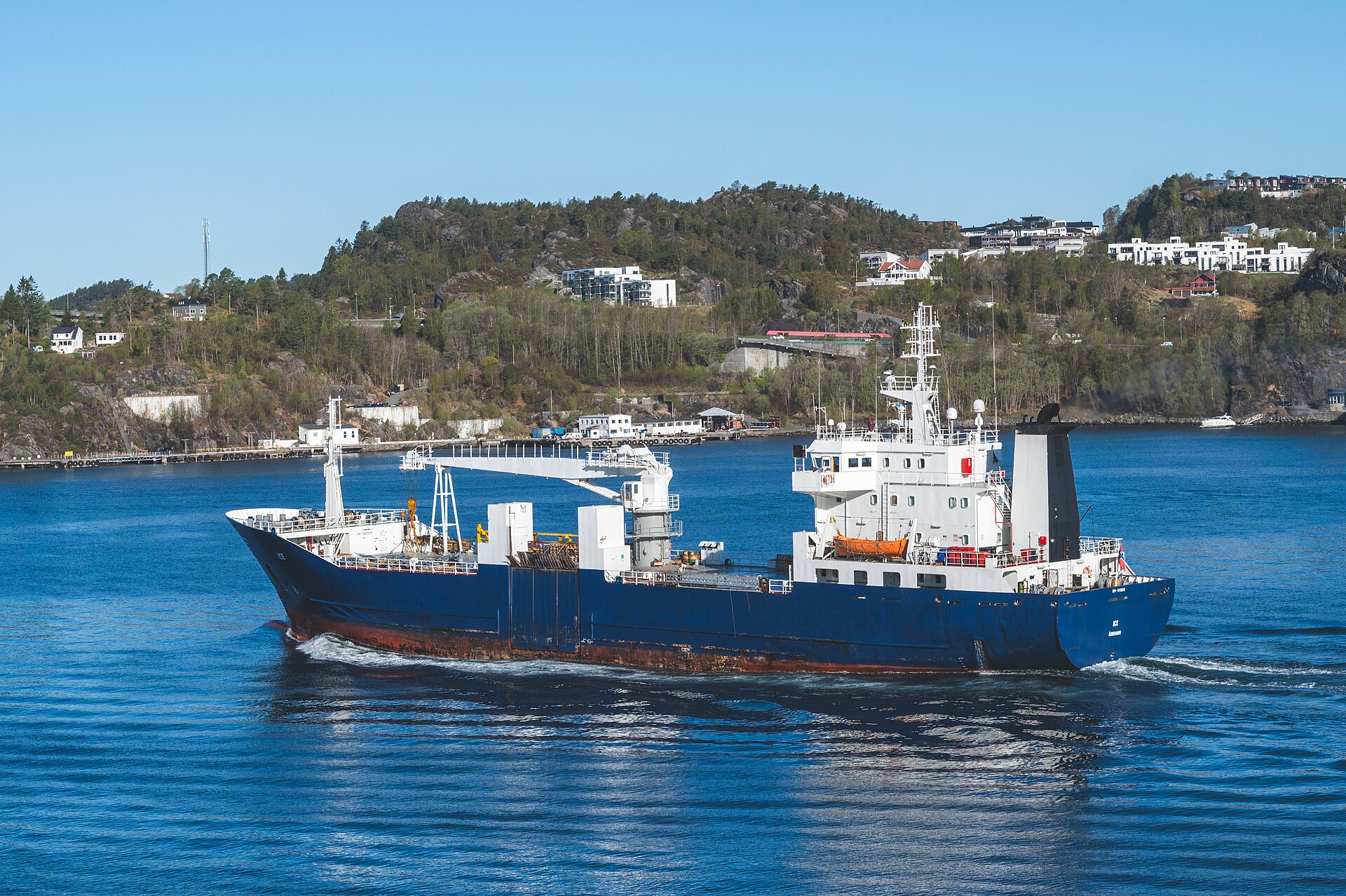
Sen. Dan Sullivan (R-Alaska) and Sen. Ted Cruz (R-Texas) are pressing the Treasury Department to use its sanctions powers against the vessels that keep China's distant-water fishing fleet supplied at sea, according to Alaska's News Source, which reported the senators' letter and their accompanying statements.
"We are urging Secretary Bessent to deploy the numerous Treasury Department tools and designations available to aggressively sanction these support vessels and dismantle the Chinese Communist Party's hub-and-spoke IUU fishing scheme," Sullivan said in remarks reported by that outlet. Sullivan also said the senators had identified a further channel for reaching the fleets by targeting the comparatively small number of support vessels that keep them working.
The request is not from one party. Alaska's News Source reported supporting statements from Sen. Andy Kim (D-N.J.), who cited forced labor and supply-chain risk to his state's fishing industries, and Sen. Chris Coons (D-Del.), who cited maritime security and American livelihoods.
The senators' case rests on concentration. As reported by Alaska's News Source, the letter states that just 55 refrigerated cargo ships accounted for nearly half of all transshipment events recorded in 2024, and that 10 tankers represented 61 percent of global bunkering activity tied to the fleet. Must Read Alaska, republishing the letter, quoted it as saying the fleet is being used "to conduct ecocide across at least three continents in both hemispheres." National Fisherman quoted the letter's argument that China's distant water fishing fleet continues to disrupt global and regional fishing economies.
"These fleets also engage in gross human rights abuses, including utilizing slave labor," Sullivan said, per Alaska's News Source. That is an allegation by a sitting senator. No court judgment, indictment or police record supporting it was obtained for this piece.
The record: Treasury has already run this play
On Dec. 9, 2022, Treasury's Office of Foreign Assets Control announced sanctions targeting two individuals, Li Zhenyu and Xinrong Zhuo, and a set of companies including Dalian Ocean Fishing Co., Ltd., Mongabay reported at the time, with 157 Chinese-flagged fishing vessels linked to those companies. The Maritime Executive reported the same vessel count and wrote: "It is the first time that the Treasury has ever sanctioned a corporation listed on U.S. stock exchange." That outlet reported the action ran on Treasury's human rights enforcement authority under the Magnitsky Act. Pingtan Marine Enterprise Ltd. appears on the U.S. OFAC Specially Designated Nationals list, per the OpenSanctions entity record.
An OFAC designation is an executive sanctions measure taken under that human rights authority, as The Maritime Executive described it. It is not a criminal charge, a trial or a conviction, and nothing in the records reviewed here establishes that any named individual has been charged with or convicted of a crime.
What the tracking data showed afterward
C4ADS, which tracks vessel activity, examined what followed. Its analysis reports that the activity of PME- and Honglong-owned vessels in 2023 and 2024 appeared "largely consistent with pre-sanctions fishing patterns," and that any financial hardship from the sanctions and the delisting had minimal influence over operations.
C4ADS reports that Juchangtai acquired 23 vessels after the sanctions, 22 of them directly from PME or Honglong, and that Pingtan Fishing sold 15 ships to Juchangtai between July and August 2024. As of May 2025, C4ADS puts the Juchangtai fleet at 29 fishing vessels and two refrigerated cargo ships, with roughly 71 percent of it supplied by PME and Honglong. C4ADS does not state that Juchangtai succeeded, controls or is controlled by either firm, and this piece does not assert it.
One detail carries the weight of the story: two of the vessels in that fleet are refrigerated cargo ships, the same class of support vessel the 2026 letter asks Treasury to designate.
A sourcing note: C4ADS writes "PME" throughout the passage reviewed here and identifies Pingtan Fishing as "PME's primary fishing subsidiary." This piece reads PME as Pingtan Marine Enterprise on that basis; the excerpt does not spell the abbreviation out.
Three numbers that line up with three separate measurements
As reported by Alaska's News Source, the letter states that between 2022 and 2024 the fleet accounted for 44 percent of global fishing, across 110 million hours, in the waters of 90 countries.
Oceana's press release on Global Fishing Watch data reports three distinct figures. It states that "China's fishing vessels appeared to conduct 44% of the global fishing activity during this period." It separately states that "57,000 fishing vessels, primarily trawlers, flagged to China appeared to fish for more than 110 million hours" - a count of China's fishing vessels generally, not of a distant-water fleet. And it reports that China appeared to fish in more than 90 countries' waters for more than 22 million hours. Oceana's release does not state the years its figures cover.
This is an observed correspondence, not a demonstrated derivation. None of the records reviewed here shows that the senators drew their sentence from Oceana. What can be said is that three numbers in the letter's single sentence match three numbers Oceana reports as separate measurements, and that in Oceana's wording the 110 million hours belong to the whole China-flagged fleet while a smaller figure, more than 22 million hours, covers other countries' waters.
Analysis
The following is analysis, grounded in the records cited above.
The letter's theory is that a small support network is the fleet's pressure point. The most recent test of a designation aimed at this network is the 2022 action, and the outcome C4ADS measured is not a collapse in activity: vessels changed hands, and the tracked activity appeared largely consistent with what preceded the sanctions, in a fleet largely assembled from vessels PME and Honglong sold. C4ADS's own conclusion points elsewhere than to more designations alone: "enforcement action must be multilateral and coordinated to tangibly influence the activity of networks implicated in IUU fishing."
That does not make the senators' request unreasonable. It does mean the request is being made without a public accounting of what the last designation achieved, and that the vessel class the letter names is already present in a fleet built out of the earlier sanctioned company's ships.
A falsifiable prediction, checkable by Dec. 31, 2026: the OFAC Specially Designated Nationals list will not by that date carry a new designation covering the support vessels described in this letter. The check is the SDN list itself.
In the source excerpts assembled for this piece, none of the outlets cited paired the 2026 request with the measured outcome of the 2022 designations. Those excerpts are partial, not full articles.
Right of reply
No comment was sought or received from any adverse party for this piece. Before publication, a human editor must document comment requests to Treasury and OFAC, the Chinese Embassy, Pingtan Marine Enterprise, Juchangtai, and the two individuals named in the 2022 designation, Li Zhenyu and Xinrong Zhuo, and record any replies. A 2022 Chinese government response exists in Mongabay's reporting on the 2022 sanctions; it answers that action and is not a response to this letter, and it is not presented as one here.
How this was reported
The senators' letter was not read in its original form. Its contents here are attributed to the outlets that reported or republished it. Treasury, OFAC and congressional websites were not reachable during reporting. Party and state affiliations and the Treasury Secretary's title are drawn from public officeholder records rather than from the cited excerpts.