Disasters & Accidents · The Record
Spokane groups say $14.76 million in wildfire-prevention grants went unpaid for 10 months before the fires
The Forest Service's own award list carries both grants. E&E News reports the money had not reached the two recipients when three fires ignited Aug. 1, and USDA did not answer questions about the conditions that held the funding.
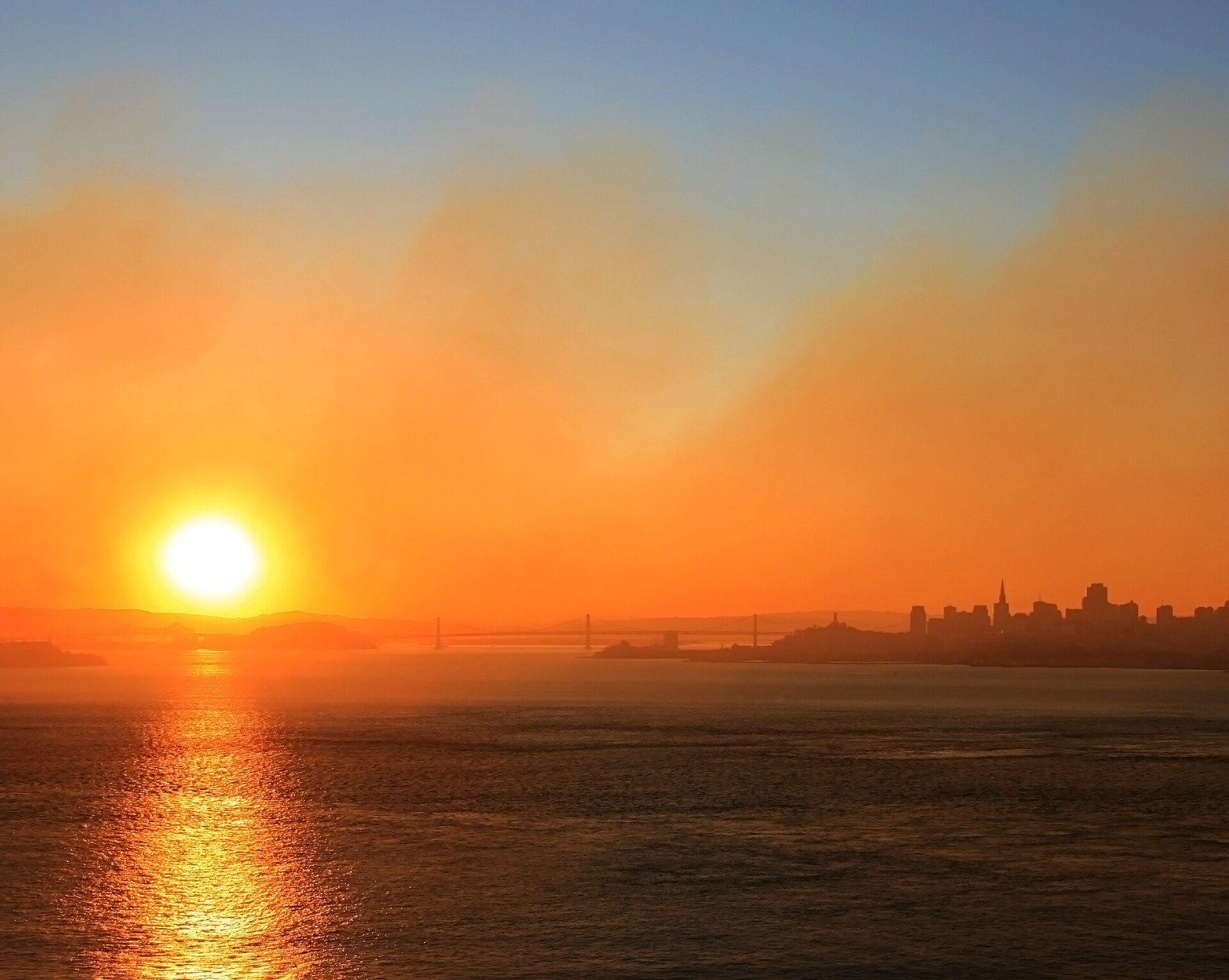
Three wildfires that ignited Saturday near Spokane, in eastern Washington, have burned upward of 10,400 acres and left more than 900 buildings destroyed or damaged, E&E News by POLITICO reported, citing a federal wildfire website that put containment at roughly 10 percent on Thursday afternoon. Evacuation orders have reached 65,000 residents, according to the same report.
Two organizations in that county say they are still awaiting $15 million announced by the Forest Service in September 2025 for projects to cut local wildfire risk, E&E reported. The recipients expected the funds months earlier, the outlet reported.
The record: two named awards
The Forest Service publishes a list of funded Community Wildfire Defense Grant proposals. The captured page names both Spokane recipients - the Spokane Conservation District and the Spokane Valley Fire Department - and both project titles, "Spokane County Wildfire Education and Prevention Program" and "Wildfire Resilience in Spokane Valley, Washington." It carries two figures: $9,258,647 and $5,500,194.
One limit of the capture is worth stating plainly: the snapshot preserves the recipients, the titles and the dollar amounts, but not the row structure that pairs each figure to each recipient. What the record does support is the total. Added together, the two published figures come to $14,758,841 - Daily Pol's own arithmetic from the agency's numbers, and a more exact figure than the rounded $15 million used in the coverage.
E&E reported that the program is the $1 billion Community Wildfire Defense effort created in 2022 under President Joe Biden's 2021 infrastructure law, awarding $200 million a year, and that the Spokane money came from the third year of funding. The Washington State Department of Natural Resources, announcing the state's 2025 awards, stated that "Investing in wildfire prevention can reduce the severity of fires and potentially save money in wildfire suppression."
What held it
Ahead of releasing this round, USDA issued new terms and conditions for states receiving grant money, E&E reported, tying eligibility to administration priorities on deportation and on ending diversity, equity and inclusion programs. An article in The National Law Review, published under the headline "Twenty States and DC Sue USDA Over New Funding Condition," quotes contested condition language including a bar on funds used to "promote gender ideology" and a bar on programs that "allow illegal aliens to obtain taxpayer-funded benefits."
Two steps sit between the award and the money. USDA attached the conditions; Washington then declined to sign them, on the grounds that they conflict with state law, including a limit on state participation in immigration enforcement, E&E reported. E&E's account locates the hold in the dispute over those conditions rather than in either step alone. Twenty Democratic-led states including Washington sued, a federal judge blocked the policy in June, and grant agreements were signed in July, the outlet reported, adding that it is unclear when money will move.
The Washington attorney general's office announced its suit under a headline characterizing USDA as illegally holding hostage billions in critical funding - the office's own framing of a dispute that spans many programs, not the wildfire grants alone. The release's captured text runs to food assistance before it reaches anything else: after a line calling the threat to withhold food aid from children and families unlawful, it states, "That's why it's important that we fight back so Washingtonians get the support they need." The same capture names the Volunteer Fire Capacity Program among the funding at issue, which establishes that fire money sat inside the scope of the conditions from the start rather than arriving there by accident.
Oregon's Department of Justice maintains a litigation tracker entry on a challenge to USDA funding conditions, describing the target as "the federal government's unconstitutional and unlawful attempt to impose conditions on U.S. Department of Agriculture programs, grants, cooperative agreements and mutual interest agreements." The captured tracker text names no plaintiff states and no court, and Daily Pol is not asserting that this entry and the case E&E describes are the same proceeding.
What USDA said when asked
USDA gave E&E a statement: "We are working closely with our state, local, and federal partners to provide every available resource," saying 242 agency personnel were at the Spokane fires. The agency did not answer the outlet's questions about the new policy, or about whether the disaster had prompted any internal discussion of the conditions on wildfire-prevention money.
Gov. Bob Ferguson of Washington said in an announcement of a federal emergency declaration, "I appreciate the federal government moving quickly and granting our request for this emergency declaration."
What the record does not establish
Nothing here shows the delay changed what the fires did. E&E states the opposite of that implication: whether the grant money would have made any difference to these three fires is unclear. Cori Turntine, operations director of the Spokane Conservation District, told the outlet the funded work would only now be beginning had the money arrived on schedule. Lance Dahl, assistant chief at the Spokane Fire Department, made a general point about prevention rather than a claim about these fires: "Fuel reduction is really important because it has the potential to change fire behavior." Environmental advocates including Brittany Fallon, a policy manager at Western Resource Advocates, and Athan Manuel, director of the Sierra Club's lands protection program, criticized attaching unrelated directives to the funding, E&E reported.
Analysis: the sequence in one place
No single source assembles the order of events. Placed end to end from the dated records above: the awards were announced in September 2025; USDA attached new conditions before releasing the money; twenty states sued; a judge blocked the policy in June 2026; agreements were signed in July 2026; the fires started Aug. 1, 2026; and as of E&E's reporting on Aug. 6-7 the funds had not been released. Counting conservatively from the end of September 2025, that is at least 305 days - Daily Pol's own count - between announcement and ignition with nothing delivered.
The contradiction the records produce is narrow and factual. The department stating it is providing every available resource is the same department whose published ledger records the prevention money for this county, and whose conditions the recipients' state refused to sign.
Prediction, checkable Oct. 31, 2026: with agreements signed in July, at least one of the two Spokane awards will have received a first disbursement by that date. If both organizations still report no money received on Oct. 31, 2026, this prediction is wrong.
On comment
USDA responded to E&E News with the statement above and did not answer that outlet's questions about the policy. Daily Pol did not independently contact USDA, the Forest Service or the Washington State Department of Natural Resources for this piece; no request for comment from this newsroom has been logged, and none is claimed.