Economy & Business · The Record
Sponsors put AUKUS trade at 70% eligible; State's rule assessed about 18% of requests ineligible
S. 4709 would add a single clause to the Arms Export Control Act. The sponsors' 70 percent baseline does not line up with the State Department's own December 2025 assessment.
S. 4709 changes federal law by one insertion. The bill as reported would amend Section 38(l)(4)(B) of the Arms Export Control Act by adding the words ", excluding subclauses (I), (II), and (III)" after a cross-reference the statute already contains. That is the entire operative provision. What its sponsors say it delivers is stated as a number: defense-eligible goods and technology transfer among the United States, Australia and the United Kingdom moving from 70 percent to closer to 95 percent.
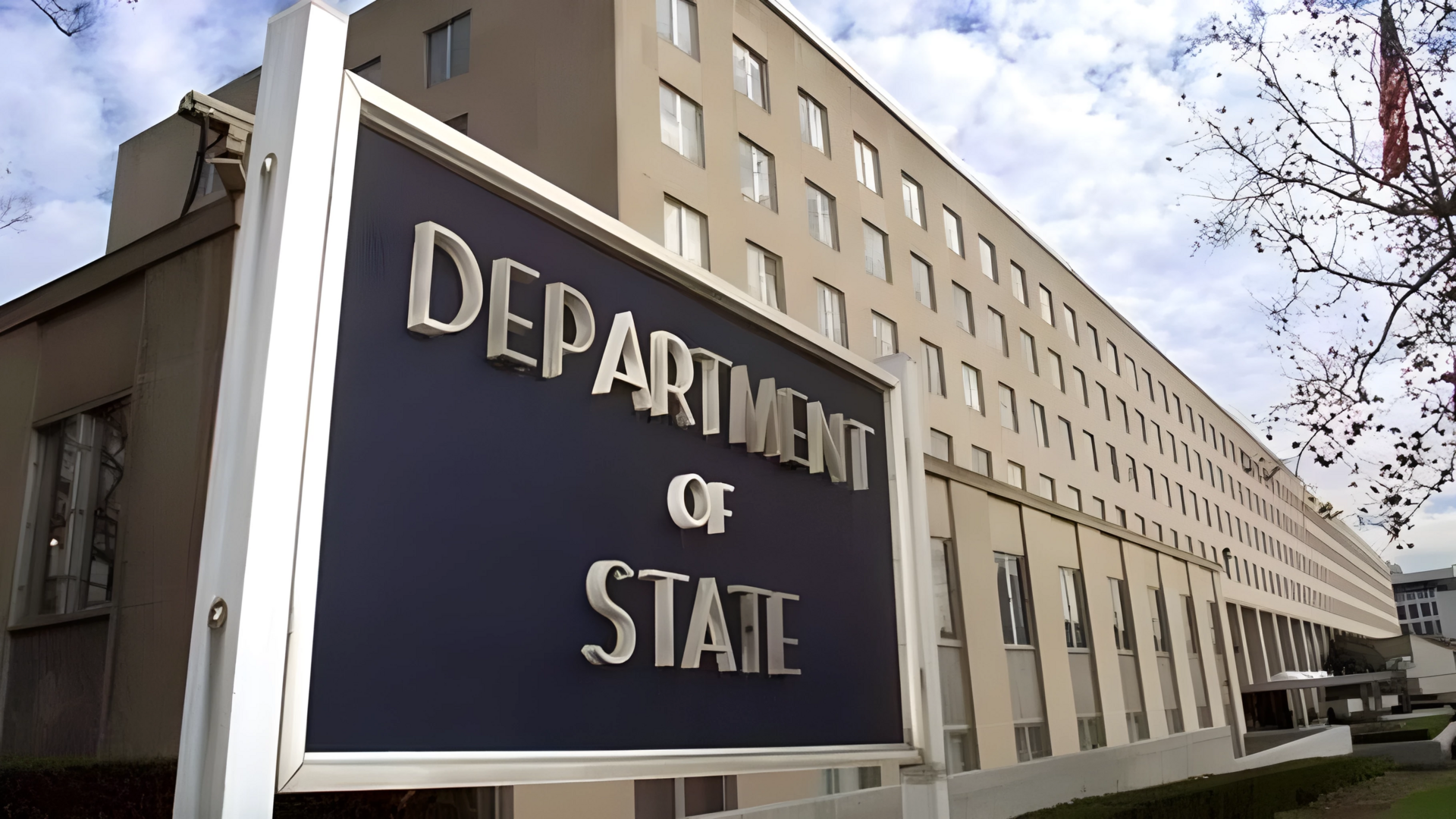
The State Department's own rule for that license-free environment carries its own figure for what the exclusions keep out, and it is not the same figure.
The claim
The 70 percent starting point comes from the joint press release that Sen. Pete Ricketts (R-Neb.) and Sen. Tim Kaine (D-Va.) issued in June 2026 to announce the bill. The release builds its case in three steps: items controlled under the Missile Technology Control Regime account for most of what still requires an export license between the three partners; the Arms Export Control Act is what forces those items onto the ITAR Excluded Technology List; and lifting that statutory requirement would carry out what Congress meant. The payoff sentence attaches the percentages. The release also names what it expects to unlock - guided weapons and explosive ordnance such as the Precision Strike Missile, autonomous and uncrewed systems, and hypersonic technologies - and describes the MTCR itself as a non-binding political arrangement signed in 1987 whose 35 members include Russia.
Ricketts put the urgency in threat terms. "The United States, Australia, and the United Kingdom face the most challenging threat environment since WWII. As we approach the 5th anniversary of AUKUS, we need to cut through any remaining red tape to streamline defense collaboration," he said in the release. Kaine's contribution called the partnership critical to a free and open Indo-Pacific and to deterring China. Ten senators are on the reported bill, Ricketts having introduced it for himself and nine others. The release also credits the existing license-free environment with enabling more than a thousand companies to work together more closely.
The House companion, led by Rep. Bill Huizenga (R-Mich.), argues the same case without any statistic at all. Its release quotes Reps. Joe Courtney (D-CT), Mark Messmer (R-IN), Michael McCaul (R-TX) and Pat Ryan (D-NY) in threat and capability terms, from the pace of Chinese military expansion to hypersonic work at Crane in Indiana's Eighth District. AUKUS, the release notes, was announced in 2021. No percentage appears anywhere in it.
The record
The Excluded Technology List is Supplement No. 2 to Part 126 of the International Traffic in Arms Regulations, and it names the defense articles and defense services that cannot move under the Section 126.7 exemption. The final rule carried in the Federal Register on December 30, 2025, effective that day, describes the list as created by the rule; the extract the desk retrieved does not identify which step of the rulemaking created it.
That rule also contains the number that complicates the sponsors' arithmetic. Over a three-month monitoring period, the Department checked licensing requests involving Australia or the United Kingdom against the list, and its assessment is that roughly 18 percent of those requests would fall outside the exemption because of the list. Note what that counts and what it does not. It counts licensing requests, not dollars, not delivered units, not the share of the technology base. It is an assessment, not an audit: no request count is given, the monitoring window is not dated in the retrieved text, and nothing breaks out which entries on the list did the excluding.
Subtract, and the rule implies that roughly 82 percent of those requests were eligible. That sits about 12 points above the 70 percent the release uses as its baseline. The two figures may not be counting the same thing: one is a retrospective assessment of licensing requests over three months, the other a before-and-after estimate of eligible goods and technology. Neither document reconciles them, and neither shows how 70 percent was derived.
The subclauses the bill would switch off are the MTCR carve-outs in subsection (j)(1)(C)(ii) of the same statute. Subclause (I) covers complete rocket systems and complete unmanned aerial vehicle systems "capable of delivering at least a 500 kilogram payload to a range of 300 kilometers", together with their production facilities, software and technology. Subclause (II) covers individual rocket stages, re-entry vehicles, motors, guidance sets and thrust vector control systems. Subclause (III) covers Annex Category II articles and services for use in rocket systems. The AUKUS limitation in subsection (l)(4)(B) has three limbs: articles excluded by the partner countries themselves, articles that "are referred to in subsection (j)(1)(C)(ii)", and activity involving individuals or entities that are not approved. The bill reaches into the second limb only, and only into its three subclauses.
There is also a question of fit between the statute and the regulation. The rule records a commenter urging the Directorate of Defense Trade Controls to confine the list's entry for MT-designated articles and services to the exclusions set out in subsection (j)(1)(C)(ii) - a request that makes sense only if the regulatory entry is written wider than the statutory subclauses. In the passage retrieved, the Department affirms that articles described in the Category II entry at paragraph (d)(3) "are not eligible for transfer under the Sec. 126.7 exemption." How much of the 18 percent the bill's three subclauses would actually recover is not settled by anything in the retrieved record.
The bill's path has been quiet. The status record shows it read twice and referred to the Committee on Foreign Relations, then ordered to be reported without amendment favorably, then reported by Sen. Jim Risch (R-Idaho) without amendment. The reported text is dated July 27, 2026 and carries the line "Reported by Mr. Risch, without amendment". The same record lists the bill placed on the Senate legislative calendar under General Orders as Calendar No. 517, an action the retrieved record does not date. No written committee report sits among the documents the desk holds.
Analysis, on those documents: the 95 percent end point is an assertion and the 18 percent an assessment, and neither is a count. A measure this small can move by unanimous consent once floor time is found, but nothing in the retrieved record shows floor time scheduled. This desk's prediction, checkable against the Senate's own records: S. 4709 will not have passed the Senate by October 31, 2026.
Four things are checkable from here. Whether the Senate calls up Calendar No. 517. Whether either sponsoring office publishes the derivation behind the 70 percent baseline. Whether the Directorate of Defense Trade Controls narrows the MT entry in Supplement No. 2 to Part 126 to match the statutory subclauses. And the CBO estimate for S. 4709, once it can be read against the bill rather than around it.