Economy & Business · The Record
White House release credits retailers with grocery price cuts as USDA forecasts beverage prices up 3.9 percent
The release names beverages among the aisles where prices came down. The Agriculture Department's Food Price Outlook, last updated 24 July, forecasts nonalcoholic beverages rising 3.9 percent in 2026 against 2.7 percent for food at home, and BLS puts ground roast coffee at $9.317 a pound in July.
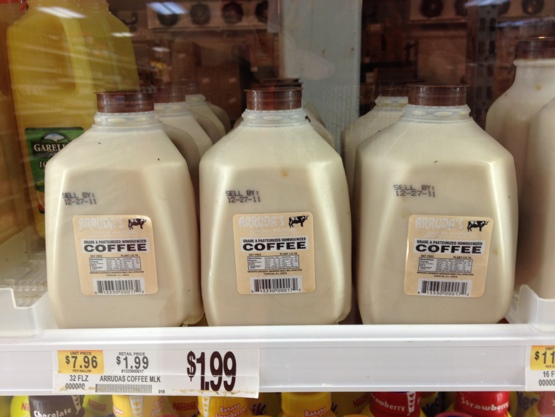
A White House release published in August 2026 says major retailers are cutting the prices of the staples that weigh heaviest on household budgets, and describes the result as "putting real money back in the pockets of American families". One of the aisles it names is the beverage aisle. The federal price record for that aisle runs the other way. The Agriculture Department's Food Price Outlook, last updated 24 July, forecasts prices for nonalcoholic beverages rising 3.9 percent in 2026, with a prediction interval of 2.7 to 5.3 percent, against 2.7 percent for food bought to eat at home. The Bureau of Labor Statistics puts the average price of 100 percent ground roast coffee at $9.317 a pound in July 2026, down from $9.457 in June and up from $8.414 in July 2025.
The release, titled "Private Sector Answers President Trump's Call to Lower Prices for American Families", argues causation as much as it reports prices. It opens by describing an economy battered by years of inflation before the current term, and credits administration action on energy, regulation and trade with rebuilding the ground under it; President Donald J. Trump (R) is the figure the document says companies are answering. Then comes the roll call of announcements. Giant Eagle is recorded cutting prices by an average of more than 10 percent across over 300 top products, Sam's Club on more than 250 household essentials, Meijer on more than 1,000 items on a rotating basis, Kroger planning its largest reductions in years, Albertsons launching a program that takes at least 8 percent or $1 off base prices across meat, seafood, dairy and pantry goods, H-E-B and C&S Wholesale Grocers on thousands of items each. Walmart's entry is the one that reaches the aisle tested here: thousands of everyday items nationwide, with beverages listed among the categories.
The page retrieved for this piece carries no publication date line. Its month is fixed by the release URL, which files it under August 2026; the day is not established by the document itself.
What the release counts is announcements, not prices. It gives item counts, average percentage reductions and cuts off base prices the document does not state, and it measures nothing a shopper paid at a register. That is not a defect of the genre, but it is the reason the claim has to be taken to a price series before it can be weighed.
The Food Price Outlook is the Economic Research Service's published forecast for retail food prices, and the summary page carries a last-updated stamp of 7/24/2026. For 2026 it predicts all food up 3.1 percent, with an interval of 2.3 to 3.8 percent; food away from home up 3.5 percent; food at home up 2.7 percent, interval 1.6 to 3.9 percent; and nonalcoholic beverages up 3.9 percent, interval 2.7 to 5.3 percent. Of the categories in view, beverages carry both the highest central estimate and the widest band.
That beverages line is the nearest thing in the federal forecast to a read on the coffee aisle, and the connection is this piece's inference rather than the agency's wording. The summary places coffee and tea as "a subcomponent of the CPI for nonalcoholic beverages and beverage materials", which is not word for word the nonalcoholic beverages series the 3.9 percent number names. The same summary also does the distinction the release elides: it records beverage prices falling 1.5 percent from May 2026 to June 2026 while standing 2.9 percent higher in June 2026 than in June 2025. A monthly dip sits inside an annual rise, and the agency models both at once.
The record for the aisle Walmart's entry names sits with two agencies: one forecasts, one records, and neither shows a return to earlier prices. The BLS average price series for coffee, 100 percent ground roast, all sizes, series APU0000717311, forecasts nothing at all. It reports what a pound cost. July 2026 is $9.317. June was $9.457, so the month-on-month fall is about 1.5 percent. May was $9.511 and April $9.723, the highest of the months retrieved. December 2025 was $9.053, and July 2025 was $8.414, which puts the year-over-year change into July 2026 at about 10.7 percent. The series is not continuous: the retrieved data carry the note "Data unavailable due to the 2025 lapse in appropriations", which does not state which months are missing.
View the data
| Value ($) | |
|---|---|
| Jul 2025 | $8.414 |
| Dec 2025 | $9.053 |
| Apr 2026 | $9.723 |
| May 2026 | $9.511 |
| Jun 2026 | $9.457 |
| Jul 2026 | $9.317 |
Source: BLS series APU0000717311 · Daily Pol graphic
The direction of travel is real and worth stating plainly: April, May, June and July trace three consecutive monthly declines, and July is down about 4.2 percent from the April figure. The argument here is about level, not slope. Relief in the release's sense means money back in a pocket, and a pound of ground roast coffee in July 2026 cost about 2.9 percent more than it did in December 2025 and about 10.7 percent more than a year earlier. Three months of falling prices from a near-record level is a smaller claim than the one the release makes.
Two figures in this piece round to the same number and mean different things. ERS records a 1.5 percent decrease in the nonalcoholic beverage index from May 2026 to June 2026. The BLS coffee average fell from $9.457 to $9.317 between June and July 2026, which also works out to about 1.5 percent. Different series, different months, different construction: one is a price index for a CPI category, the other an average shelf price for a single item. Neither confirms the other, and the coincidence should not be read as corroboration.
There is a prior test in the record. A presidential action dated 14 November 2025 modified the scope of the reciprocal tariff with respect to certain agricultural products, effective for goods entered for consumption on or after 13 November 2025. The text retrieved for this piece states the effective date but not the covered product list, so nothing here establishes from that document alone which goods were included. What the coffee series shows across the following eight months is this: $9.053 in December 2025, a peak of $9.723 in April 2026, and $9.317 in July.
A Reuters account of coffee prices after the tariff reset supplies the mechanism that makes any single month hard to attribute to any single announcement. U.S. roasters typically carry two to three months of bean stocks, need a further two to three months to roast and package, and renegotiate with retailers on a quarterly basis. The same account reports an 18.8 percent rise in U.S. retail coffee prices in the year to November, and does not state which November; in a story turning on 2025 against 2026 timing, that figure should not be bound to either year. The account states the asymmetry as a bare line, naming no speaker in the text retrieved for this piece: "Coffee prices rise more quickly than they fall,".
Analysis, on the figures above: the ERS stamp of 24 July precedes the August release, so the forecast is the standing expectation for the year rather than a rebuttal issued in response, and the July BLS reading also predates the announcements. Neither can score August. The prediction that follows is falsifiable. If the 3.9 percent beverage forecast holds anywhere near its central estimate, the BLS average price for ground roast coffee in December 2026, published in January 2027, will be above the $9.053 recorded in December 2025.
No comment was requested from the White House press office or from the retailers named; the release is quoted from its published text, and this piece asserts nothing about whether the announced cuts took effect. Three dates settle the question instead: the August 2026 average price, published by BLS in September; the next update to the Food Price Outlook, whose current version is stamped 7/24/2026; and the December 2026 coffee figure in January 2027.