Fashion & Apparel · The Record
One capture of a Lanham Act opinion gives the Bulova watch case two opposite readings
Five files, all fetched 2026-09-05. One recent opinion capture calls the older watch case of little assistance and, in the same file, says it clearly recognized infringement consummated abroad. Three captures of that older opinion carry both halves of the argument.
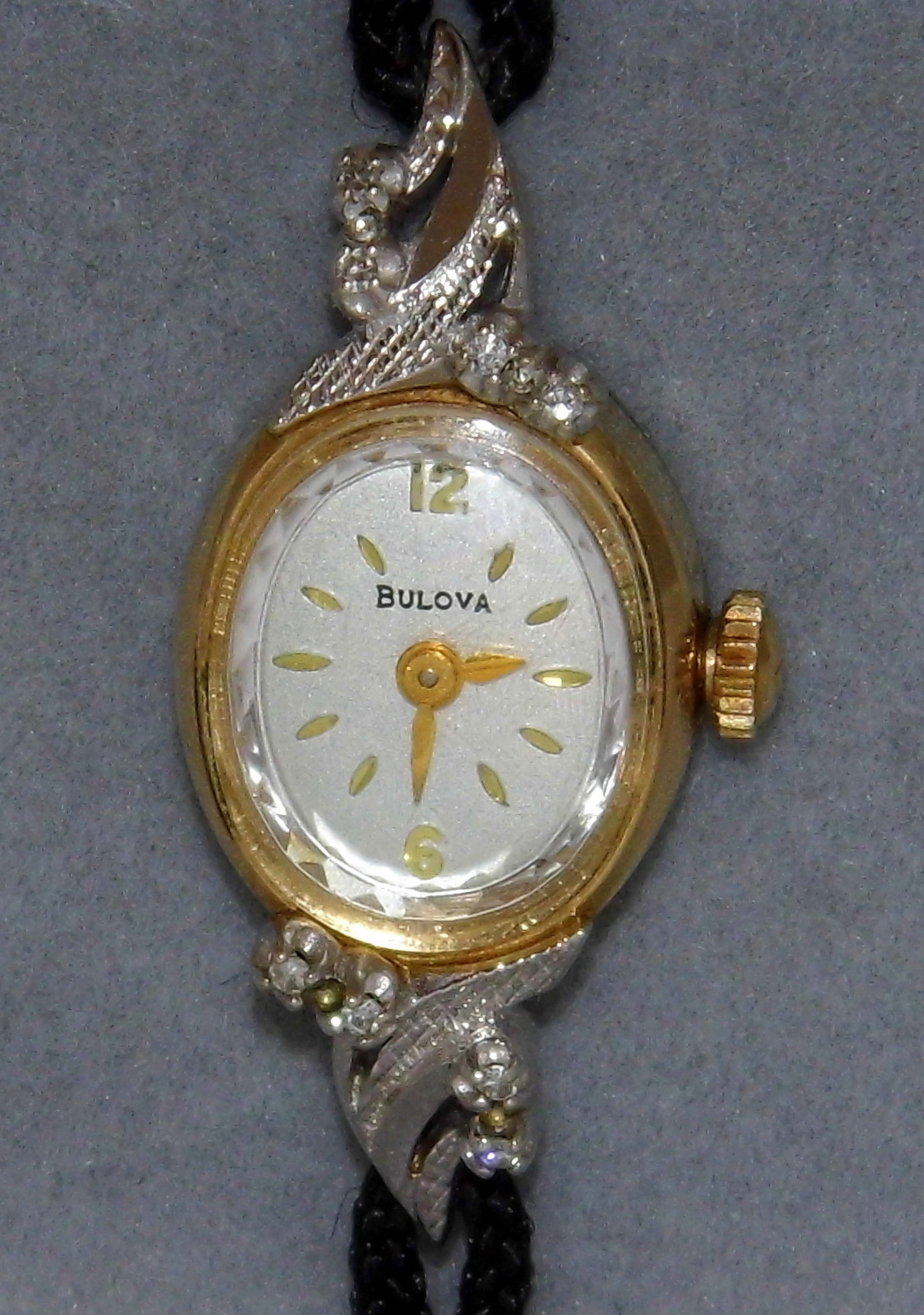
Five captures sit behind this piece, all fetched on 2026-09-05, and one of them argues with itself about a watch case.
The file is Cornell Law School's page for a Lanham Act opinion, saved as sources/s4-law.cornell.edu.txt. One passage in it reads: "Steele is of little assistance here." Another passage, in the same file, reads: "Steele clearly recognized that infringing acts consummated abroad fall under the purview of the Lanham Act". Both sentences describe the same earlier case - the dispute over watches stamped Bulova and sold in Mexico City that three other captures in this set record, two of them in full sentences.
That capture also prints three lineup lines. One states that Justice Alito delivered the opinion of the Court, joined by Thomas, Gorsuch, Kavanaugh and Jackson. One states that Justice Jackson is concurring. One states that Justice Sotomayor, with the Chief Justice, Justice Kagan and Justice Barrett, concurs in the judgment. What the capture does not do is attach any of its quoted passages to any of those three opinions. The extract is a run of sentences, and proximity in an extract is not attribution, so nothing quoted here is assigned to a named Justice. Disclosure: the research file behind this piece identifies the first characterization as the Court's and the second as the concurrence's; the captured page does not carry that identification, so the piece does not print it as a finding.
Another passage sits in the same file: "has guided the lower courts' extraterritoriality analysis for more than 70 years." The captured line starts at the verb. Whatever noun governs it is outside the capture, and the line printed above it is not evidence of what that noun was.
Elsewhere the recent capture states that the provisions at issue reach only claims where the infringing use in commerce is domestic, and that use in commerce is the line between foreign and domestic applications of those provisions. It states as well that the older watch case involved both domestic conduct and a likelihood of domestic confusion, and that this does not settle which of the two determines the domestic applications of the two sections the capture names by number, section 1114(1)(a) and section 1125(a)(1). The same file carries the sentence "our decision was instead narrow and factbound." The captured line does not say whose decision that was, and this piece does not resolve it from the line printed above it.
Three captures carry the older opinion: Caselaw Access Project, at sources/s1-static.case.law.txt; Cornell Law School, at sources/s2-law.cornell.edu.txt; and FindLaw, at sources/s3-caselaw.findlaw.com.txt. The Caselaw Access Project text opens on the question the case put - whether a United States District Court had jurisdiction to give an American corporation relief against infringement and unfair competition "consummated in a foreign country by a citizen and resident of the United States". That is the phrasing the favourable reading leans on. Abroad in the recent capture and in a foreign country in the older one are doing the same work.
The domestic half sits in the same files. The Cornell capture of the older opinion records that the trader bought his parts at home - "He bought component parts of his wares in the United States" - and that "spurious 'Bulovas' filtered through the Mexican border into this country". It records numerous complaints from retail jewelers reaching the Bulova Watch Company's Texas sales representative. The FindLaw capture describes the assembly line itself: "Assembling Swiss watch movements and dials and cases imported from that country and the United States", stamped in Mexico City and sold under the name.
Read as trade rather than as doctrine, the captured recitation is a two-way border operation: components moving south, finished goods filtering back north, and the complaints landing on a sales desk in Texas. That is the fact pattern the recent capture reaches for when it says the older case involved domestic conduct as well as confusion at home. It is also, in the same file, the case the other reading treats as authority for reaching conduct completed on the far side of a border.
Two details in the older captures get no air at all in the modern argument. The Cornell capture states that Mexico's courts nullified the Mexican registration of Bulova; it names no court, gives no date, and says nothing about who held that registration or for how long. And the FindLaw capture carries a flat territorial objection: "The stamping of the Bulova trade-mark, done in Mexico, is not an act 'within the control of Congress.'" The same file carries a line naming Justice Reed, joined by Justice Douglas, and a line naming Justice Clark. Which of them that sentence belongs to is not in the capture. What is on the page is the territorial argument in its plainest form - the act happened over there, so the statute does not reach it - running along the same axis as the recent capture's rule about domestic use in commerce.
The Caselaw Access Project file also carries a sentence in the first person plural, with no speaker named in the captured line, rejecting the idea that a trader could by so simple a device operate "in a privileged sanctuary beyond our borders". A second sentence in that file records agreement with the Court of Appeals that the petitioner's activities, taken together, came within the Lanham Act's jurisdictional reach. Elsewhere the captures state that Congress, in prescribing standards of conduct for American citizens, may project its laws past the country's territorial boundaries; that sentence appears truncated in the Cornell capture and complete in the FindLaw one, and the two agree where they overlap.
Set that against how the trade counts the same problem now. The page published by the Federation of the Swiss Watch Industry FH, captured at sources/s5-fhs.swiss.txt, states that "Tens of millions of fake Swiss watches are offered for sale every year", while "the Swiss watch industry produces around 30 million original watches". It puts fake watches at 9% of customs seizures, second only to textiles, and states that importing a counterfeit watch is barred by law even for a one-off piece. No speaker is named for any of it.
The contrast is worth stating as analysis, on the cited files only. The trade page gives no year for the tens of millions, no year for the 30 million, and no customs authority behind the 9%; a reader cannot test any of the three. The court captures give the opposite kind of evidence: no market total anywhere, but a named buyer of components, a named border, a named sales representative and a named registration that a country's courts cancelled.
Two things a reader can check directly. Both Cornell URLs are public: https://www.law.cornell.edu/supremecourt/text/344/280 for the older opinion and https://www.law.cornell.edu/supremecourt/text/21-1043 for the recent one. A full fetch of the second settles what this capture cannot - which opinion each of the two contradictory characterizations sits in, and what noun governs the sentence about more than 70 years of lower-court analysis.
The prediction, checkable by 2026-12-31: a re-fetch of that Cornell page will still carry all three lineup lines and both characterizations of the older watch case, unchanged and in one file. If it does not, the contradiction described here was an artefact of one capture rather than a feature of the opinion, and this desk will say so on the record.