Lifestyle & Consumer · The Record
Bucks County smoke shop order called historic; the statute carrying that injunction power names district attorneys
The district attorney's office describes the action against a Buckingham Township shop as one never taken before. Pennsylvania's consumer-protection law names district attorneys as injunction plaintiffs on its face - and prints three separate per-violation penalty figures.
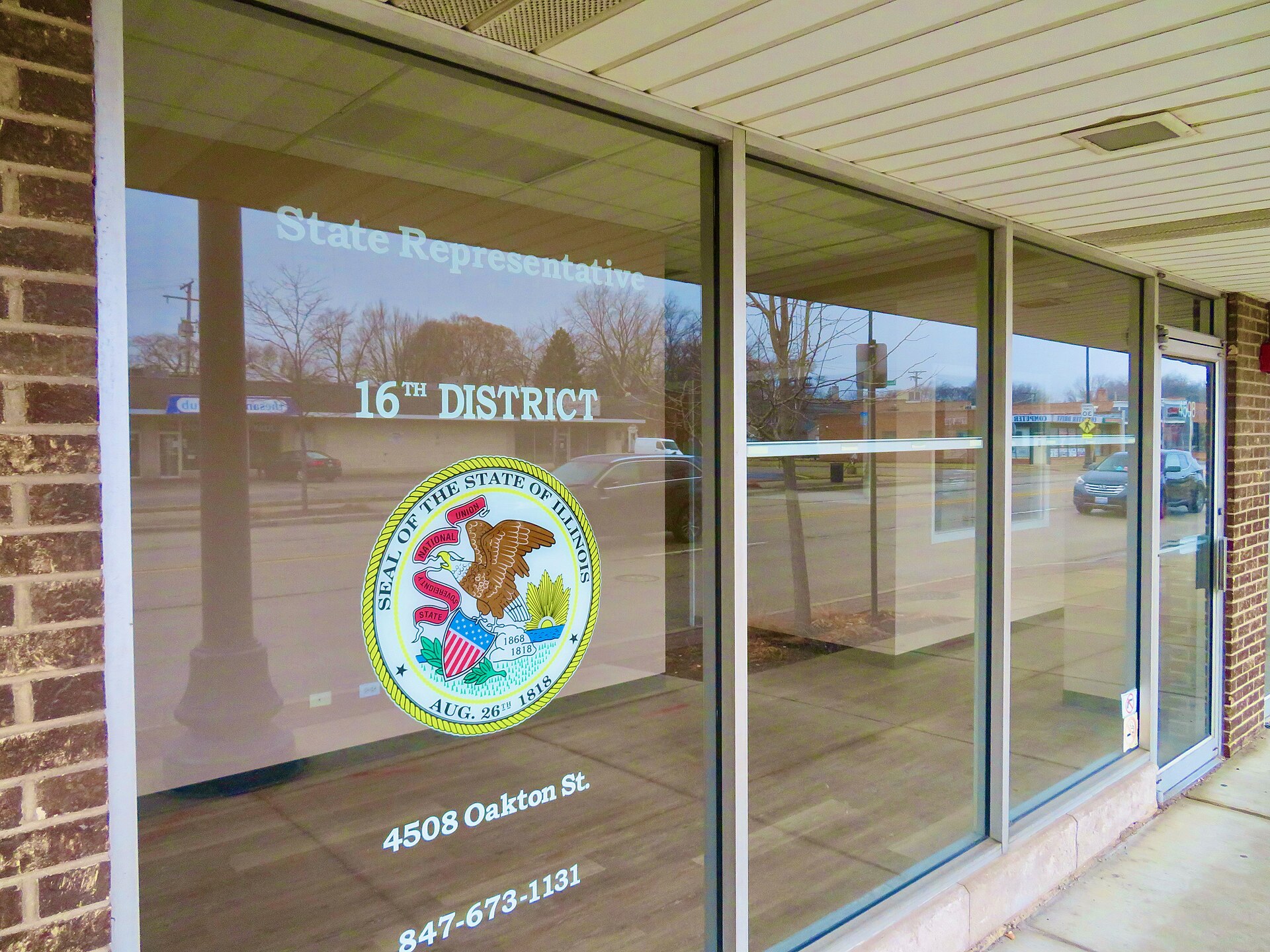
A vape and cigar shop in Buckingham Township, Bucks County, is under a court order restricting tobacco and kratom sales, and the office that obtained it describes the step as one never taken before. That description is the part a reader can test. The power to bring this kind of case is printed on the face of a Pennsylvania consumer-protection statute, which names district attorneys, alongside the Attorney General, as officials who may ask a court for an injunction.
FOX 29 Philadelphia reported that Bucks County District Attorney Joe Khan obtained an emergency court injunction halting tobacco and kratom sales to minors at the store. The same report sets out the allegations behind it: five illegal sales of tobacco to minors between July 2025 and August 2026, documented by investigators, and kratom-infused goods, among them chocolate bars made to look like ordinary candy, allegedly sold to an undercover 17-year-old on July 10, 2026 with no ID check. 6abc Philadelphia describes the same conduct as five separate illegal tobacco sales to minors without ID checks; that outlet's account is published at an address naming Zaza Vape & Cigar as the business shut down. Of the 580 licensed tobacco retailers FOX 29 counts in the county, officials are quoted saying this was the only one to fail every youth compliance check over the past year, selling to minors each time. All of it comes, so far, entirely from the prosecution's side. None of it has been tested at trial, and no statement from the business appears in any captured source.
The historic framing arrived in remarks describing the action as taken that day. FOX 29 renders the attribution as a bare "He said," in a report that identifies the district attorney as Joe Khan: "It was important to do today what has never been done before, to take this historic action so that this store can't make money like it did in the past." The argument the remarks were making was broader than one storefront - the report says the district attorney suggested this may be the start of a wider crackdown, and quotes him saying, "We have uncovered that this is really a store running an illicit drug operation under the guise of a legitimate business operation." That is a characterization of a business that has been found liable of nothing.
Now the record half. Pennsylvania's Unfair Trade Practices and Consumer Protection Law, at 73 P.S. section 201-4 as reproduced by FindLaw, opens with the words "Whenever the Attorney General or a District Attorney has reason to believe" that a person is using an unlawful practice. It then supplies the remedy in the same sentence: that official "may bring an action in the name of the Commonwealth against such person to restrain by temporary or permanent injunction the use of such method, act or practice." Two things follow from the printed text. A district attorney is a named plaintiff, not an unusual one. And both the temporary and the permanent forms of the order are contemplated by the statute itself.
What the comparison does not do is tie that section to this filing. No captured page names the statute or section the complaint invoked, names the judge who issued the order, or reproduces the complaint. The district attorney's own release could not be retrieved at all. So the record shows what the law makes available to a Pennsylvania district attorney; it does not show which provision this action was built on.
The money is printed too, and it is printed more than once. The captured text of section 201-8 carries three per-violation amounts, not one: "a civil penalty of not more than five thousand dollars ($5,000) for each violation" in one line, a ceiling of one thousand dollars ($1,000) per violation in a second, and a third setting a ceiling of three thousand dollars ($3,000) per violation. The captured lines arrive without the surrounding subsections that would say which ceiling attaches to which circumstance, so this piece does not say which figure governs here. What it does say is that a court working from that section works from a schedule the legislature wrote, and the schedule has three rungs. FindLaw marks the text current as of January 1, 2026.
The kind of evidence a case like this rests on is also produced by routine. The Pennsylvania Department of Health states that its Division of Tobacco Prevention and Control "was awarded the first FDA contract in 2011," and that the state received funding for roughly 10,000 tobacco compliance check inspections across the commonwealth each year. That is the background rate of youth-purchase testing in Pennsylvania, running for fifteen years. Read as analysis, and stated as the limit it is: no captured page connects the shop's reported failures to that specific program, and the compliance checks described by FOX 29 are attributed only to unnamed officials. The point is narrower - a county with 580 licensed retailers sits inside a statewide inspection routine that generates exactly this sort of record, year after year, without anything historic attached to it.
A second channel ran in the same week, and the captured record of it is thinner than the coverage implies. LevittownNow.com published a report at an address stating that the Bucks County district attorney called for the state to emergency-schedule kratom as schools reopen. The captured body text does not state who asked whom, or when. What it carries is three first-person passages with no speaker line attached to any of them. One begins, "As a parent, and as Bucks County District Attorney, I have become alarmed at the rapid proliferation in smoke shops, gas stations, and other retailers offering products containing 7-Hydroxymitragynine." Another states, "We can't allow a loophole in the law to leave our residents vulnerable." This piece attributes those words to the report, not to a person, because the capture does not.
If a scheduling request was in fact made, the two tracks say something about each other. An injunction under the consumer law binds one retailer's conduct. Scheduling a substance would reach every seller of it. Pursuing the second while announcing the first is, on its face, an acknowledgement that the first does not reach the product.
An emergency injunction is an order, not a verdict. The next checkable steps sit on the case file: whether the Commonwealth converts the order into a permanent injunction, whether penalties are sought under the schedule section 201-8 already prints, and what the business files in answer. A second place to look is federal. The Department of Health directs readers to the FDA's site, stating that "Pennsylvania's Compliance Check Inspections results of Pennsylvania tobacco product retailers, to include, warning letters and civil money penalties can be found on FDA's website." If this shop's inspection history is what the county says it is, that is where it will appear, under its own name, without anyone having to call it historic.