Lifestyle & Consumer · The Record
CPSC opens comment on a revised button battery standard, with comments closing September 17
The Commission's 2023 announcement recorded a vote to adopt the button battery standard. The 2026 notice records the opposite mechanism: UL's revision becomes a federal safety standard by default unless the Commission rejects it within 90 days. Comments close 14 days after publication - a span this desk computed from the notice's own date fields.
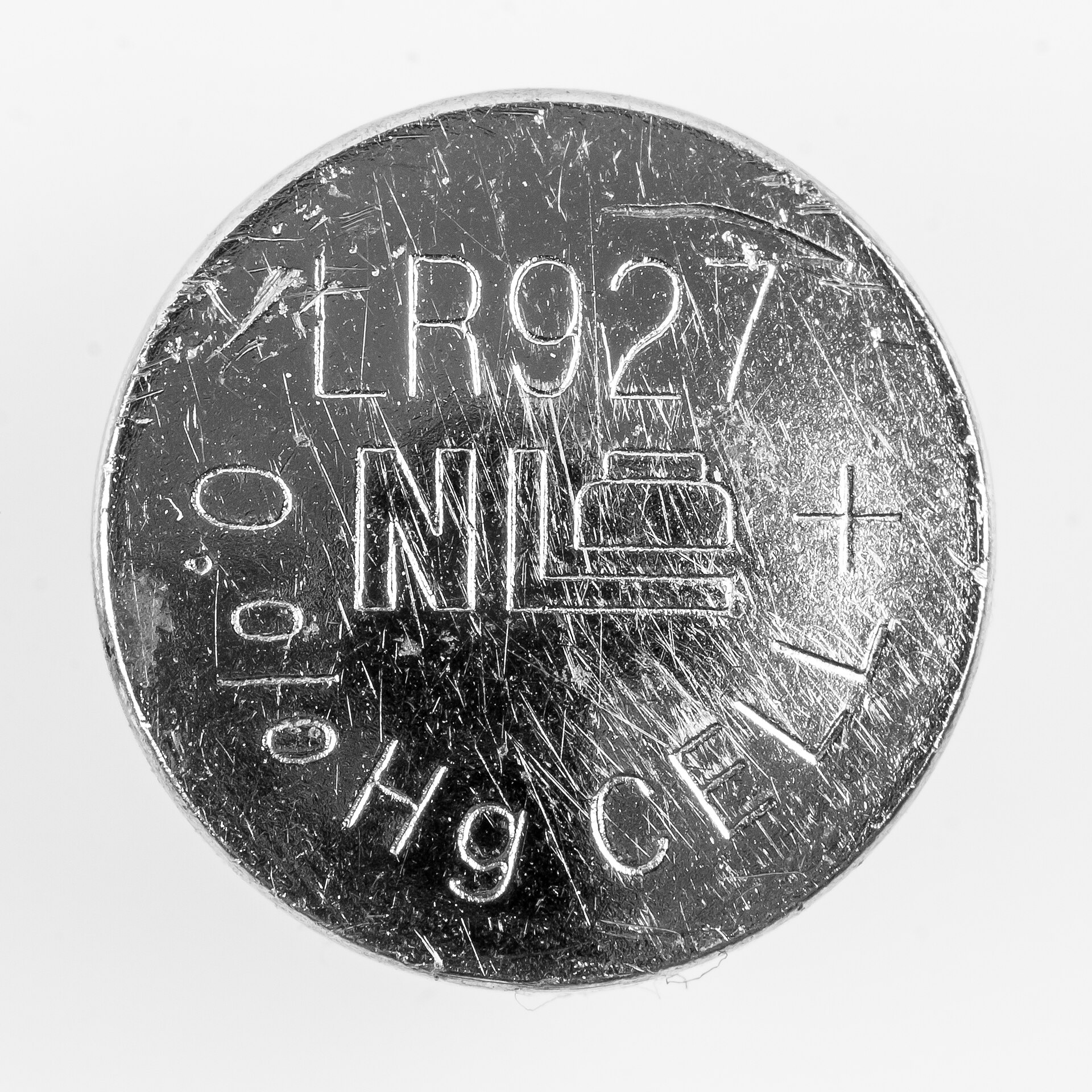
The Consumer Product Safety Commission published a notice on September 3, 2026 that asks the public one question and shuts the door on September 17. UL has revised UL 4200A, the industry standard that the Commission's mandatory rule for products containing button cell or coin batteries incorporates by reference. UL notified the Commission of the revision, and the Commission is now asking whether that revision improves the safety of these batteries and the products that hold them. Comments must be received by September 17, 2026, and they go to Docket No. CPSC-2023-0004 - the same docket number the agency carried for the original rulemaking, which is a small sign of how it treats this: as a continuation, not a new proceeding. The notice files itself under a single action line, "Notice of availability and request for comment."
Who this reaches is not abstract. The Commission's own 2023 announcement of the mandatory standard listed the product range: keyless entry remotes, wireless game controllers, toys, musical greeting cards. For a shopper there is nothing to do this week. For anyone who designs, imports or sells one of those products, the text under review is the text a compartment latch and a warning label will be measured against, and the deadline is September 17.
What the Commission said in 2023
The claim half of this story is the Commission's own, and it is three years old. The 2023 news release ran under the headline "Making Families Safer from Button Cell or Coin Battery Dangers; Reese's Law Leads to New Federal Mandatory Safety Standard". The release records a vote: pursuant to Reese's Law, the Commission adopted ANSI/UL 4200A-2023 as the mandatory consumer product safety rule for consumer products containing button cell or coin batteries. The Commission also set labeling requirements for battery packaging, to warn of the ingestion hazard to children. Reese's Law was enacted August 16, 2022; the 2026 notice describes its purpose as protecting children six years old and younger from the hazards of swallowing these batteries during reasonably foreseeable use or misuse, and its section 2(a)(2) directs the Commission to establish warning label requirements by rulemaking for both the products and the battery packaging.
The substance of the adopted standard, as the release describes it: a battery compartment must open only with a tool such as a screwdriver or a coin, or with at least two independent and simultaneous movements by hand, and covered products must pass a series of performance tests simulating reasonably foreseeable use or misuse. Toy products for children under 14 are outside the requirement if they comply with the Toy Standard.
One thing that release does not contain is a person. It carries no quoted words from any named official, and this piece attributes it the way it attributes itself - to the Commission.
What the 2026 notice records
The record half is the mechanism, and the notice states it plainly. To reject a revised standard, the Commission must notify the voluntary standards organization within 90 days of receiving the notice of revision that the revision, in whole or in part, "does not improve the safety of the consumer product covered by the standard" and that it is retaining all or part of the existing consumer product safety standard. Partial rejection is contemplated; this is not an up-or-down vote on the whole document.
And if the Commission does not act? The notice answers that too. The revised voluntary standard is then treated as a consumer product safety standard issued under section 9 of the Consumer Product Safety Act, 15 U.S.C. 2058, "effective 180 days after the Commission received notification of the revision" - or a later date the Commission specifies in the Federal Register.
Here is the analysis this desk draws from those two sentences, and it is analysis: in 2023 the standard became federal law by a vote the Commission took and announced. In 2026 a change to that same federal law arrives by default. UL writes the revision, the Commission is notified, and unless the agency affirmatively says no inside 90 days, the privately drafted text is a federal safety standard on day 180. Everything in that reading comes from the notice's own language about rejection and effectiveness; nothing in it is a prediction about what this Commission will do.
The clocks in that mechanism cannot be pinned to a calendar from this document. Both the 90-day and the 180-day periods run from the date the Commission received UL's notification, and the extract of the notice this desk captured does not state that date. Publication is September 3, 2026; receipt is some earlier, unstated day. So the outer edge of the rejection window is knowable only as "90 days after a date the public record here does not give."
Three death counts, three clocks
The harm behind all of this is documented, and documented inconsistently across the Commission's own papers. The 2023 release states that from 2011 through 2021 the agency is aware of 27 deaths and an estimated 54,300 injuries treated in emergency rooms associated with ingested or inserted button cell or coin batteries. It also states, in the plainest terms the agency uses anywhere, that these batteries can "burn through a child's throat or esophagus in as little as two hours if swallowed".
The September 21, 2023 Federal Register document 2023-20334 gives two more figures on two more spans. Drawing on the Consumer Product Safety Risk Management System, the proposed rule identified 25 fatalities from 2016 through 2021. Combining reported deaths since 2011, staff identified "32 reported deaths in the United States from button cell or coin battery ingestion" for January 1, 2011 through March 31, 2023. Set the 27 and the 32 side by side and the gap is mostly the calendar: the second window ends 15 months after the first. That document closes with the line "Alberta E. Mills, Secretary, Consumer Product Safety Commission." The signature line on the 2026 notice was not captured here, and this desk does not assert who signed it.
The standard already in force is already being enforced
The revision lands on top of a live compliance regime. CPSC business guidance for manufacturers states that compartments with replaceable button cell or coin batteries must need a tool or "at least two independent and simultaneous hand movements to open", that compartments must not let batteries be accessed or liberated under use and abuse testing, that packaging must bear a warning, that the product itself must bear one if practicable, and that manuals must carry the applicable warnings. Those requirements, the guidance states, "will apply to products manufactured or imported after March 19, 2024".
A 2025 client note from the law firm Foley & Lardner supplies two fragments about how that plays out. One describes noncompliance as "failing to adequately contain the batteries making them accessible to children" and failure to carry the required labels. The other states that "Apple had modified both the product itself and the product's packaging to display the required warnings", with further action on units already sold. Both fragments reached this desk without their surrounding sentences, and neither was checked against CPSC recall records; they are reported as the firm's account, not as findings verified here.
What a reader can check is short and dated. Comments are due September 17, 2026, in Docket No. CPSC-2023-0004, and the question on the table is the narrow one the notice asks: does the revision improve safety.
After that, one falsifiable call from this desk: no document rejecting the UL 4200A revision, in whole or in part, will appear in the Federal Register on or before December 2, 2026, which is 90 days after publication. That test observes the Federal Register only. The notice requires the Commission to notify UL, not to publish, so a rejection sent as a letter to the standards organization would not show up in it - which is itself the thing worth watching.