Culture & Society · The Record
El-Sayed said Medicare for All means paying 'a little bit more in taxes'; CBO modeled GDP approximately 1.0 to 10 percent lower by 2030 under income- or payroll-tax financing
The Congressional Budget Office's illustrative single-payer paper projects that household premiums would be eliminated and out-of-pocket costs would decline, and that a system financed with an income or payroll tax would leave gross domestic product between approximately 1.0 percent and 10 percent lower by 2030. Those are conditional model projections, not measurements, and the financing they assume is the paper's, not one the candidate has specified.
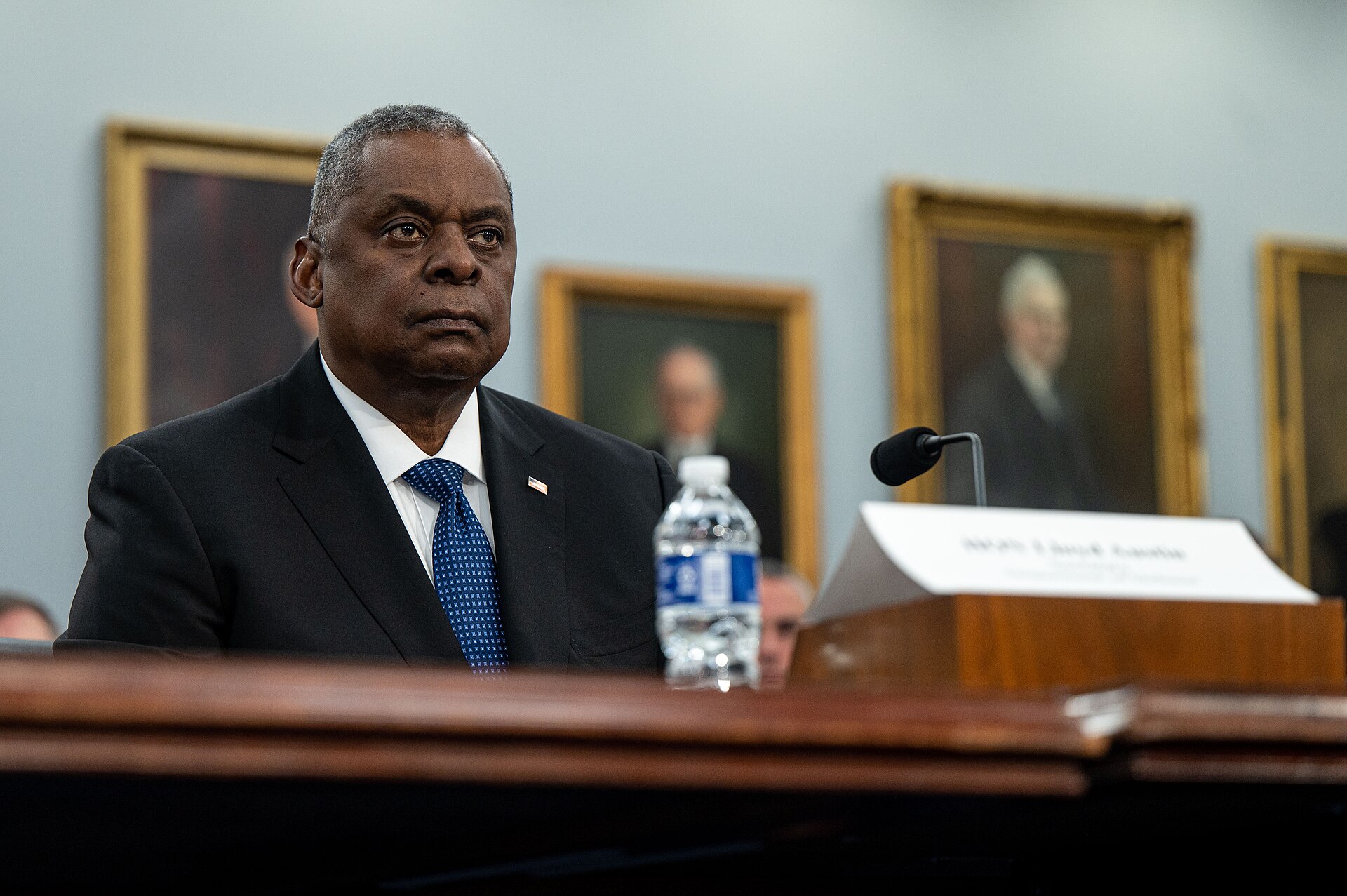
Abdul El-Sayed, a candidate for the U.S. Senate in Michigan, was asked in a televised interview this month whether Medicare for All would raise taxes on people earning less than $1 million. In the exchange as transcribed by Fox News, he answered by describing a swap: the premium that comes off a worker's pay stub would go away, and in its place a worker would pay "a little bit more in taxes" for coverage that would survive a lost job, a birthday, a marriage or a divorce.
Pressed on whether that amounted to a yes - whether he was acknowledging that people earning below $1 million could see their taxes rise - he replied, in full as transcribed: "I'm saying that we'd be paying for healthcare in a different way. Instead of paying a health insurance company, whose CEO makes $20 million, I would much rather pay for durable healthcare into a government..."
The transcription breaks off there, mid-sentence. It contains no yes and no no. It does contain an affirmative preference: he would rather the money went to a government system than to an insurer. This piece does not describe that as an admission, because on the record available he declined to answer the question as put.
The record that tests it
The Congressional Budget Office has modeled the swap he described. Its working paper on the economic effects of five illustrative single-payer health care systems, numbered 2022-02, states the benefit side in terms close to his own: "Households' health insurance premiums would be eliminated, and their out-of-pocket (OOP) health care costs would decline." The same paper puts the projected gain in average private nonhealth consumption per capita at roughly 11.5 percent by 2030.
The financing side is where the range opens. The paper states: "If the system was financed with an income or payroll tax, gross domestic product (GDP) would be between approximately 1.0 percent and 10 percent lower by 2030."
Two features of that sentence do the work. It is conditional - a projection under an assumed financing method, not a measurement of anything that has happened. And the assumption is the paper's own illustrative design. El-Sayed has not said his plan would be financed with an income or payroll tax, at what rate, or from what income upward, so the band cannot be read as the price of his proposal. It is what CBO's modelers got when they priced a hypothetical.
What the campaign page says
El-Sayed's campaign page on Medicare for All promises coverage for every American from cradle to grave "without premiums, copays, or deductibles." None of the campaign passages reviewed for this piece names a tax rate, an income threshold, or any other financing mechanism. The absolute promise and the on-air answer that declined to say whether taxes rise below $1 million were made by the same campaign in the same week.
The money claim, and what the filing can carry
El-Sayed told Democracy Now! that his campaign's message was to "get money out of politics". His committee's own filing is a checkable record, but a narrow one.
Federal Election Commission records for ABDUL FOR U.S. SENATE, committee C00902668, report total receipts of $14,528,335.93 for the period 01/01/2025 to 07/15/2026, of which $14,408,058.06 came from individual contributions - 99.2 percent, by Daily Pol's arithmetic. Disbursements were $11,975,573.38 and ending cash on hand $2,552,762.55.
What that ratio shows is that this committee's receipts came overwhelmingly from individuals rather than from other committees. What it does not show is two things worth stating plainly. It says nothing about how much money was spent in the race from outside the committee, because a committee reports only its own receipts. And it says nothing about whether those individuals gave $20 or the legal maximum, because the summary reviewed here carries no donor-size breakdown. Outside spending was at issue in this race on El-Sayed's own telling: PolitiFact's review of the Michigan Democratic primary debate records him saying "AIPAC has spent tens of millions of dollars in attack ads against me or ads lying about the congresswoman's record." None of that would appear in his committee's receipts.
Analysis
This section is Daily Pol's reading of the records cited above, not reporting of anything a source said.
On the direction of the trade, the CBO paper and the candidate agree: premiums and out-of-pocket costs go down, and something else goes up. The disagreement is not between him and the record. It is between the word "little" and the absence of any number attached to it.
The temptation is to close that gap with CBO's band and call it the answer. That would be wrong in both directions. The 1.0-to-10-percent figure is not a rebuttal of El-Sayed, because it prices a financing design he has not proposed. It is equally not available to him as support, because it is conditional on assumptions he has not adopted. The number that would actually settle the question he was asked - a rate, and the income at which it begins - is in neither record examined here. Until a candidate supplies it, "a little bit" is a design choice waiting to be made, not a finding.
A falsifiable prediction, so this piece can be marked right or wrong: as of 2026-11-03, El-Sayed's campaign page on Medicare for All will still carry the promise of coverage without premiums, copays or deductibles without naming a tax rate or an income threshold to pay for it. If a rate or threshold appears on that page before that date, this prediction fails and the piece should be corrected.
A note on method, from Daily Pol rather than from any source
The CBO wording quoted here was not read at the agency's own site, which returned an access error to our retrieval attempt. It was read through a reproduction of the working paper hosted by Physicians for a National Health Program. Readers should treat the CBO sentences as quoted at second hand and verify them against the agency's working paper 2022-02. The interview quotes are second hand for the same reason: they are taken from Fox News's transcription of the broadcast, not from the broadcaster's own transcript, which this publication did not obtain.
Daily Pol logs a request for comment with the subject of a piece of this kind before publication. At the time of drafting, no response from the El-Sayed campaign had been received, and the request is recorded as outstanding in this piece's ledger.