Science & Technology · The Record
FTC's own judge contradicted its $100 million estimate, and the click-to-cancel rule was vacated
The Eighth Circuit threw out the federal click-to-cancel rule on a missing preliminary regulatory analysis, not on the merits. What stands in its place is one city's rule and a fresh FTC proceeding.
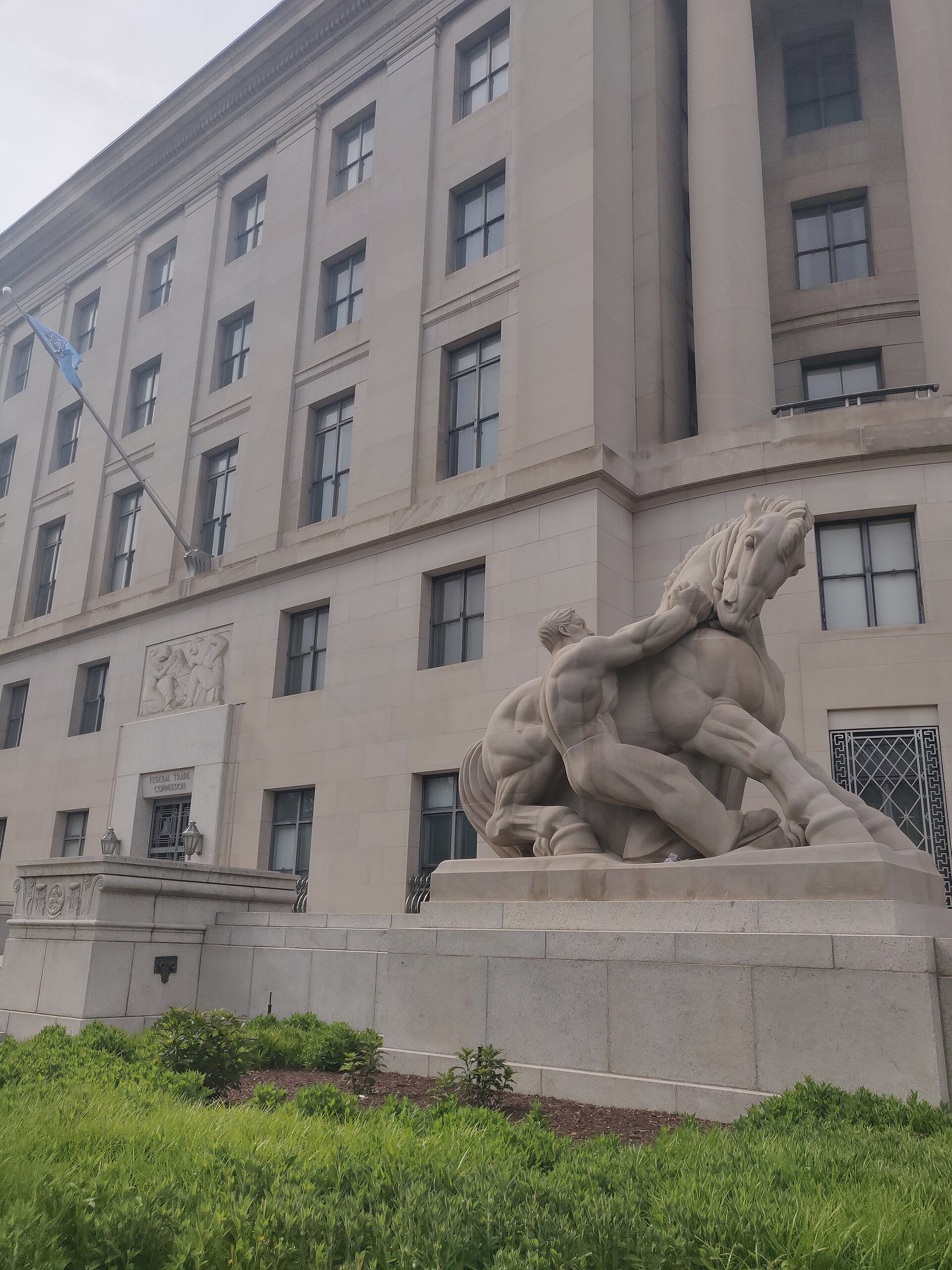
The Federal Trade Commission's click-to-cancel rule was vacated before its compliance date ever arrived. The United States Court of Appeals for the Eighth Circuit granted the petitions for review and vacated the rule in Custom Communications, Inc. v. Federal Trade Commission, filed July 8, 2025 (per curiam). The Commission had already moved the compliance date once, from May 14, 2025 to July 14, 2025, using what the opinion calls its enforcement discretion.
The rule did not fall on the question of whether unwanted subscriptions are a real problem. It fell on a document the Commission never produced. The court concluded that Section 22 of the FTC Act required the Commission to issue a preliminary regulatory analysis after its administrative law judge found the rule would meet the $100 million economic impact threshold, even though the Commission had initially estimated it would not. The missing analysis was the fatal defect.
The mechanism
"Negative option" is the term the court uses for a subscription arrangement in which a seller may read a customer's silence, or failure to take any action, as acceptance of an offer. The opinion opens by describing consumers who find themselves enrolled in recurring plans they did not want and keep paying because they never cancelled.
The rule the Commission adopted on November 15, 2024, by a 3-2 vote, reached negative option programs in any media. The fourth of the rule's new requirements is the one the nickname refers to: sellers had to give customers a simple way out, one that stops recurring charges immediately and is no harder to use than the path the customer took to sign up. The opinion calls this the "equal dignities" requirement.
The claim
In its notice of proposed rulemaking, the Commission stated it had preliminarily determined that amending the 1973 rule would not produce the $100 million annual effect on the national economy that triggers a mandatory preliminary regulatory analysis. Its reasoning, as the court sets it out: most sellers already offer some form of disclosure, consent procedure and cancellation method, so the new requirements would add no substantial burden, and the Commission had tried to keep those requirements flexible rather than prescriptive. On that basis it declined to prepare the analysis.
That threshold matters because the statute's analysis requirements do not attach to an amendment unless the FTC itself estimates the annual effect will reach $100,000,000 or more. The trigger is the agency's own number.
On appeal, the Commission's position was that nothing in the FTC Act requires a preliminary regulatory analysis at that late stage of a rulemaking.
The record
The check on that number came from inside the agency. The Commission's own administrative law judge took two of the FTC's own inputs: its estimate that 106,000 entities currently offer negative option features, and the average hourly rates it had estimated for professionals - lawyers, website developers and data scientists are the examples given - whose services, the opinion says, many businesses would need in order to comply. Run backwards, those inputs give a crossing point. Unless each affected business used fewer than twenty-three hours of professional services, priced at the lowest end of the estimated rate range, compliance costs would pass $100 million. Twenty-three hours per business the judge called "clearly unrealistically low", given how many existing practices and disclosure forms the proposal would force businesses to change.
One step further than the opinion goes, and marked here as this writer's arithmetic rather than the judge's: because twenty-three hours is the crossing point at the bottom of the rate range, any higher rate makes the crossing point smaller still.
One industry figure in the record gives the scale. The Internet and Television Association, appearing before the judge, submitted an estimate that compliance would cost major cable operators between $12 million and $25 million per company.
The judge found the proposed rule would have an annual effect on the national economy above the threshold. The Commission did not then issue a preliminary regulatory analysis. It finalised the rule and issued only the final analysis alongside it, and in doing so it recorded the contradiction: it had preliminarily determined the amendments would not have such effects, and the presiding officer had ultimately determined they would. The acknowledgement and the omission sit in the same document.
Just under eight months later the Eighth Circuit vacated the rule in its entirety, holding that petitioners were prejudiced by the procedural error and that the party-specific vacatur the Commission asked for was not feasible given how broadly the rule reached.
The court's warning is the part with a life beyond subscriptions. Excusing the noncompliance, it wrote, "could open the door to future manipulation of the rulemaking process", because an initially unrealistic low estimate would hand an agency a procedural shortcut that limits public engagement and substantive analysis at the front end.
What the court did not decide
The court rested on the procedural defect and said so plainly: it stated that it does not endorse the use of unfair and deceptive practices in negative option marketing, and that the procedural deficiencies of the rulemaking were fatal here. Three counterweights belong next to any account of this vacatur.
First, the court found the Commission's decision to bypass the preliminary analysis was "certainly not made in bad faith" and was not an outright dodge of procedure. Nothing in the opinion supports a claim that the low estimate was contrived.
Second, the Commission's own final regulatory analysis, as quoted in the opinion, put the low-end estimate of the rule's benefits at seven times the high-end estimate of its costs; the Commission argued on that basis that adjustments to the cost-benefit work would have changed nothing. The court's answer was that petitioners had raised enough uncertainty about whether their comments would have had some effect, in the context of a closely divided vote that drew a lengthy dissent.
Third, two commissioners dissented from that vote: Melissa Holyoak and Andrew Ferguson, now the Commission's chairman. The sources used here do not state either commissioner's party. Holyoak questioned the majority's "race to cross the finish line", argued the rule swept far past the area of inquiry the advance notice had proposed and failed the FTC Act's specificity requirement by generalising from narrow industry complaints to the whole economy, and said the Commission had not shown that unfair or deceptive negative option practices are prevalent.
What exists instead
With the federal rule gone, the cancellation requirement now exists where a city has written one. SlashGear describes New York City's as "a first-in-the-nation municipal rule". DLA Piper's client note says the city rule requires businesses to "clearly and conspicuously present all material terms" - product description, cost, billing frequency, cancellation deadlines and the cancellation methods on offer - before asking for consent or billing information.
The same note describes penalties running from "$525 for a first violation to $3,500 for third and subsequent violations". Read that carefully: the note covers both the cancellation rule and separately proposed junk fee regulations, and the passage available here does not tie that schedule specifically to the cancellation provisions.
amNewYork carries a line of argument for the city rule: "If a business can enroll you with one click, they can let you cancel with one click. It's that simple." The excerpt available here does not identify who said it.
At the federal level the proceeding restarted. Cooley reports that the FTC issued a request for public comment on an advance notice of proposed rulemaking on March 11, 2026, with comments due by April 13, 2026. Among the things the notice asks about is to "understand the impact of Saves on competition in the negative options marketplace".
Analysis
Analysis, drawn from the record above and from no single source in it. The chain runs one way. The agency estimated its own rule's economic effect below the statutory trigger. That estimate let it skip the front-end analysis. Its own judge found the estimate wrong. The Commission wrote that finding into the record, produced no preliminary analysis, and finalised the rule anyway on a 3-2 vote. The court vacated the entire rule on that omission alone, deciding nothing about whether the requirements were sound. What was to be one national requirement is now a municipal one in the city that wrote it - a fragmentation produced by a procedural failure rather than by any judgment on the merits.
A second reading of the same record is about participation. The advance notice that opened this rulemaking drew only seventeen comments. The rule that came out of it was found to carry an annual economic effect above $100 million across the Commission's own figure of 106,000 affected entities. That gap is what the court's reasoning is protecting against: the preliminary analysis exists to pull comment in before an agency commits, and the front end of this proceeding was thinly attended.
And a loop worth naming. Ferguson dissented from the 2024 rule; as chairman he now presides over the 2026 advance notice that reopens the same subject and asks the public for cost and competition input. Functionally, that is the front-end record the vacatur said was missing, being gathered before a rule instead of after one.
A checkable prediction
The replacement proceeding was still at the advance-notice stage on March 11, 2026, with comments closing April 13, 2026. Prediction: no final federal negative option rule will be in force on December 31, 2026. The Federal Register settles it either way.
Note on sourcing
The Commission's rulemaking language quoted here reaches this article through the Eighth Circuit's opinion, which quotes it directly. The FTC's own filings and New York City's releases were not read directly for this piece. The FTC was not asked for comment for this article.