Disasters & Accidents · The Record
FEMA grants pay up to 75 percent of state firefighting costs and exclude owners, as Warm Springs ranchers seek help
A KLCC report carries a Warm Springs rancher's account of fire running 14 miles in a day. The tribes' range code shows what a grazing district is - a unit authorized jointly, with capacities set by the Bureau of Indian Affairs - and FEMA's own description of its firefighting grants states they do not reach individual owners.
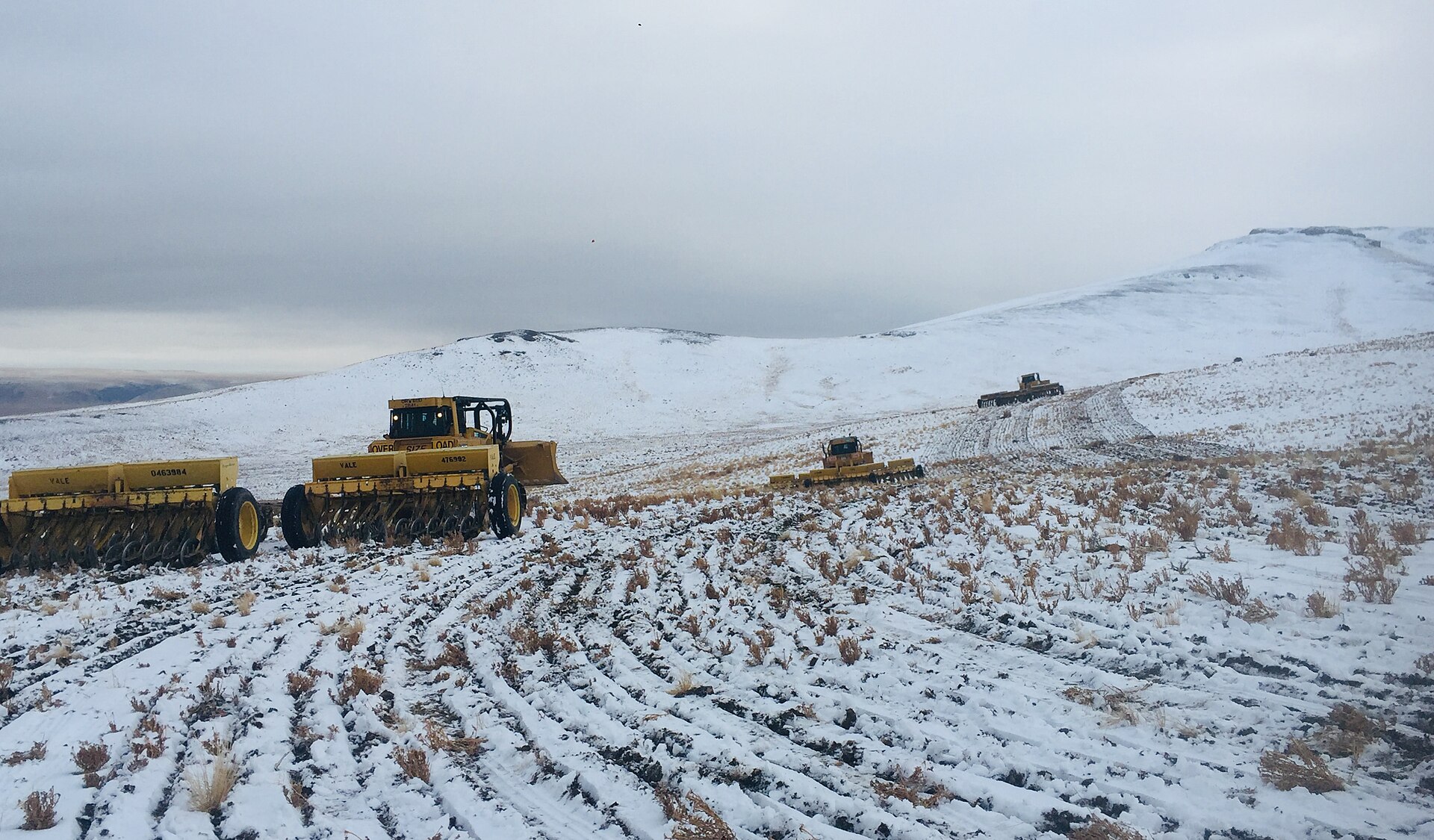
"It run like 14 miles in one day, y'know. It made it from our westerly range where we run our cattle and horses, clear to our front door." That is how a rancher described the fire's arrival at the family's operation on the Warm Springs Reservation, in a KLCC report published September 3, 2026. The passages captured for this article carry the account without a speaker line, so the words stay with the report rather than with a name. The same report carries the ask, also unattributed in the captured text: "If we can take care of that through community support and grants, that would be a game changer."
That is the claim side of this story, and it is worth stating plainly what it is arguing for. After fire moved across grazing ground on the reservation - no captured document dates the burn - the people who run livestock on it are asking the public and grant-makers to cover a shortfall. The KLCC capture also describes fires burning just south of the reservation that looked to be moving toward the ranch, and a sky that was orange and high with flame.
Oregon Public Broadcasting's August 2, 2026 report on Bench Fire recovery at Warm Springs recorded, earlier and at more length, what a grazing district means to the households that hold one: "My family takes care of the fences for our grazing district. We take care of the springs. We take care of the creek. We take care of the animals. It's a part of us, this land, and we're a part of it." The same report carries an account of smoke thick enough to blind and to choke, white and black at once, and a flat summary of the aftermath: "I have a lot of fond memories there, and it's gone." Those passages, too, arrive in the capture without a speaker line.
KPIC's report on the tribes' account of damage from the Bench and Beachcomb fires places the loss inside a government-to-government relationship rather than a charitable one. Its captured passages describe home losses that displace three generations at once, and describe a treaty with the federal government, ratified under the Constitution and signed by the president in 1855, with Oregon becoming a state four years later in 1859.
The acreage attached to this story comes from a trade publication rather than an incident record. The Northwest Horse Source's account of the Warm Springs animal relief effort carries the phrase "40,000 acres of grazing land" and the bare figure $15,000. Nothing in the captured passages states what that $15,000 is for. The same capture states that "the loss of grazing land, habitat, and resources will be felt for many months." That acreage appears in that report and in no primary document captured for this piece.
Now the record. The clearest published statement of what federal wildfire money does and does not reach is a Federal Emergency Management Agency release hosted by the Office of Rep. Cliff Bentz. Two cautions come before it is read. The release concerns the Highland Fire in Crook County, Oregon, is datelined Bothell, Washington, and describes an approval given in 2025. It is not a record of any action on the fire at Warm Springs, and it is cited here for one thing only: the agency's own account of the scope of its Fire Management Assistance Grant program.
That account is specific. The release states that the grants make funding available to pay "up to 75 percent of a state's eligible firefighting costs" for fires that threaten to become major disasters. It lists what counts as eligible: field camps, equipment use, materials, supplies, and the work of mobilizing and demobilizing crews against the fire. It then draws the outer edge of the program in a single sentence, which is the sentence a reader of this story needs.
The release also shows what triggers the money and where it lands. Oregon's request was approved by FEMA Region 10 Acting Administrator Vincent J. Maykovich at 10:58 p.m. PT on July 12, 2025, the fourth such declaration for Oregon wildfires that year, and the release records that at the time of the request the fire threatened homes around the community of Prineville Lake Acres along with roads, infrastructure, utilities, a watershed and wildlife resources. The threat is to homes and infrastructure; the payment is against a state's firefighting bill.
These grants do not provide assistance to individual home or business owners and do not cover other infrastructure damage caused by the fire.
The second record is the Confederated Tribes' own range and livestock code, which shows that a grazing district is an administrative instrument rather than a stretch of scenery. Under the code, grazing area boundaries are set upon development of grazing area authorizations, by Tribal Council resolution, after recommendations from grazing groups, the Range/Irrigation/Agriculture Committee and the Natural Resources Department. "Grazing authorizations shall be issued to grazing groups by the Tribal Council and the Superintendent, acting jointly", the code states. An authorization fixes the number and kind of livestock that may graze, the season of use, and the number of Animal Unit Months allowed.
The ceiling on all of it is federal. "The grazing plan shall be consistent with approved grazing capacities established by the Bureau of Indian Affairs", the code directs. What the code cannot do is stand in for an incident map: the captured text names no district, carries no acreage, says nothing about any fire, and identifies no permit holder. It establishes what kind of thing a grazing district is. It does not establish that the burned ground lay inside one.
Analysis, drawn from those two documents and nothing else. The tribal code puts the carrying capacity of tribal range under a federal ceiling, counted in Animal Unit Months and set by the Bureau of Indian Affairs. The FEMA program, as the agency itself describes it, is scoped to a share of a state's eligible firefighting costs and states in terms that it reaches neither individual owners nor damage beyond the firefight. Those are two different federal relationships to the same category of ground. One governs how many animals it may carry. The other, by its own description, stops at the fire line.
Be exact about the limits of that comparison. Nothing in the captured record says who fought this fire, what the suppression cost, or whether Oregon sought a Fire Management Assistance Grant for it. What the record does settle is the shape of the program if one was sought, and the shape is written into the program rather than left to administration.
The incident-data page for the Bench Fire captured for this article yielded two strings and no more: a fuel model given as "Short Grass (1 foot)", and fire behavior recorded as "Minimal, Smoldering". No containment percentage or suppression cost appears in the incident record captured here, and the only acreage figure comes from the Northwest Horse Source report rather than the incident page.
Three things resolve on a date. FEMA publishes its fire management assistance declarations, so whether one exists for this fire, and on what terms, is answerable from that record. Under the tribes' code, any change to grazing area boundaries runs through a Tribal Council resolution, which is a document with a number and a date. And the $15,000 in the Northwest Horse Source report stays what the capture makes it: a bare figure whose purpose the record does not state.
A prediction, checkable by December 31, 2026: if a Fire Management Assistance Grant turns up on the federal record for this fire, its terms will match the scope the FEMA release states - up to 75 percent of a state's eligible firefighting costs, with no assistance to individual home or business owners - rather than any payment to the ranchers or any restoration of the range they graze.