Fashion & Apparel · The Record
Ninth Circuit opinions record six registrations for Levi's pocket tab and an affirmed finding of no secondary meaning on shirts
Modern Retail reports two new suits and prints a wide reading of the tab right. The opinion at 778 F.2d 1352 affirms the district court's finding that the same tab carried no secondary meaning in the shirt market.
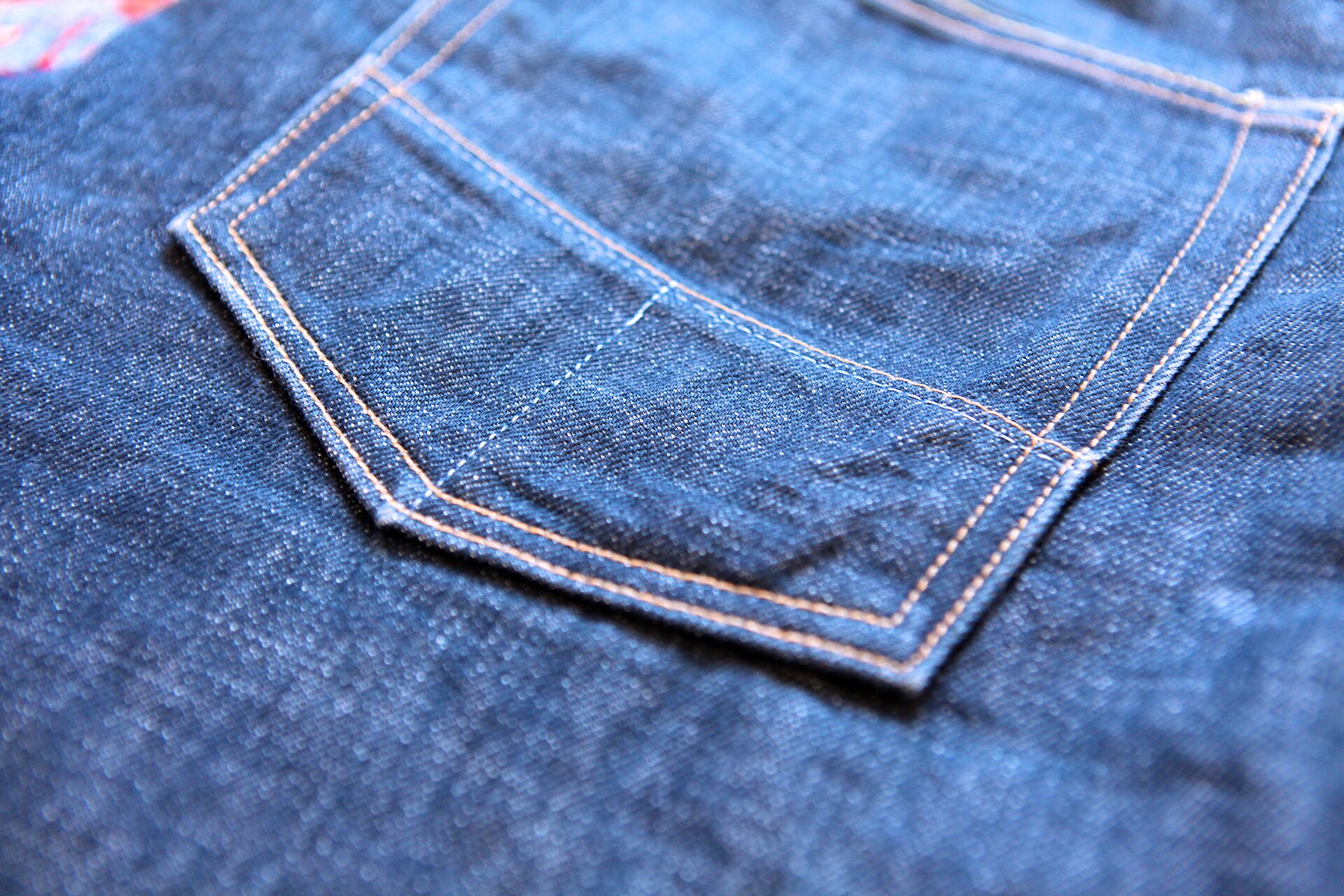
Modern Retail reports that Levi Strauss & Co. has filed two new trademark lawsuits this year over its pocket tab, a mark the report describes as nearly 90 years old. The rationale printed for that enforcement is a wide one. The passages captured for this piece carry the words with no speaker attached to them: "It's not limited to a rear pocket. It's not limited to jeans. So they are able to claim this very broad set of rights."
The same report carries a second passage, also without a named speaker in the capture, on why owners of design marks go to court so often: "Those types of site identification trademarks are very difficult to enforce unless you do it regularly."
That is the claim. The record is two opinions of the U.S. Court of Appeals for the Ninth Circuit, both against the same defendant, Blue Bell, Inc. Read together, they run in opposite directions depending on which garment the tab is sewn into.
Start with the pants. The opinion at 632 F.2d 817 records that Strauss adopted and used the pocket tab as a trademark in 1936, and that a Strauss employee, Chris Lucier, conceived the idea of a permanent identifier for pants that stayed visible while the pants were worn. The same opinion records the portfolio behind the mark: the company "has obtained and maintained six federal trademark registrations covering its pocket tab, and has an application pending for a seventh registration." It records the finding that the tab acquired secondary meaning identifying Levi Strauss and its products to the public, and defines that term as recognition in buyers' minds that goods connected with a device come from the same source. On infringement, the opinion records that Blue Bell's Wrangler pocket tab, on the bottom of the right rear patch pocket of its pants, was "likely to cause confusion, mistake or deception."
One caution about that document. The capture used here carries those findings with no affirm-or-reverse line and no decision date, so this piece reports what the opinion records, not how the appeal came out.
Then the shirts. The opinion at 778 F.2d 1352 sets the same mark against the same defendant, moved up the body. It records that Strauss began putting a pocket tab on shirts in 1969 and registered a shirt tab under California state law on June 12, 1974, and that Blue Bell, from around 1975, sold a shirt carrying a Wrangler or Maverick label printed on a folded cloth ribbon fixed to the seam of a shirt pocket. The registration language the opinion quotes describes the thing being protected in plain material terms: "a small marker or tab of textile material or the like, colored red".
To win on its federal claims, the opinion states, Strauss had to establish both a protected interest in the tab as against Blue Bell's shirt usages and a likelihood of consumer confusion. It failed at both steps. The appellate court held that the district court had correctly recognized secondary meaning in the tab as applied to the pants market, but did not err in finding none in the shirt market, and that the district court's ultimate finding of no likelihood of confusion was not clearly erroneous. The disposition affirms as to the federal trademark and state unfair competition claims and remands the state trademark infringement and dilution claims: judgment affirmed in part, vacated and remanded in part.
Analysis, and it is this desk's rather than any source's. The two opinions mark an edge. 632 F.2d 817 concerned a tab on the rear patch pocket of pants; 778 F.2d 1352 concerned a tab on a shirt pocket, and on that record the mark did not travel between them. Nothing captured here from either opinion says anything about the products in the suits Modern Retail reports, and a finding about the shirt market as one district court found it is not a rule about tabs in general. What can be said is narrower and still worth saying: in this evidence base the proposition that the tab right is not limited to jeans was tested in court once, against one defendant, and the federal claim failed. The passages captured here from the report that prints the broad reading carry no mention of 778 F.2d 1352.
The company's own filings put the tab in a much larger file. Levi Strauss & Co.'s Form 10-K for fiscal 2018 tells the Securities and Exchange Commission the company holds "more than 5,000 trademark registrations and pending applications in approximately 180 jurisdictions worldwide," and lists the Tab Device among core trademarks alongside the 501 mark and the Arcuate Stitching Design. The filing states the company regards its trademarks as its most valuable assets and describes an enforcement program of market reviews, cease-and-desist letters, oppositions and litigation: "We are currently pursuing over 200 infringement matters around the world." The six-registration count in this piece comes from 632 F.2d 817 and from nowhere else in this evidence base. The passages captured here from the filing do not mention that figure or characterize it; setting the two counts beside each other is this desk's comparison, not the document's.
The company's published history of the tab adds a cross-category claim of its own. It credits National Sales Manager Chris Lucier with the idea of "placing a folded cloth ribbon in the seam of a rear patch pocket," gives him a sales title where the court opinion calls him a Strauss employee, and says the Tab Device spread past the 501 jeans to jackets in 1937. That corporate account of the tab moving across product lines sits next to an appellate record in which the tab, moved to shirts, was found to carry no secondary meaning there.
The enforcement program has drawn a formal complaint. The Fashion Law reports a Barbour lawsuit calling Levi Strauss & Co. "one of the world's biggest trademark 'bullies.'" The same report puts the company's litigation count at more than 300 trademark lawsuits since 1989; the captured text does not settle whether that figure is the outlet's own reporting or an allegation from the complaint, so it is reported here as the report's. The characterizations are contentions in a civil case and have not been adjudicated. That report also carries a statement reading "our trademarks are one of the company's most valuable assets, and we work actively to protect our trademark rights." The capture does not identify who said it.
What a reader can check next is on public dockets. The two suits Modern Retail reports will show whether the accused article is a tab on the rear pocket of a pair of pants, the configuration 632 F.2d 817 dealt with, or something further from it. The company's next annual filing will restate, or revise, its own count of infringement matters underway. And a prediction, this desk's, checkable by June 30, 2027: neither of those two suits will have produced a published court finding of secondary meaning in the tab outside the pants market.