Fashion & Apparel · The Record
Louboutin's red sole registration, Serial No. 77141789, still carries the contrast limit a court ordered
The opinion that held the Red Sole Mark valid also modified it and told the Patent and Trade Office to limit the registration. The live USPTO status view shows that limit in the mark's description today.
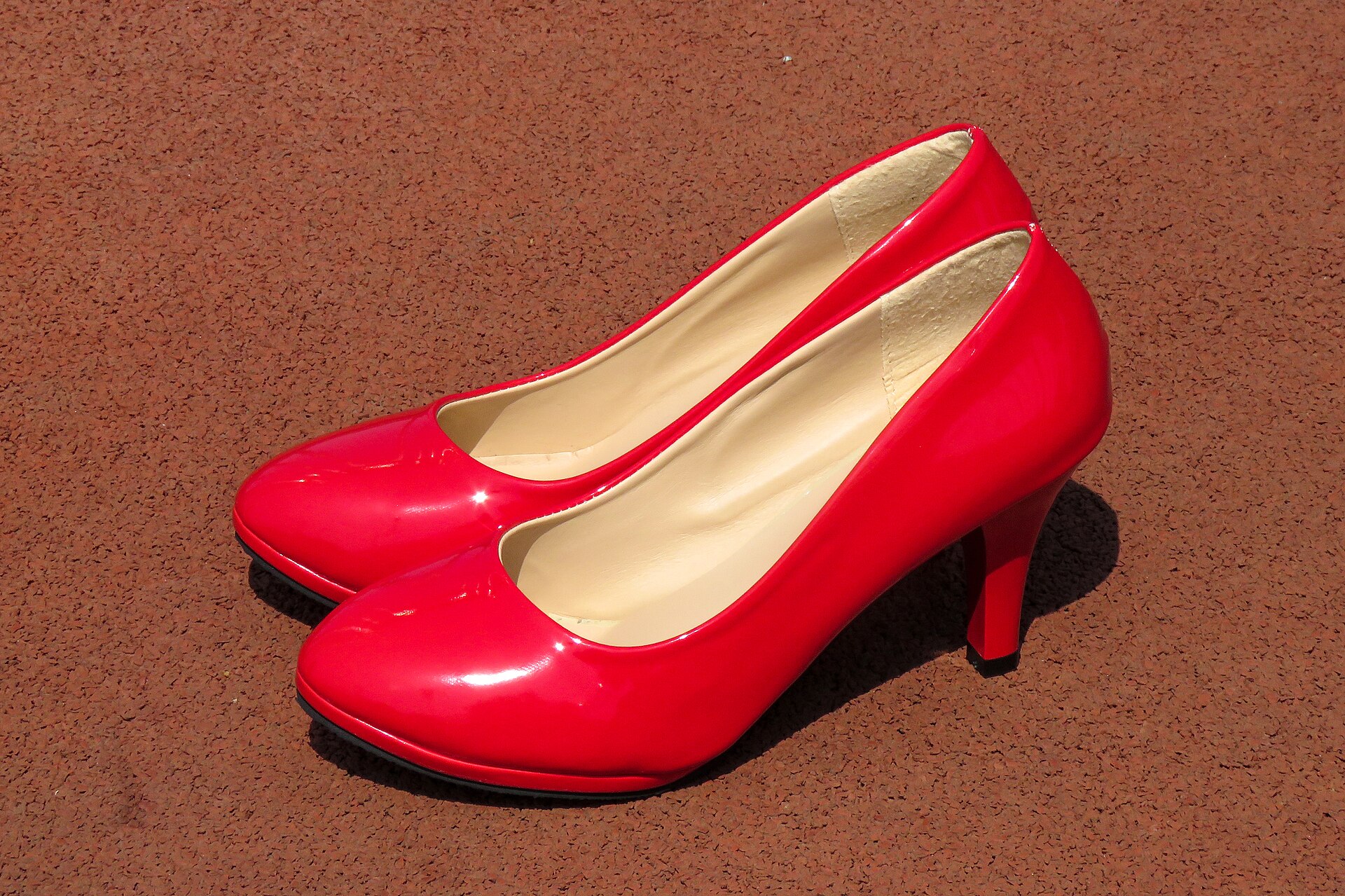
The sentence that decides which shoes fall inside Christian Louboutin's red sole trademark is public, free to read and one line long. On the United States Patent and Trademark Office's status view for Serial No. 77141789, the description of the mark reads: "The mark consists of a red lacquered outsole on footwear that contrasts with the color of the adjoining ("upper") portion of the shoe. The dotted lines are not part of the mark but are intended only to show placement of the mark." The contrast condition in that sentence is not a preference expressed by a design house. It states the same requirement a court ordered onto the register - which is as close as a public file comes to showing that the instruction was carried out.
The opinion captured for this piece - catalogued by the Caselaw Access Project under the caption Christian Louboutin S.A. v. Yves Saint Laurent America Holding, Inc. - does two things in the same breath. It leaves the mark standing - the text of the decision published by FindLaw states that "the Red Sole Mark is valid and enforceable as modified" - and it modifies that mark under Section 37 of the Lanham Act, 15 U.S.C. § 1119, confining it to a red lacquered outsole that contrasts with the color of the adjoining upper. The court then instructs the Director of the Patent and Trade Office to limit the registration to exactly those contrasting situations. The narrowing sits in the disposition itself, addressed to the register rather than to the parties.
The carve-out is stated without softening: "The use of a red lacquer on the outsole of a red shoe of the same color is not a use of the Red Sole Mark." A shoe that is red all the way through is outside the mark by definition, not by defence. That is the sentence the disputed product line needed. The FindLaw text records that in 2011 YSL prepared to market a line of monochrome shoes in purple, green, yellow and red, each carrying one color across the entire shoe, so that the red version is red throughout.
Both commentary pages captured here carry victory language, and neither capture attaches a name to any of it. The IPKat post on the decision prints a statement claiming a win in defending against a Louboutin lawsuit and saying monochromatic shoes with red outsoles will continue, as they have since the 1970s; the page as captured names no speaker. The same post prints a second sentence calling the outcome a significant win for Louboutin and for the fashion industry generally - again with no speaker, and with nothing in the capture indicating which side of the case issued it. This desk will not supply the missing names, and for the second sentence it will not supply the missing side. The Center for Art Law review has the same gap: the captured page carries the phrase "considers this a significant win for Louboutin" with no subject attached to it, nothing identifying who is doing the considering.
Aside from the ordering of names in the catalogued caption, which party brought the case is, in this material, one side's word. The unattributed IPKat statement describes defending against Louboutin's lawsuit. That is a characterization by whoever issued it, not a docket entry, and it is the only description of the posture in the captured record.
The claim side of this story is a handful of sentences on two commentary pages. The record side has an address. The USPTO status view for Serial No. 77141789 carries the narrowed description in force today: contrast with the adjoining upper is part of the mark as registered. The same page lists red as a claimed feature of the mark, the goods as women's high fashion designer footwear in International Class 025, and the file as live, issued and active, renewed as of Oct. 03, 2017. The wording the court ordered and the wording on the register describe the same requirement, which is as close as a public file comes to showing that an instruction to the Director was carried out - and that it has since survived a renewal.
Before it was a legal question the red sole was a finishing step on a production line. The FindLaw text records that the designer has painted the outsoles of his women's high-heeled shoes with a high-gloss red lacquer since 1992, and registered the lacquered outsole as a trademark with the Patent and Trade Office in 2008. The decision also sets out the general principle it works from: "color alone, at least sometimes, can meet the basic legal requirements for use as a trademark". What the court declines to do is carry that protection across the boundary it draws on the register.
Why the boundary falls where it does is explained in a sentence that appears on both commentary pages in near-identical form. The IPKat post carries it as: "it is the contrast between the sole and the upper that causes the sole to 'pop,' and to distinguish its creator." On that page the sentence sits among passages of opinion text, which indicates the review is quoting the ruling rather than offering an outside view of it. Read that way, it is not corroboration from a third party; it is the court's own reasoning, reprinted twice.
The Center for Art Law page also carries this: "because in the fashion industry color serves ornamental and aesthetic functions vital to robust competition, the court finds that Louboutin is unlikely to be able to prove that its red outsole brand is entitled to trademark protection". The captured fragment says only "the court", without identifying which court reached that conclusion or at what stage of the case, and this piece does not fill that in.
Nor does the opinion end the litigation. Both captures of the decision carry the line: "We remand for further proceedings with regard to YSL's counterclaims." No page captured here records what became of those counterclaims.
Louboutin has not stopped going to court. The Fashion Law reports a complaint filed with a New York federal court on May 5, and gives the caption as Christian Louboutin SAS et al v. Vinci Leather, Inc., 1:23-cv-03806 (SDNY). That report describes the complaint as alleging "a blatant attempt to trade off the renown of the Christian Louboutin brand". That is an allegation in a filing: the captured page records no ruling on it and no answer from Vinci Leather. The page also does not name Serial No. 77141789 or tie the suit to the modified registration rather than to the design patent named in the report's own title, so this piece does not assert the link.
What a reader can check is unusually concrete for a fashion story. The status view for Serial No. 77141789 is public and updates itself, and the prediction this desk will stand behind is testable on or before 2027-03-01: the mark description will still require the outsole to contrast with the adjoining upper, and the file will still read live and active. The docket number 1:23-cv-03806 (SDNY) is public too, for anyone who wants to see what that complaint alleges and what becomes of it. The trade-off the court imposed - the mark survives, the all-red shoe walks free of it - is legible in one sentence on a government website, and reading it takes about a minute.