Science & Technology · The Record
NASA says Artemis dust hardware is still in ground testing as Isaacman targets 2028 landing attempts
NASA's Aug. 7 release describes spacesuits and mechanisms still being tested against regolith simulant in vacuum chambers at Johnson Space Center. Administrator Jared Isaacman puts Moon landing attempts in 2028; NASA's Inspector General says the suits may not be demonstrated until 2031.
Correction, 3 September 2026. This piece identified the speaker of the quoted schedule remarks as NASA Administrator Jared Isaacman. The quotations are verbatim in the captured Fox News text, but that capture does not carry the speaker identification; the name was not taken from the fetched record. The remarks are reported here as the account gives them. Our rule is that a quote's speaker must come from the fetched record like the words do; where it does not, we say so rather than let the attribution stand unmarked.
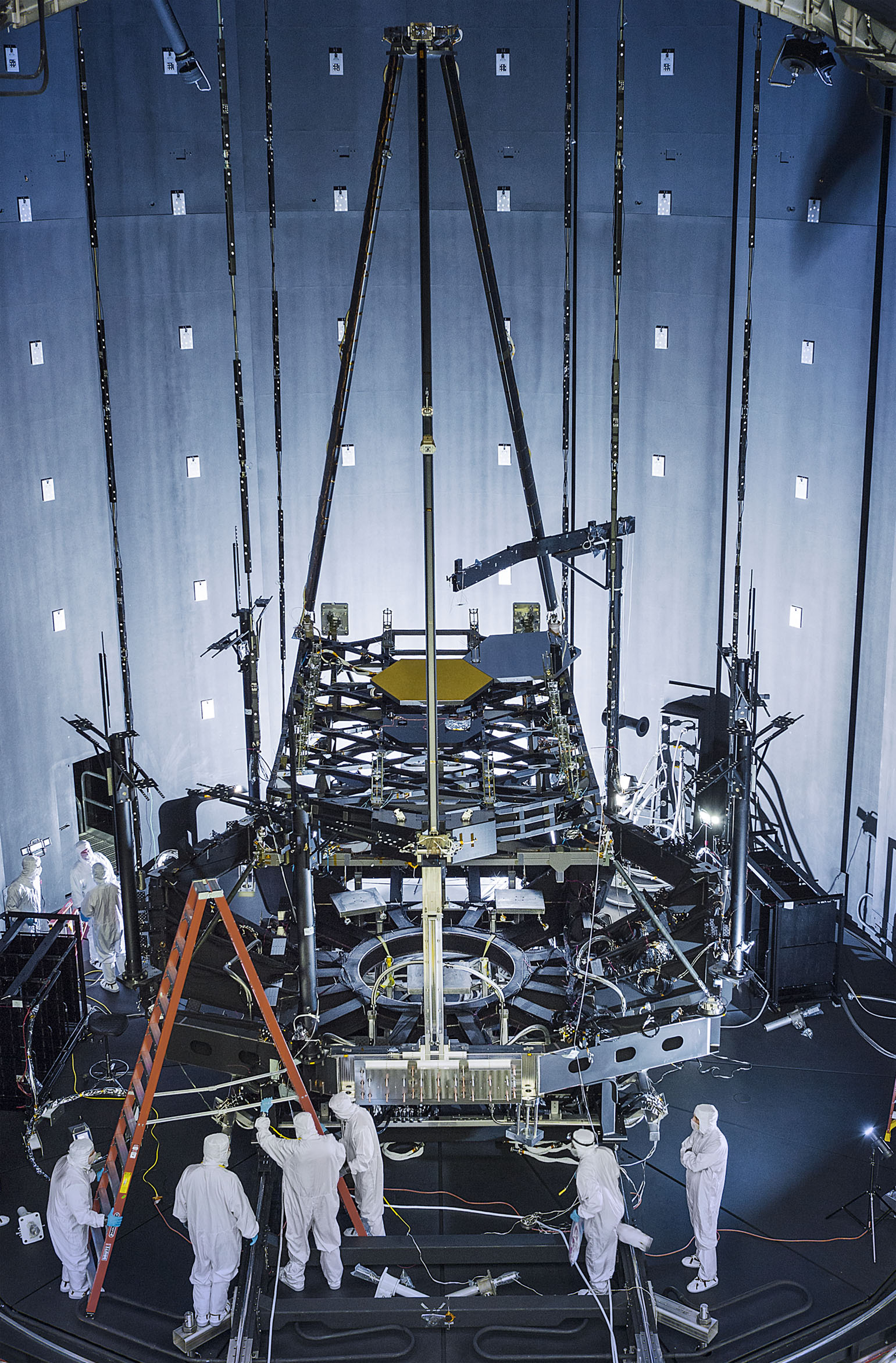
NASA published a description of its Lunar Development and Test Facility at Johnson Space Center in Houston on Aug. 7, 2026. The facility sits inside the Energy Systems Test Area, NASA wrote, and supports development and testing of hardware in simulated lunar conditions. Engineers there place spacesuits, spacecraft components and mechanisms with moving parts and joints inside vacuum chambers loaded with lunar regolith simulant to see how they will perform on future Artemis missions.
The hardware list in the release is small and specific: a dust containment and preparation laboratory for ambient testing, a 3-foot cube vacuum chamber, and a 15-foot thermal vacuum chamber, the last of which uses a closed-loop nitrogen system. That is a ground rig, not flight equipment.
The release also states what the rig is for. Before astronauts return to the surface, NASA wrote, the hardware they depend on "must first prove it can survive the unforgiving lunar environment." The agency describes lunar dust as sharp and abrasive, and states that without mitigation it could damage equipment and spacesuits while posing health risks to astronauts.
Mike Salinas, branch deputy chief in NASA Johnson's Propulsion and Power Division, said in the release: "Engineers are advancing techniques to extract resources from lunar regolith, which can be turned into oxygen for astronauts and liquid oxygen for rocket propellant."
Read as a description of a mechanism, that sentence sets out two steps rather than one: pulling resources out of the soil, then converting what comes out into oxygen. The release describes the techniques for doing it as being advanced, not as being in service.
The claim
NASA Administrator Jared Isaacman, in a Feb. 27, 2026 interview reported by Fox News, laid out the schedule this hardware has to meet. "Artemis III will launch by mid 2027 with the aim to buy down risk and low Earth orbit for subsequent Moon landing attempts in 2028," he said. Of the plan as a whole he said "we did not stretch out our timeline or delay anything," describing the change as inserting additional standardized missions.
In the same interview he named Lockheed, Boeing, ULA, SpaceX and Blue Origin among prime contractors backing the approach.
The record
NASA's Office of Inspector General, in its audit of the agency's acquisition of next-generation spacesuit services (IG-26-006), found that NASA's original goals to demonstrate the lunar and microgravity suits in 2025 and 2026 "were overly optimistic and unrealistic." Its projection for what replaces them is explicit: "if Axiom's testing schedule follows historical averages, the spacesuit demonstrations would not occur until 2031."
The same audit records how the supplier base narrowed. NASA awarded contracts to Axiom Space and Collins Aerospace in 2022 to compete for the suits. In 2024, NASA and Collins agreed to remove the company's task orders, citing an inability to meet the ISS demonstration schedule, leaving one spacesuit provider. The audit states that NASA has been challenged to ensure readiness for the Artemis lunar surface mission in 2028 and for the ISS before its planned decommission in 2030.
The Government Accountability Office reached comparable conclusions in GAO-24-106256. It found that "the Artemis III crewed lunar landing is unlikely to occur in 2025" and that while Axiom is reusing much of NASA's prior work, "significant work remains to resolve design challenges." GAO also recorded that NASA's original suit design did not provide the minimum emergency life support needed for Artemis III, that as of September 2023 the Human Landing System program had delayed eight of 13 key events by at least six months, and that NASA documentation described limited SpaceX progress in maturing needed technologies.
Analysis: two documents that sit on the same critical path
The following is analysis grounded in the records cited above.
The Aug. 7 release and the spacesuit oversight findings are usually read as separate stories. Mechanically they are one. A suit that is delivered on schedule still cannot be used unless the dust problem the Aug. 7 release describes has been solved, because the same suit is the item NASA lists as vulnerable to dust damage. Dust mitigation and suit delivery both have to close before a crew stands on the surface, and NASA's own language for the dust half is developmental.
The schedule record also shows a shape rather than a single miss. Two federal oversight bodies examined the same program and found the same direction of error: GAO judged the 2025 landing unlikely and the suit design work incomplete; the Inspector General judged the 2025 and 2026 demonstration goals unrealistic and set 2031 as the outcome if Axiom's testing tracks historical averages. Both bodies note the 2028 lunar surface mission as the readiness target, but no oversight body cited here has published a schedule analysis of the 2028 date comparable to the 2025 and 2026 findings.
One structural point does not appear in the contractor list Isaacman gave. Prime contractor support is broad across the launch and lander elements, but the suit line has exactly one supplier after the 2024 removal of Collins's task orders. A single-provider path carries no redundancy: the Inspector General states that if Axiom cannot meet its contractual requirements in a timely or cost-effective manner, NASA could be forced to significantly adjust its lunar and microgravity spacewalking plans.
A falsifiable prediction from that record: Artemis III will not have launched by June 30, 2027, the date Isaacman gave. It is checkable on that date against NASA's own launch record.
Comment
Requests for comment to NASA's press office, Administrator Isaacman and Axiom Space are required before publication and are pending documentation by an editor; no response from any of them is recorded in the source material used here. Axiom Space's direct response to the Inspector General's findings is not represented in that source record either, and should be sought before this piece runs.