NASA article pairs Lunar Station’s 60-year Moon data claim with water uncertainty
Blair DeWitt said Lunar Station can help clients understand environmental factors anywhere on the Moon. NASA’s same article said water availability is largely unknown.
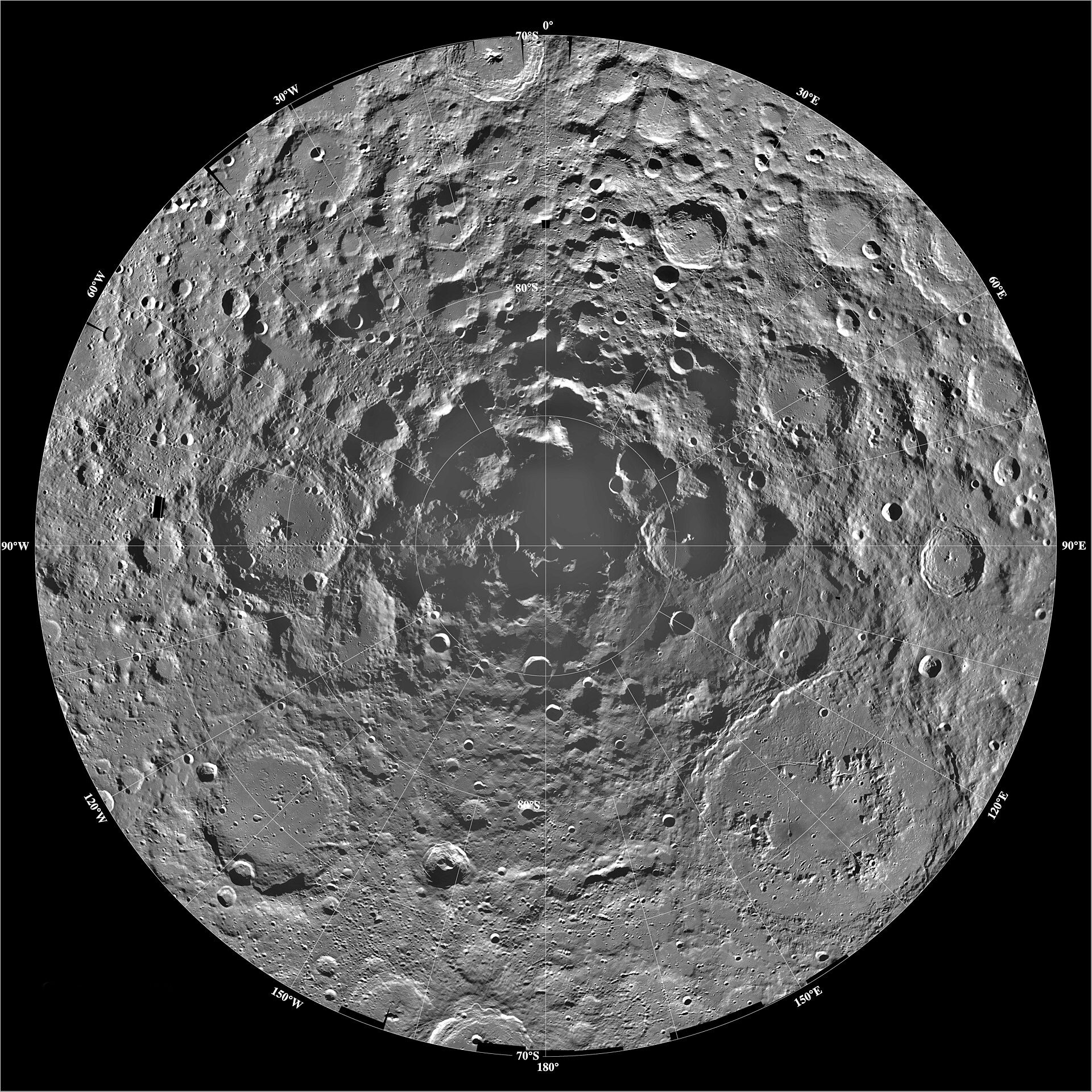
“Moon South Pole no Legend”, by NASA/JPL-Caltech, public domain
A NASA article contains both a Lunar Station executive’s broad claim about Moon site knowledge and a NASA expert’s statement that lunar water availability is largely unknown, according to NASA.
Blair DeWitt, CEO of Lunar Station, said: “With 60 years of lunar data available to us, we help our clients understand the environmental factors for any given location on the Moon,” according to NASA.
In the same article, NASA said the availability of in-situ lunar water resources at any location is “largely unknown,” according to Gerry Sanders, NASA’s Johnson Space Center in-situ resource utilization system capability lead.
NASA’s LCROSS mission page said: “As planned, LCROSS and its Centaur stage impacted the Moon on Oct. 9, 2009.” The same page said: “Scientists also confirmed the water was in the form of mostly pure ice crystals in some places.”
NASA’s Technology Transfer program said: “NASA’s Technology Transfer program ensures that technologies developed for missions in exploration and discovery are broadly available to the public, maximizing the benefit to the nation.”
Analysis: The article’s commercial claim and its water-availability uncertainty statement can be read together. DeWitt’s statement about environmental factors for any lunar location does not answer the water question because NASA’s same article says water availability at any location is largely unknown. NASA’s LCROSS page said ice crystals were confirmed in some places, and the same NASA article said water availability is largely unknown.