Economy & Business · The Record
White House cites 83,000 new factory construction jobs; BLS shows 79,000 added across all construction
The 83,000 figure covers a category the Bureau of Labor Statistics does not publish as a payroll series. Total construction employment across the whole sector rose 79,000 over the same window, and the White House has not said which dataset produces its number.
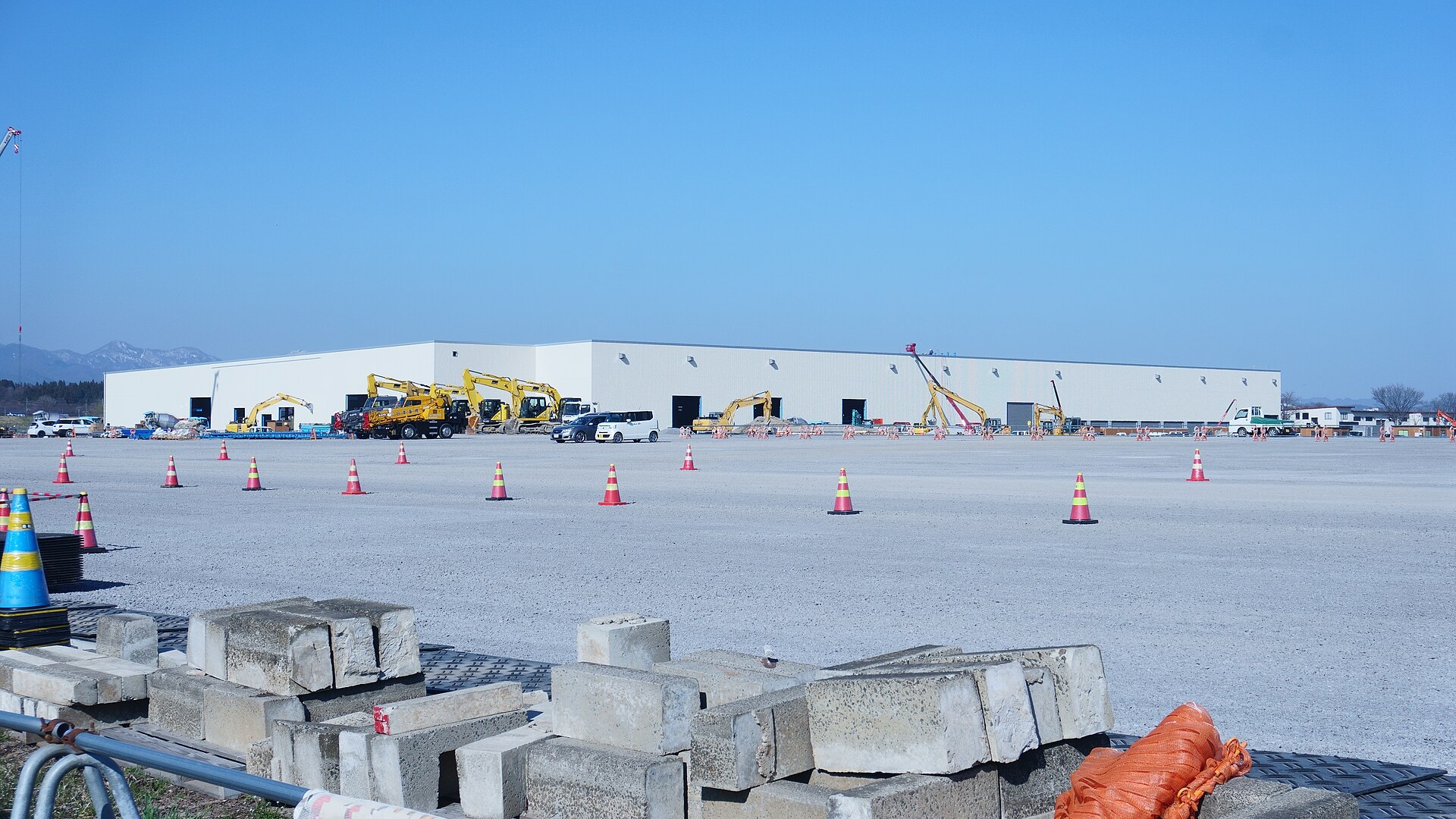
On August 3 the White House published a release headed "Under President Trump, U.S. Factories Expand at Fastest Clip in More Than Four Years." Most of it is adjectives. Two lines are countable. The first: "83,000 factory construction jobs have been added since President Trump took office." The second: "More than 18,000 manufacturing jobs have been created in 2026 alone, reversing years of decline."
Four days later the Bureau of Labor Statistics published the July employment report. Total nonfarm payrolls, series CES0000000001, fell from 158,881,000 in June to 158,858,000 in July, a decline of 23,000. The unemployment rate, series LNS14000000, was 4.1% in July against 4.2% in June. Indeed Hiring Lab, writing up the report on August 7, recorded the same two figures and added that revisions cut a combined 103,000 jobs from the May and June reports, leaving average job growth of 34,000 a month over the past year.
The White House did not revise the August 3 framing after the report landed.
The record against the 83,000
The release dates its window to when the president took office. Presidential terms begin on January 20, and this administration's began on January 20, 2025; that date is a matter of public record rather than something contained in the snapshots cited here. BLS payroll data are monthly, so the nearest reference month is January 2025.
All-employees construction, series CES2000000001, stood at 8,264,000 in January 2025. The preliminary July 2026 reading is 8,343,000. That is a net gain of 79,000 jobs across every construction category the country has: residential, commercial, civil, industrial, specialty trade contractors, all of it.
The White House attributes 83,000 to factory construction alone. That is 4,000 more than the entire sector added.
One caution, stated plainly because the reader should be able to check the reasoning: "factory construction jobs" is not a published BLS payroll series. BLS publishes the construction total above and finer industry detail beneath it, but the phrase in the release does not map onto a series this article can name. So the comparison is a bound, not a refutation. The 83,000 can be reconciled with CES2000000001 only if every other construction category combined shed jobs on net over the same eighteen months, or if the figure rests on a different basis entirely - a spending-derived estimate, a tally of announced projects, or a different data vintage. The release does not say which. Naming the series would settle it in one line.
The record against the 18,000
Here the White House understates its own case. Manufacturing employment, series CES3000000001, was 12,582,000 in January 2026 and 12,611,000 in July 2026: a gain of 29,000, not 18,000. Measured from the December 2025 low of 12,580,000, the gain is 31,000 over seven months, about 4,400 a month. Dean Baker of the Center for Economic and Policy Research put it at a slightly higher figure, though he framed it as meager, writing that manufacturing has been creating some jobs recently but that "the average is just 5k a month."
The second half of the sentence is where the same series stops cooperating. Manufacturing employment was 12,673,000 in January 2025. July 2026 is 62,000 below that. It is also 14,000 below July 2025's 12,625,000. The 2026 gain is a rebound off a trough inside a longer decline, and the series has not returned to where it started.
The two series point opposite ways
Factory construction employment is being claimed as a boom in the same weeks that factory construction spending is falling. Baker wrote that factory construction "has been on a downward path since the third quarter of 2024" and is "now down by close to 27 percent from its recent peak." Chicago Construction News reported that manufacturing construction spending is projected to fall 17.4% in 2026, to $178 billion, on the reasoning that the semiconductor and battery plants begun between 2022 and 2024 are moving past their heavy-spending phases with little of similar scale starting behind them.
On the manufacturing side, Manufacturing Dive reported on the June data released July 2 that the sector added 3,000 jobs that month, alongside the observation that factory job cuts are running at their highest since 2009. That June figure was subsequently revised up: the current vintage of CES3000000001 shows June at 12,606,000 against May's 12,595,000, an increase of 11,000. Revisions are the theme of this report in both directions.
Context the payroll headline leaves out
Baker noted that local government education employment dropped 45,000 in July, which he attributed to a seasonal adjustment for public school teachers rather than to anything happening in classrooms; excluding it would leave job growth of 22,000. Hiring Lab reported that government lost more than 50,000 jobs in July and leisure and hospitality 40,000. Baker also reported the year-over-year increase in the average hourly wage at 3.2% in July, and wrote that "workers are now falling behind inflation."
Analysis
Two of the White House's figures can be traced to a published series, and both are arithmetic on a chosen window rather than inventions. The 18,000 is true on its own series and conservative. The 83,000 is checkable only against a category BLS does not publish, and set against the sector total it sits 4,000 above every construction job the country has added since January 2025.
The other numbers in the August 3 release - manufacturing wages up 4.2% year over year, non-residential fixed investment up 11.7% in the last quarter, a projected 6.2% annualized growth rate for the third quarter, and a seventh consecutive month of expansion in the Institute for Supply Management index - were not checked against any dataset for this article, and nothing here endorses or disputes them. Note in particular that the release's 4.2% and Baker's 3.2% are different measures: one is a manufacturing wage, the other the year-over-year change in average hourly earnings for all workers. Both can be correct.
The distinction doing the work is between a level and a change. A sector can add jobs on net over seven months and still employ 62,000 fewer people than it did eighteen months earlier. Both statements come out of the same column of the same series. A release that reports only the second of them has chosen a window, which is a legitimate thing to do and a fair thing to name. And the ISM streak the White House cites is a survey of activity, not a payroll count; the employment series shows no comparable run of monthly gains, with April at 12,597,000 and May at 12,595,000 both below March's 12,598,000.
A falsifiable test
Returning manufacturing employment to its January 2025 level of 12,673,000 by December 2026 would require about 12,400 jobs a month for five consecutive months, roughly triple the 2026 pace to date. Prediction: the December 2026 reading of CES3000000001, published in early January 2027, will still be below 12,673,000. Check by January 31, 2027.
Editor's note on right of reply
The central finding here is that a specific White House figure cannot be reconciled with the BLS payroll series the same releases draw on. Daily Pol's standard for a claim of that kind is that the subject is asked to answer it before publication. This piece is held until the White House press office has been asked, in writing, which series or dataset produces the 83,000 figure and over what window. The ledger records that requirement; a human sends and logs the request. As of August 10, 2026 no reply has been received, and this note will be updated with the answer or with the fact of no answer.